
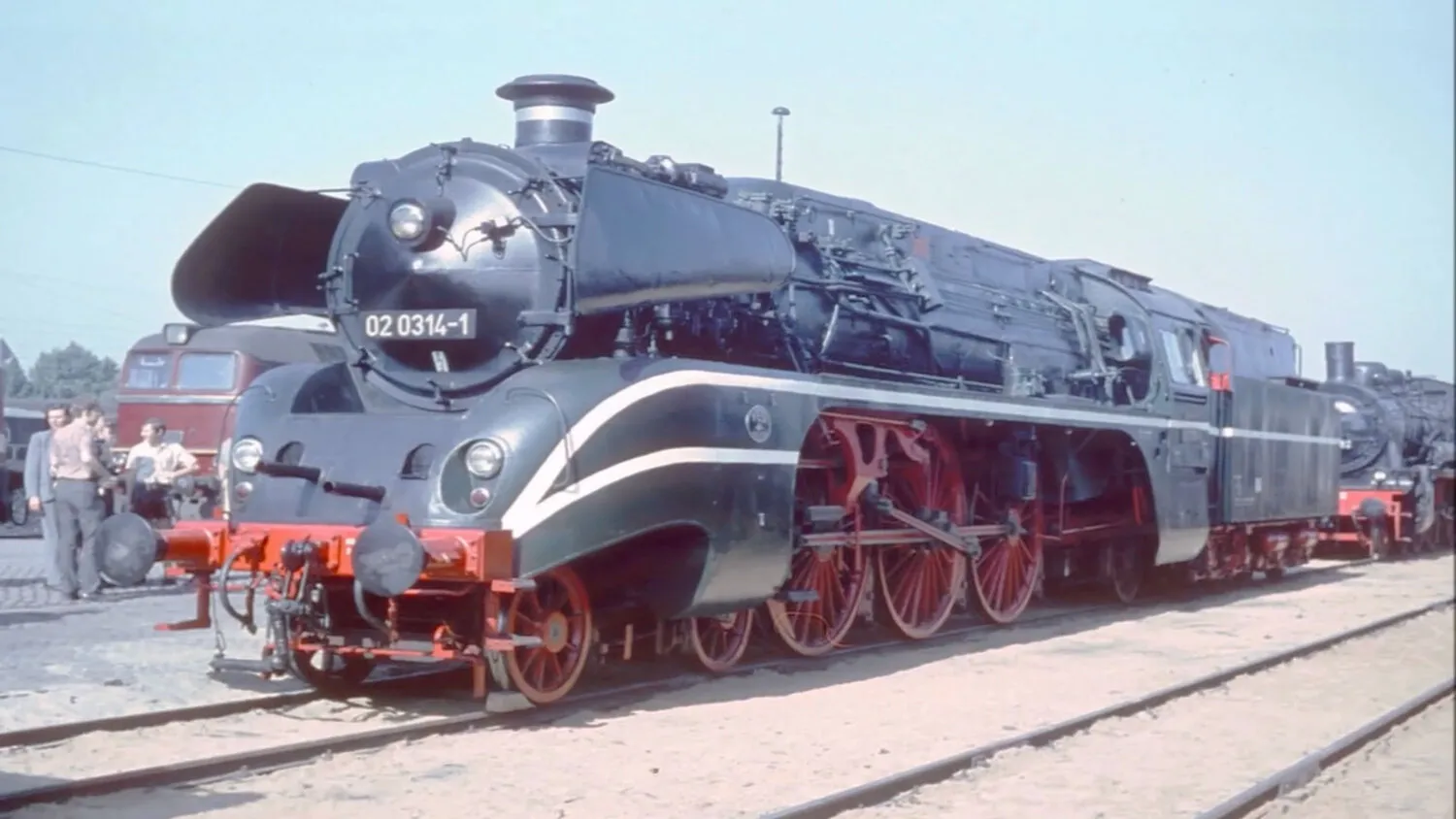
Also known as: BR 02 0314-1 / Schorsch
Vehicle type: Steam locomotive
Registration country: Germany
Railway companies: DR - Deutsche Reichsbahn
1919
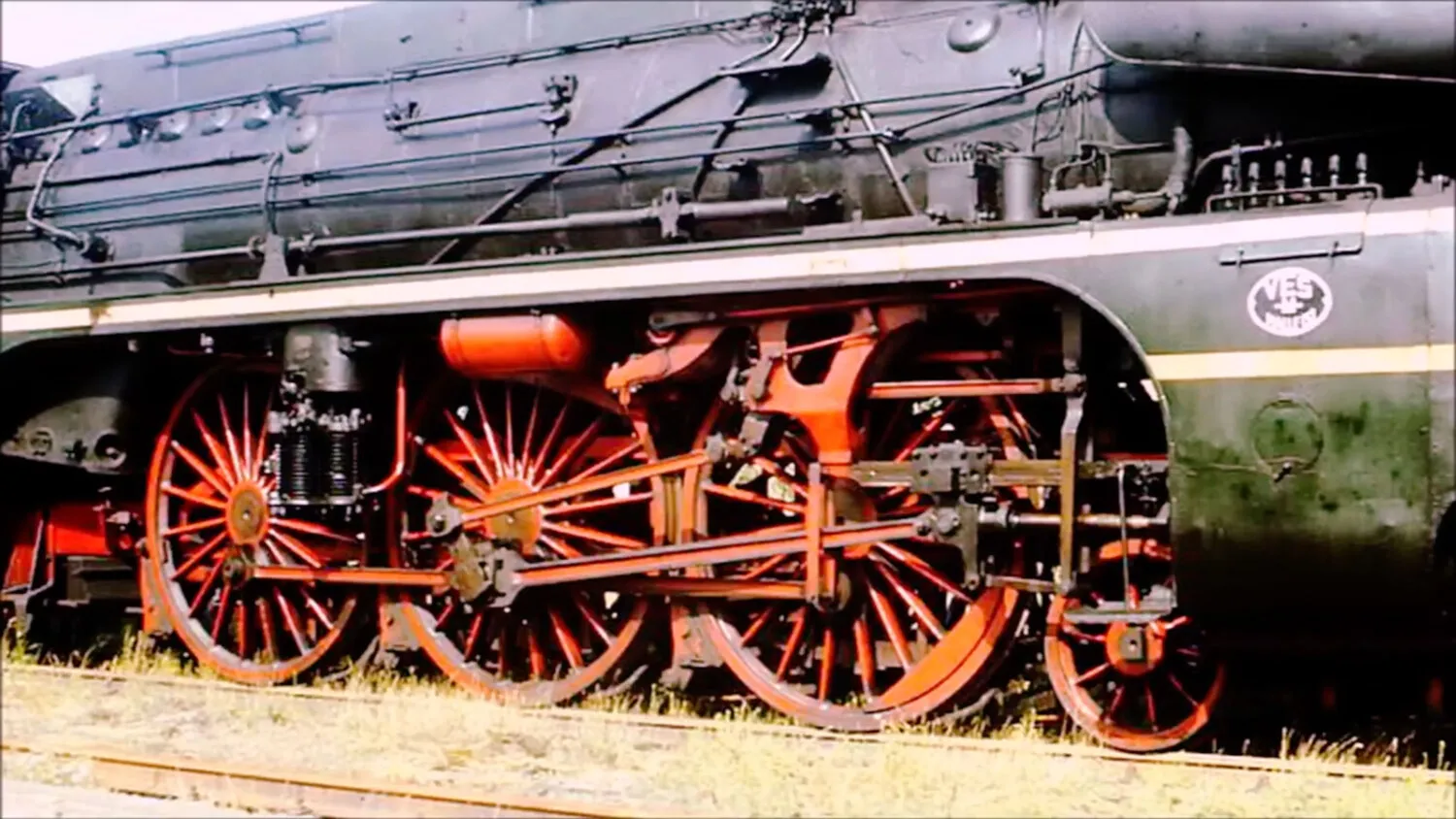
The locomotive began its life as a Baden Class IV h, a powerful 4-6-2 "Pacific" type designed for heavy express service. Built by Maffei in Munich in 1919, it was part of a small series of only 20 locomotives designed for the challenging Rhine Valley line. These engines were nicknamed "High Steppers" because of their massive driving wheels (2'100 mm).
After the founding of the Deutsche Reichsbahn (DRG), it was renumbered to 18 314. It spent much of the 1930s pulling prestigious trains, including the legendary Rheingold.
1948
In 1948, Max Baumberg, head of the VES-M, arranged a rare cross-border trade. He exchanged a Bavarian S 3/6 (Class 18.4) that was stuck in the Soviet Zone for the Baden 18 314. The locomotive was transferred to East Germany, where it would spend the rest of its working life as a specialized test bed.
1960
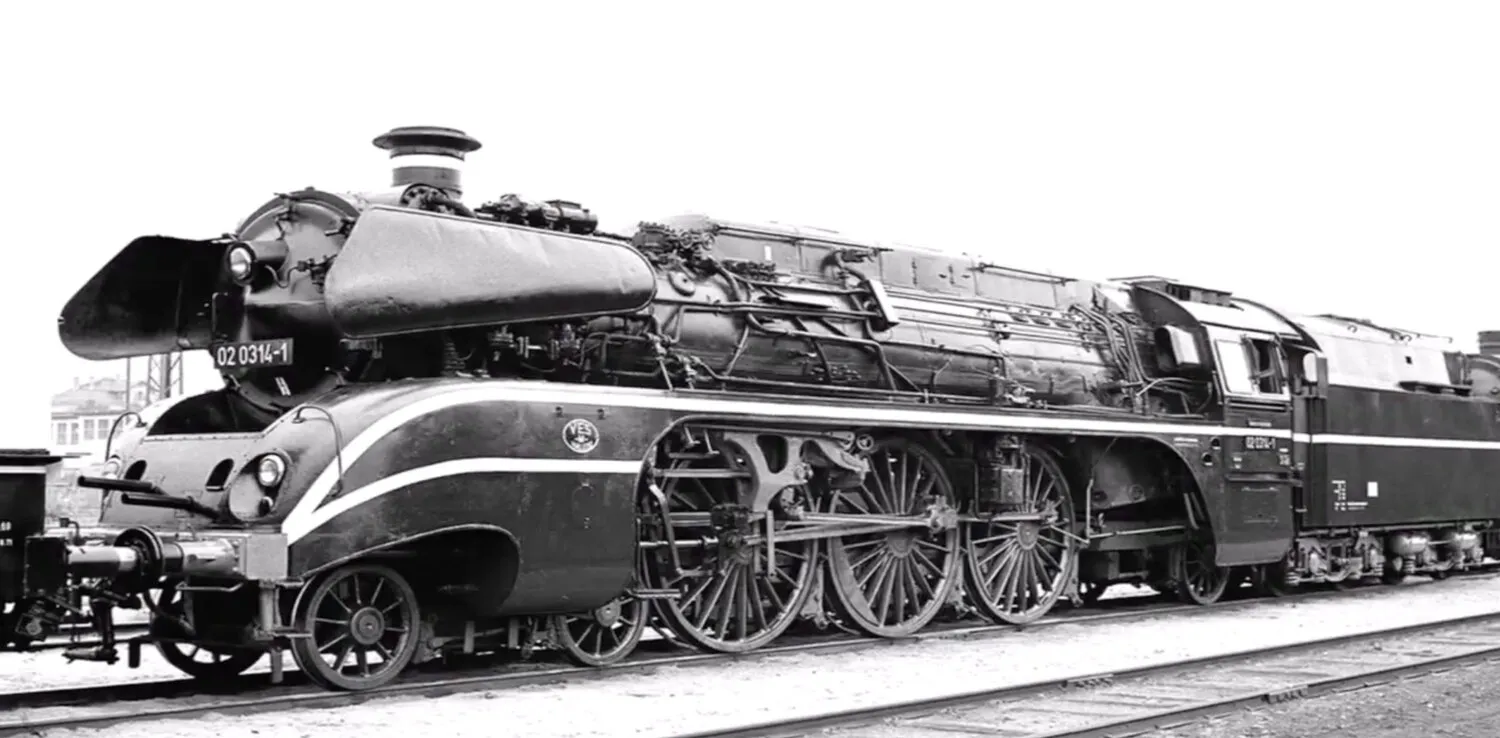
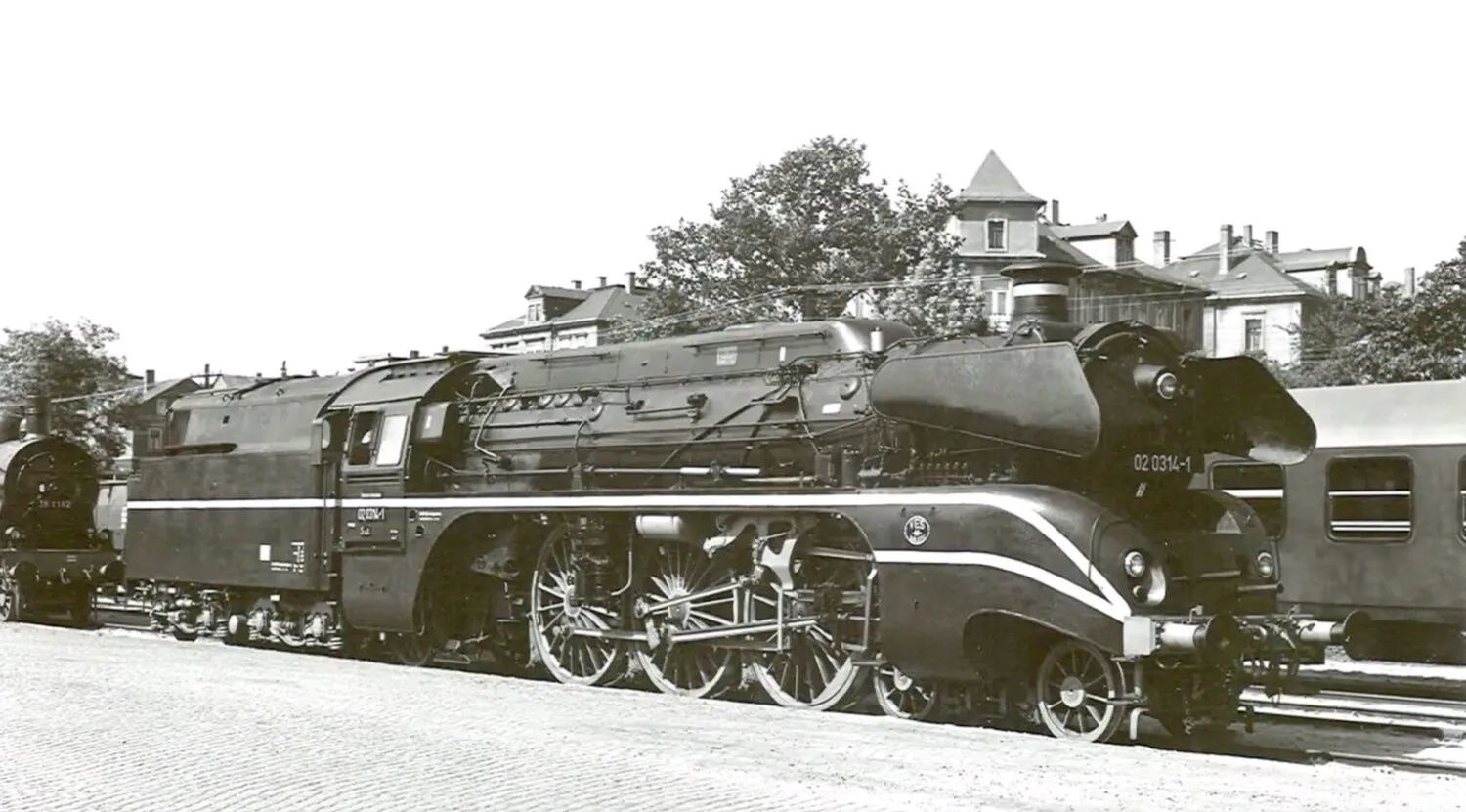
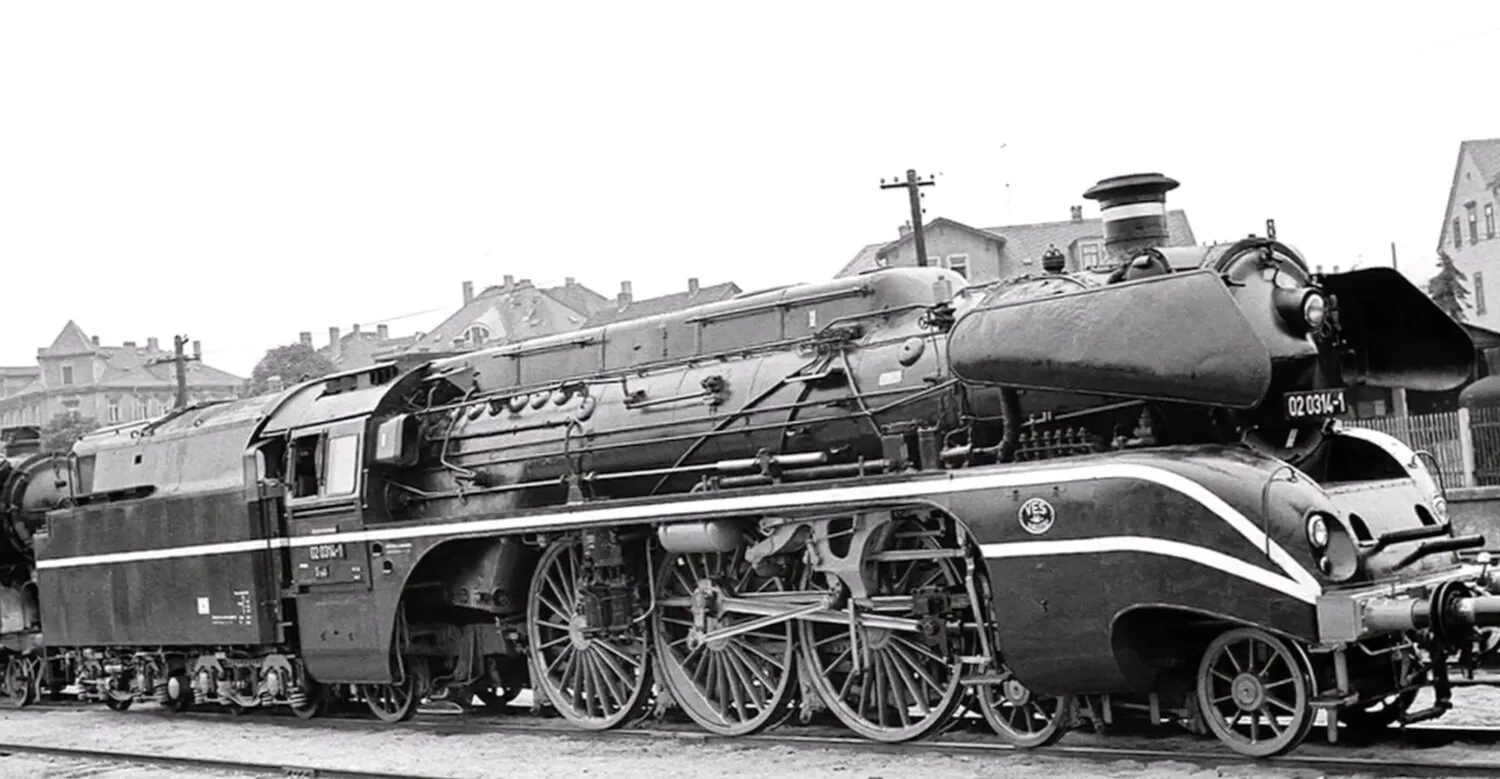
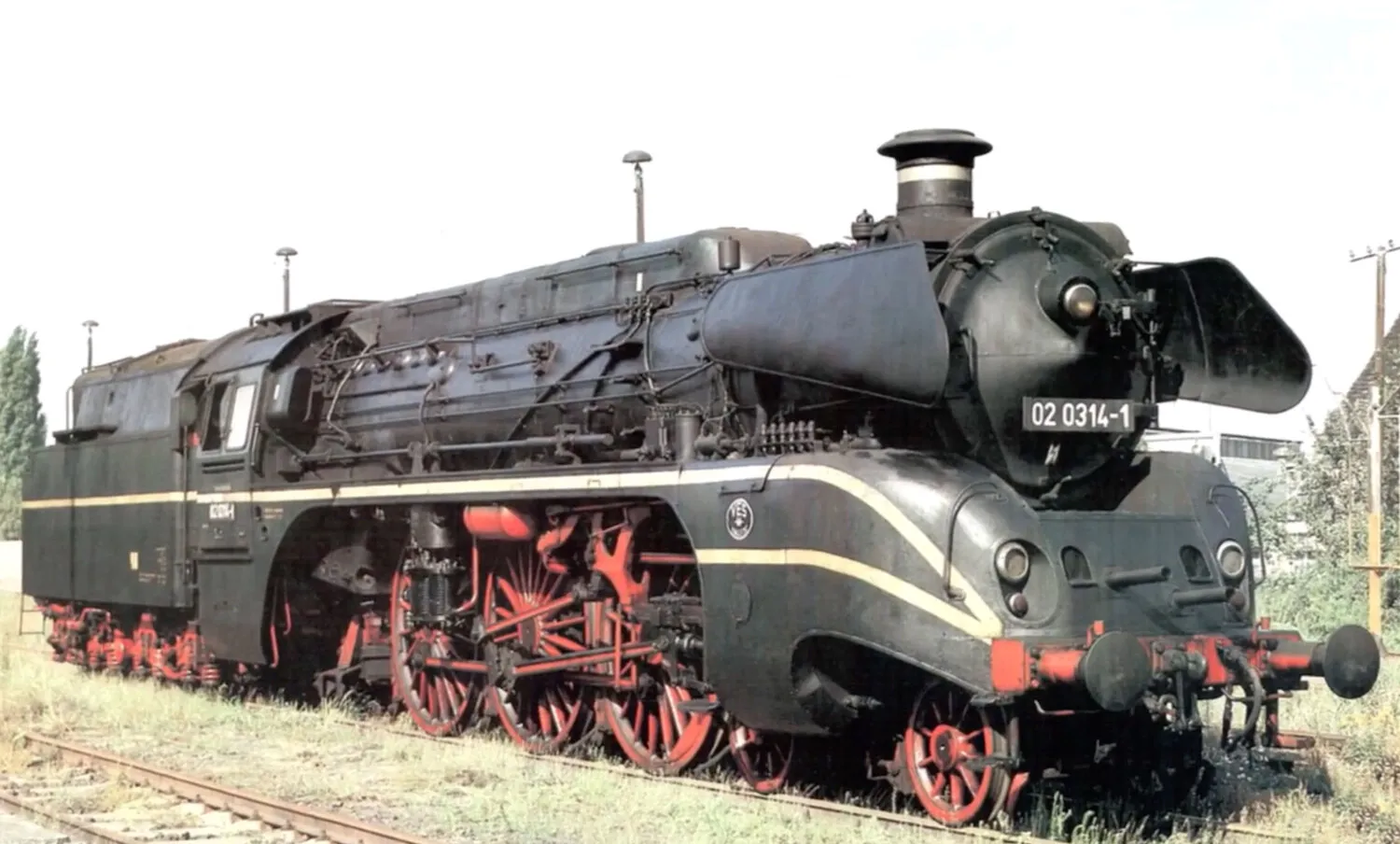
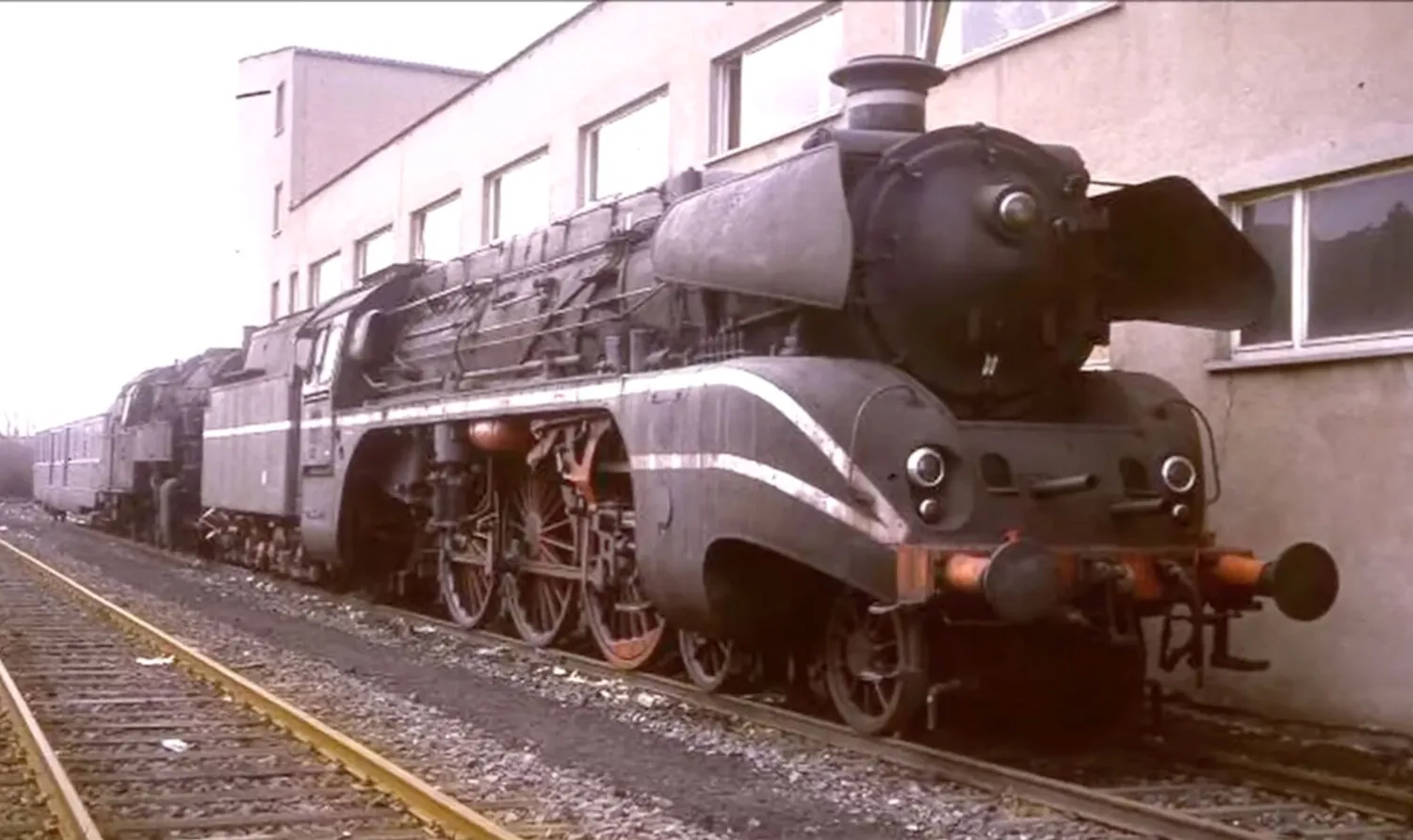
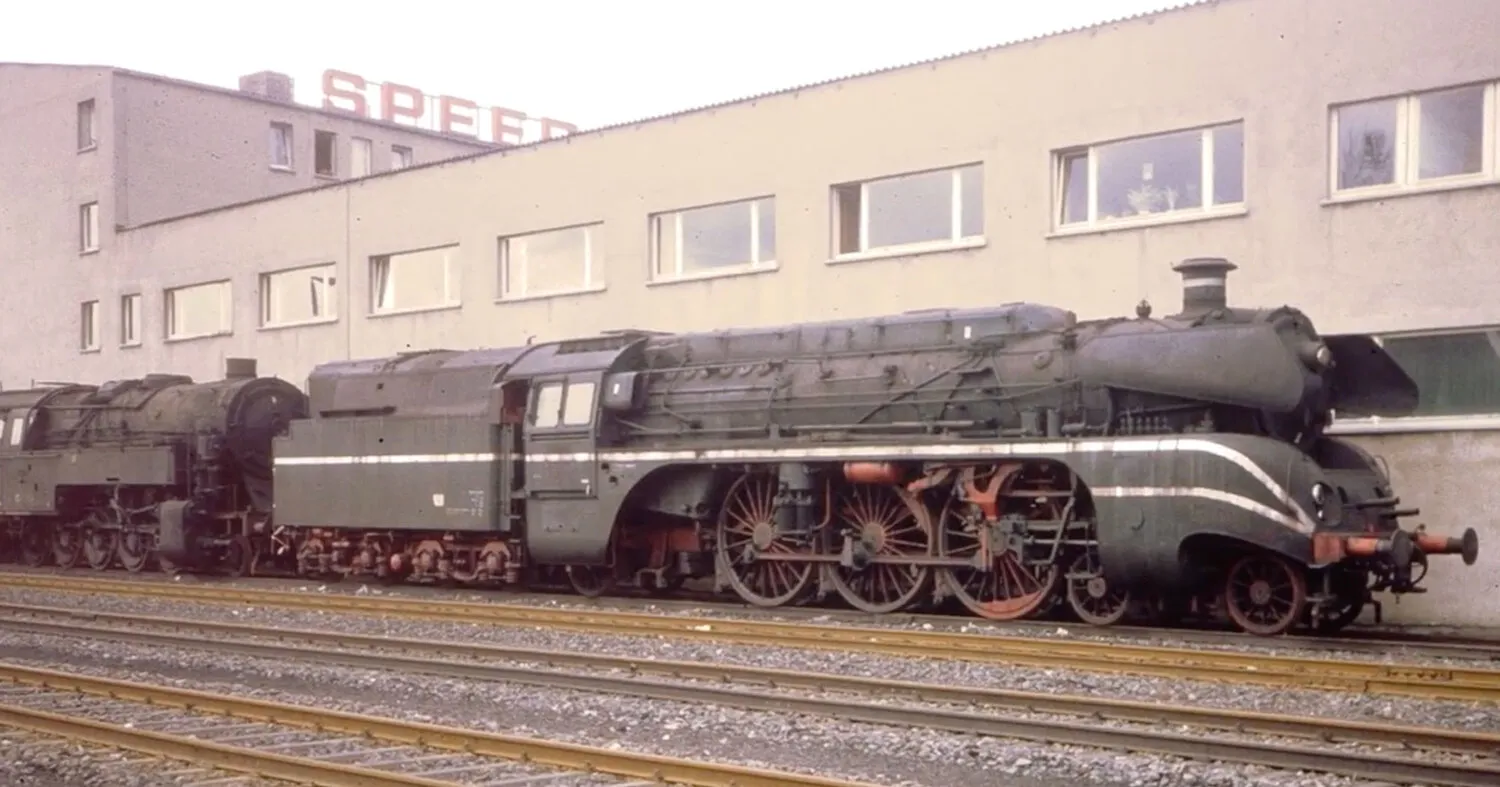
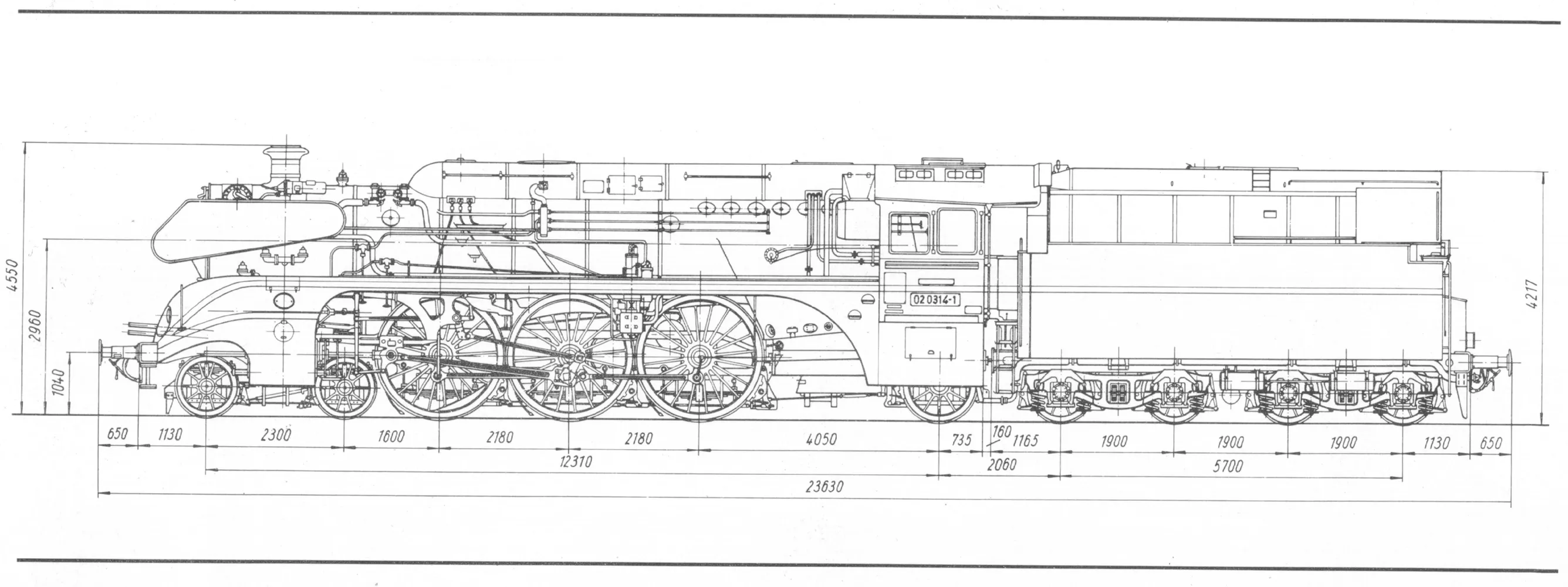
Rebuilding: It received a new boiler, a new cab, and partial streamlining on the cylinders and boiler.
Identity: It was painted a striking green with white stripes, earning it the nicknames "Schorsch" (a Bavarian diminutive for George) and "Laubfrosch" (Tree Frog).
Power: Its top speed was officially increased to 150 km/h, with nearly 2'000 horsepower.
Oil Firing: In 1967, it was converted from coal to oil firing, making it even more efficient for high-speed runs.
1970
1971
1984
Do you have additional informations regarding this vehicle?
Help us writing the history of Class 02 0314-1! Your knowledge is precious for us and the entire community, do not hesitate to share your facts, photos or videos:
Latest update on the 12th of January 2026 at 12:14
Contributor(s): Tudor C.
Advertising:
Class 02 0314-1 - Associated miniature models:

DR - Class 02 steam locomotive
Recommended retail price: 599,00 €
Advertising:

The identity card, photos and videos for thousands of railway vehicles all around Europe!
