
Vehicle type: Electric locomotive
Registration country: Germany
Railway companies: DRG / DRB - Deutsche Reichsbahn
1920s
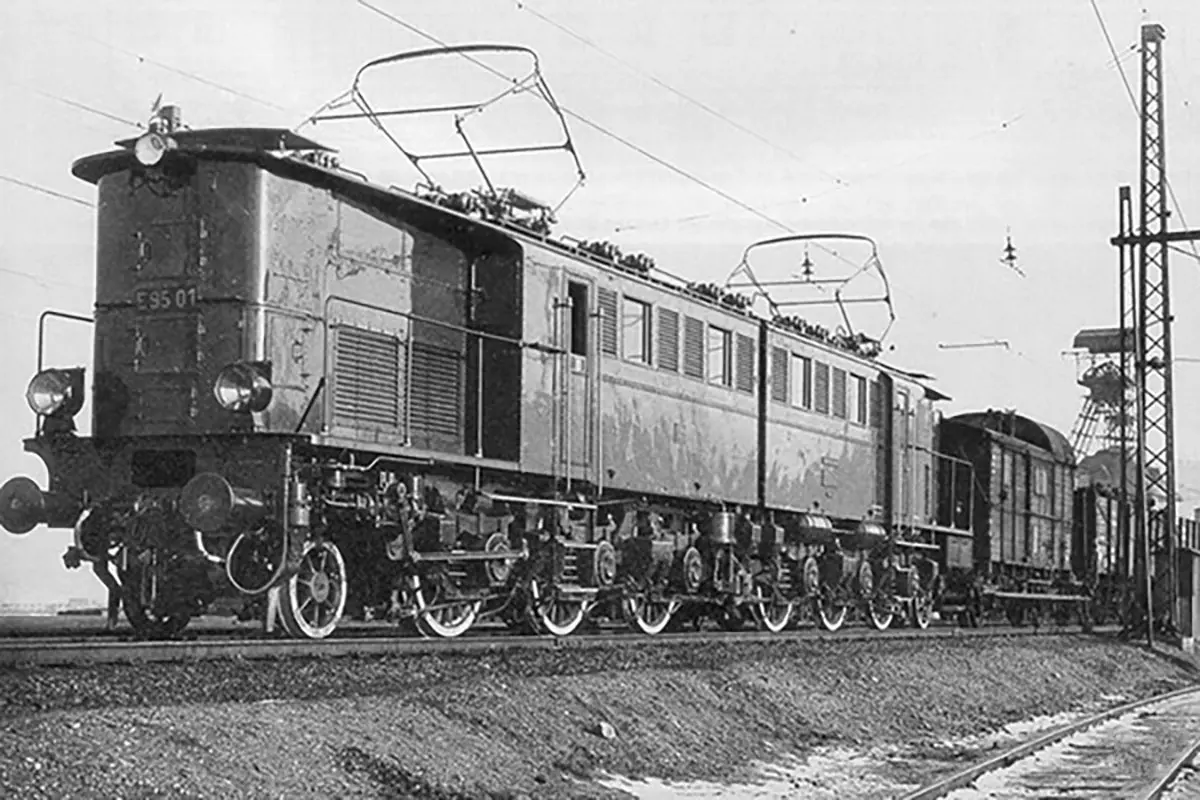
Twenty months after construction commenced in December 1927, the E95.01 locomotive was ready for testing. By mid-1928, all other locomotives had been delivered.
The first trial run took place in March 1928 with the E95.03. This test journey, conducted between Königszelt and Wroclaw, demonstrated their peak performance, as the train consisted of 39 new (drop-bottom) freight cars of the OOt type, including the measuring car, weighing a total of 2,568 tons. During this trip, the locomotive accelerated the train to a speed of 60 km/h, allowing for the determination of the effective power output during startup. The locomotive drew a current of 230 amperes from the overhead line while operating in Wroclaw, with the overhead voltage dropping from 14 kilovolts to 12 kilovolts, resulting in a power output of 2,760 kilowatts.
These locomotives primarily serviced heavy coal trains between Waldenburg-Dittersbach and Görlitz on the Silesian mountain tracks, proving their capability and demonstrating the exceptional performance achievable with the Tatzlager drive. The maximum speed was set at 70 km/h, and these locomotives recorded the highest mileage among all Silesian electric freight locomotives.
The E95.01 reached a total mileage of 78,538 kilometers in 1928, with E95.05 achieving a peak of 82,344 kilometers in 1929.
As coal train traffic declined in the early 1930s, the locomotives were repurposed for passenger service, facilitated by the installation of a safety system.
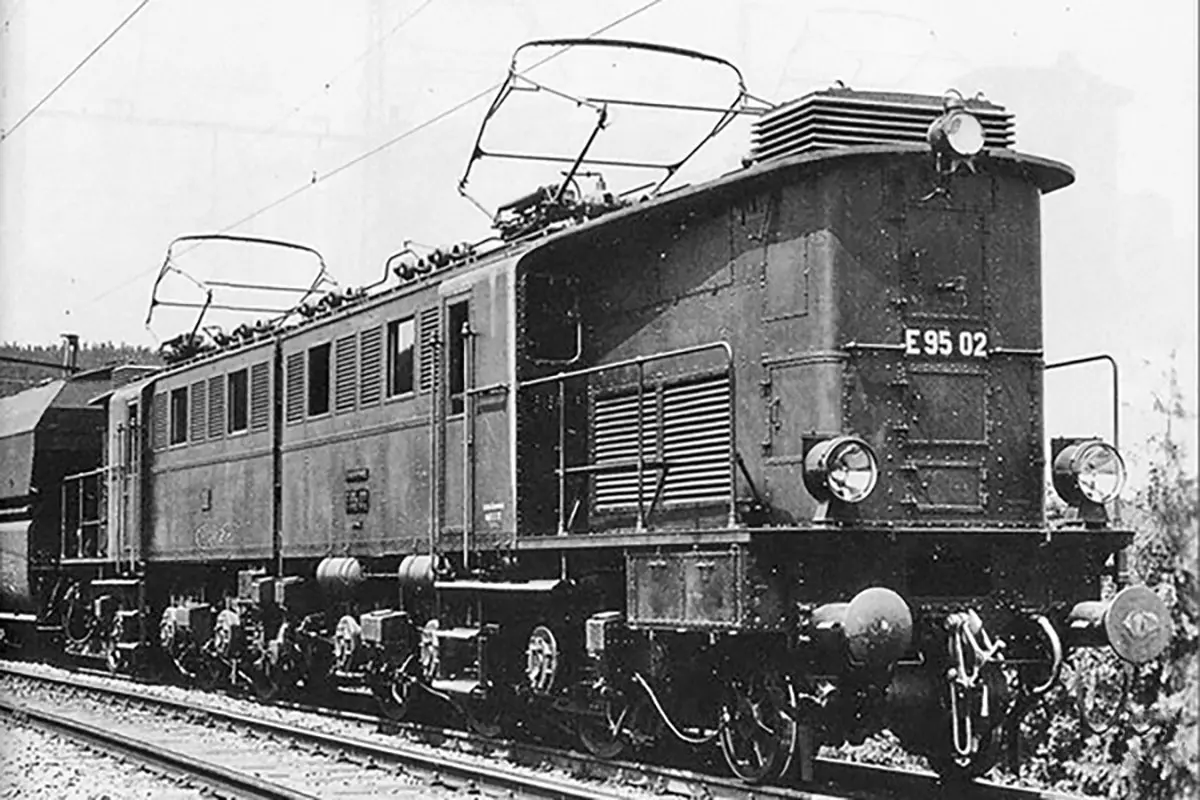
The E95.02 was exhibited at a Berlin showcase in 1930, where it was presented as the most powerful electric locomotive of the Deutsche Reichbahn.
In 1931, plans were made for the electrification of the Stuttgart-Karlsruhe line, which included the construction of 20 locomotives; however, this electrification was never realized, and consequently, no follow-up series of this locomotive type was ordered. Thus, only six machines remained, primarily operating on the Silesian mountain routes.
All locomotives survived World War II and subsequently were located in the territory of what later became East Germany (DDR).
Except for the E95.02, all locomotives were scrapped.
Do you have additional informations regarding this vehicle?
Help us writing the history of E 95! Your knowledge is precious for us and the entire community, do not hesitate to share your facts, photos or videos:
Latest update on the 16th of December 2025 at 20:49
Contributor(s): Tudor C.
Advertising:
E 95 - Associated miniature models:

DRG - Class E 95 electric locomotive
Recommended retail price: 799,90 €
Advertising:

The identity card, photos and videos for thousands of railway vehicles all around Europe!
