
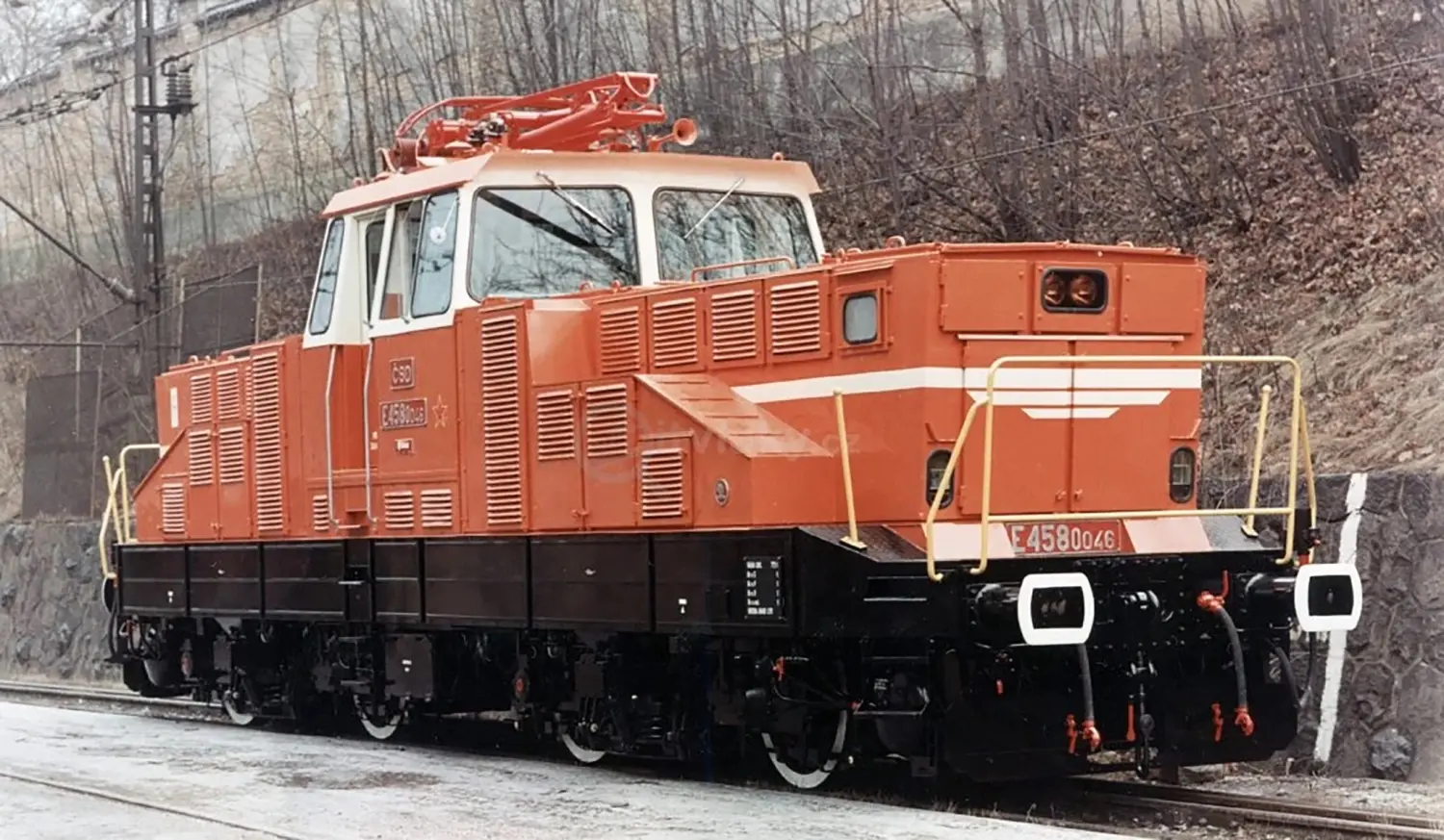
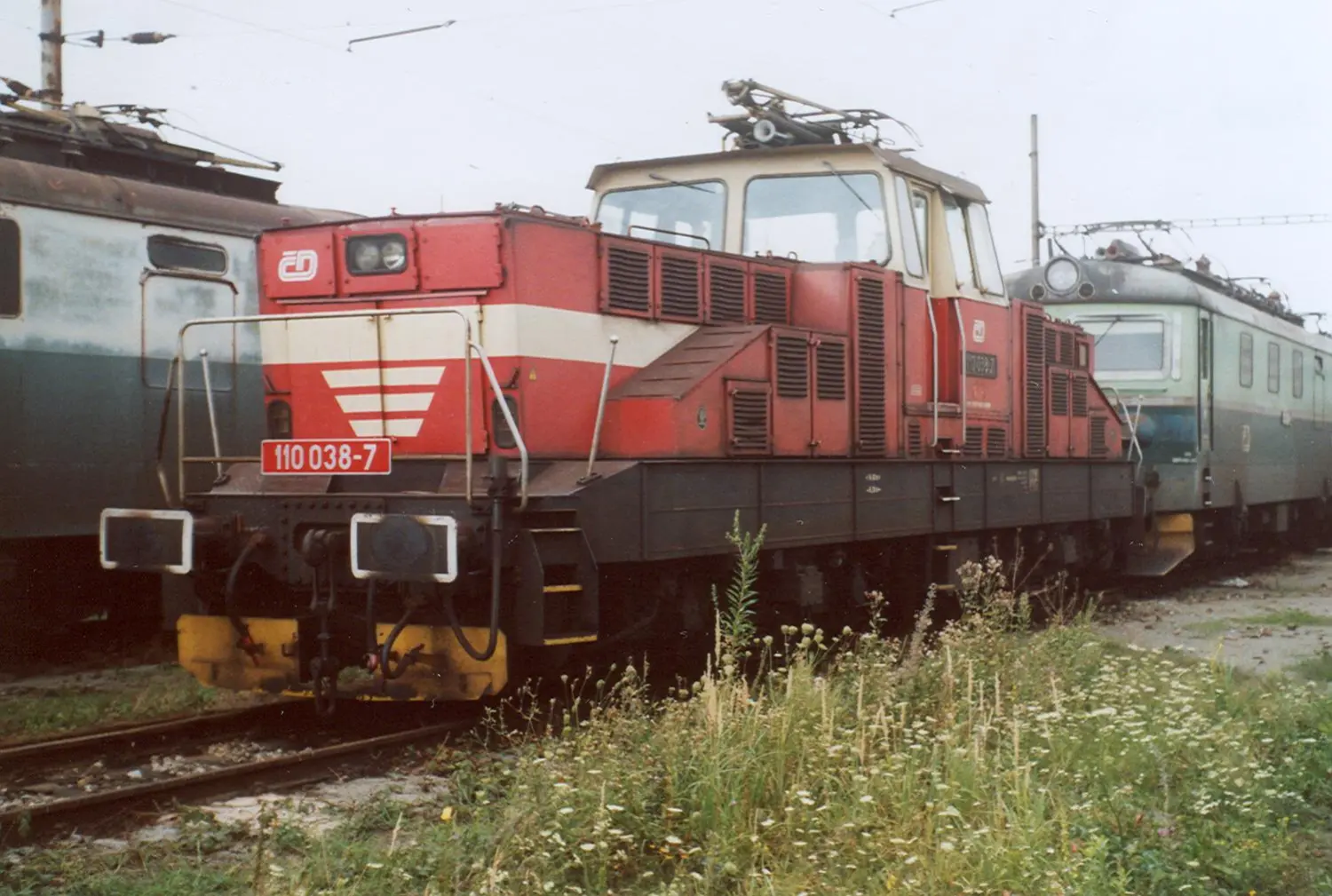
Source: de.wikipedia.org
Also known as: Class 110 / Type 33E 1
Vehicle type: Electric locomotive
Registration country: Czechoslovakia
1972
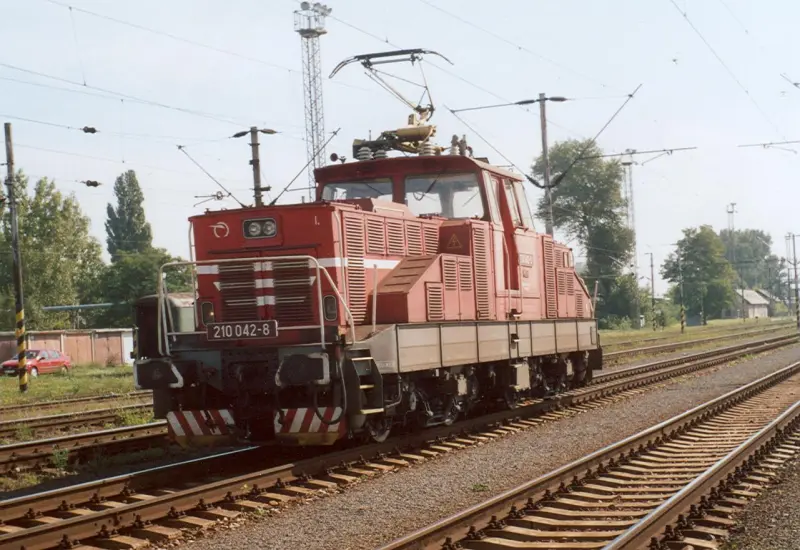
The locomotives were built as four-axle machines (Bo'Bo') with a distinctive central cab and low, flat hoods on either side, which led to the nickname "Bügeleisen" (Flatiron):
Traction control: The series utilized traditional resistance control. Speed and tractive force were regulated by switching starting resistors in and out of the circuit, controlled via a classic contactor system.
Weight and traction: To ensure sufficient adhesive force for heavy shunting, the locomotives were fitted with ballast, bringing their total service weight to 72 tons (18 tons per axle).
Power output: The locomotives were equipped with four 1 AD 3946 aT traction motors, providing a continuous power of 800 kW and a maximum speed of 80 km/h.
A notable feature of this series was its suitability for hump yard operations:
Auxiliary pantographs: In addition to the main roof-mounted pantograph, the units were equipped with two auxiliary pantographs. These were used to receive a variable voltage (up to 1000V DC) from a separate auxiliary overhead line at the sorting hump.
Remote control: This setup allowed the locomotive to be controlled remotely at extremely low, precise speeds - a requirement for pushing wagons over the hump economically without the losses associated with resistance control at such low speeds.
The inclusion of a 3000V heating line allowed the E 458.0 to be used for pre-heating passenger cars and occasionally for pulling light local passenger trains.
1988
1993
Do you have additional informations regarding this vehicle?
Help us writing the history of Class E 458.0! Your knowledge is precious for us and the entire community, do not hesitate to share your facts, photos or videos:
Latest update on the 17th of January 2026 at 12:50
Contributor(s): Tudor C.
Advertising:
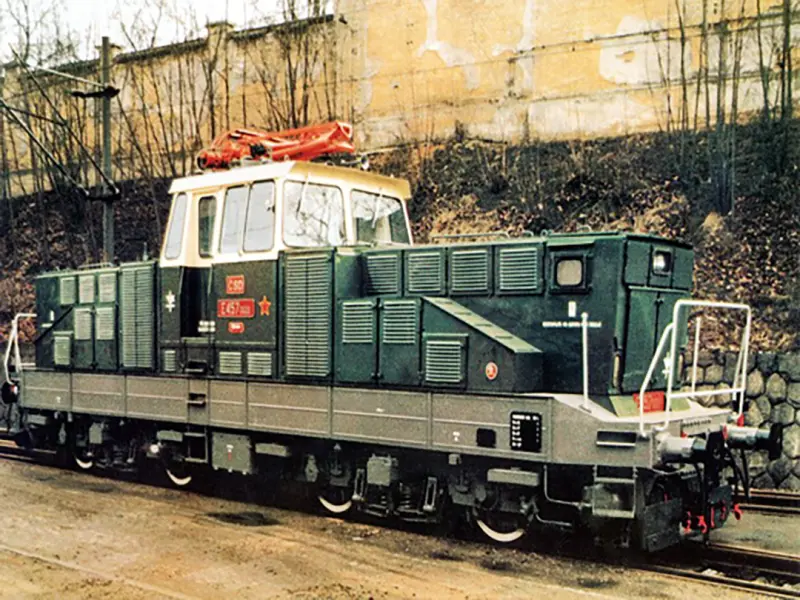
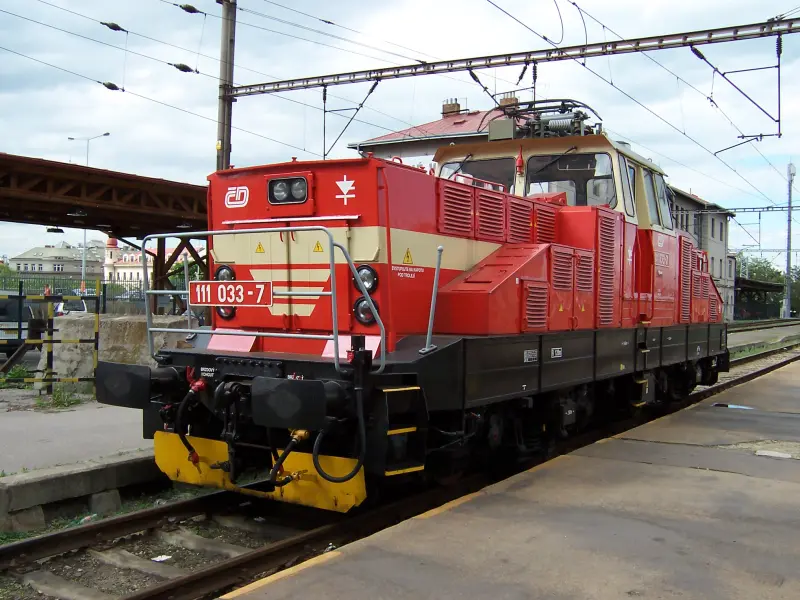
Class E 458.0 - Related rolling stock from category "ČSD - "Žehlička" electric locomotives":
Class E 458.0 - Associated miniature models:

ČSD - E 458.006 electric locomotive
Recommended retail price: 229,90 €

ČSD - E 458.0020 electric locomotive
Recommended retail price: 229,90 €
Advertising:

The identity card, photos and videos for thousands of railway vehicles all around Europe!
