
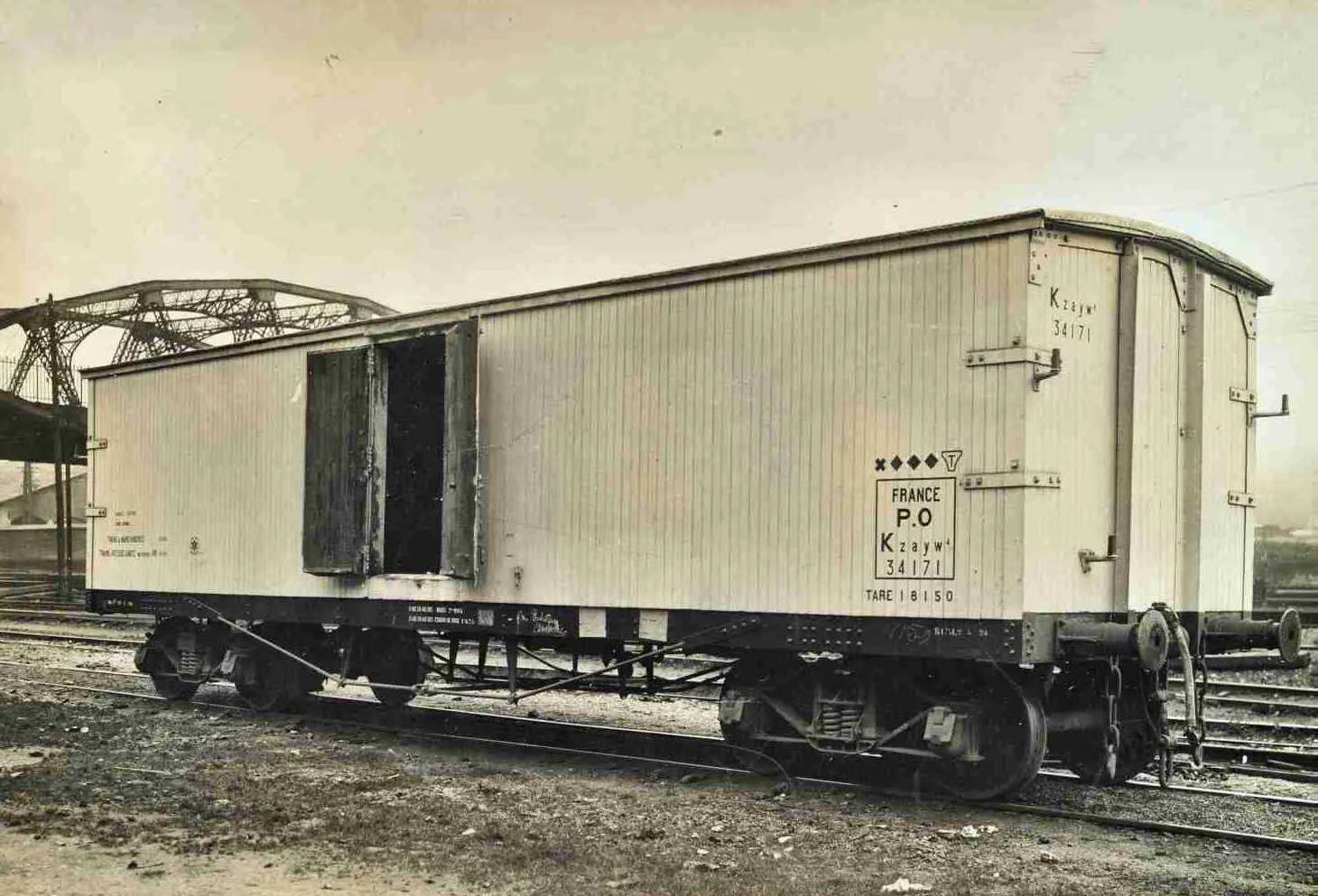
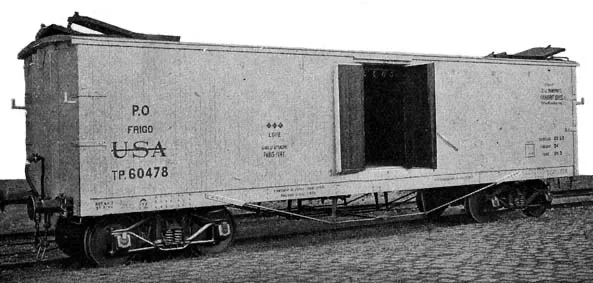
Also known as: TTnf / Kzayw / type TP
Vehicle type: refrigerated wagon
Registration country: France
1918
The American freight wagons arrived from 1918 onward, generally shipped across the Atlantic as components and assembled in French ports and workshops, notably around La Rochelle, La Pallice and Saint-Nazaire. Their construction differed considerably from most contemporary French freight stock. Instead of the short two- or three-axle vehicles then dominant in Europe, the American wagons used two bogies, typically of the characteristic Diamond pattern. The standard chassis was approximately 12.14 metres long, and the vehicles intended for French service were fitted with European buffers and screw couplings. After the war, large numbers remained in France or were followed by wagons built to similar principles under the authority of the Ministère des Travaux Publics, giving rise to the familiar designation "TP" (Travaux Publics).
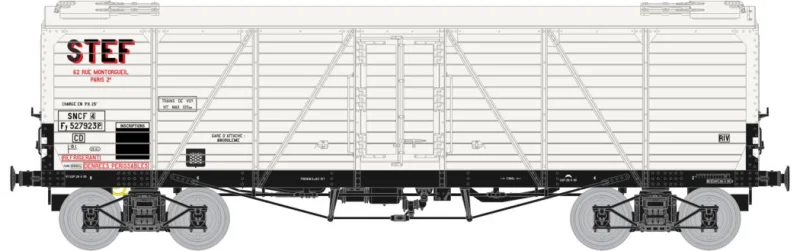
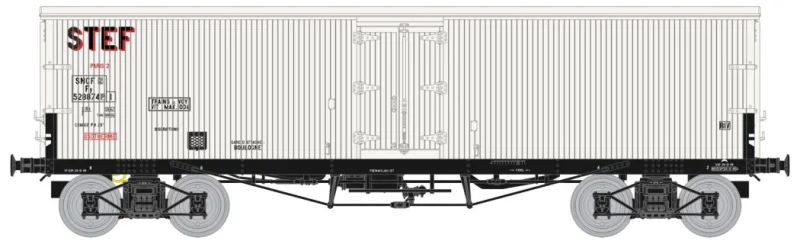
The refrigerated version, commonly known as the wagon frigorifique TP, appeared in 1919 and retained the characteristic 12.144 m length of the TP family. Its large body and bogie running gear made it particularly well suited to carrying substantial quantities of perishable goods over long distances. These wagons represented an important technological step compared with the smaller French refrigerated and insulated vehicles used before the war.
Despite the generic term frigorifique, these early vehicles should generally be understood as insulated or ice-refrigerated wagons rather than mechanically refrigerated wagons. Their insulated bodies limited heat transfer, while ice could be loaded into dedicated compartments through roof hatches. The cold produced as the ice melted maintained the cargo at a low temperature, with meltwater evacuated beneath the wagon. A refrigerated wagon could carry as much as 2.5 tonnes of ice. True mechanically refrigerated wagons, capable of producing their own cold with onboard equipment, remained rare and expensive during the interwar period.
The arrival of these American wagons had consequences far beyond the vehicles themselves. During the war, American forces also established refrigerated slaughterhouses and demonstrated the large-scale organisation of a complete cold chain. French railway companies subsequently adopted these techniques for civilian traffic. Refrigerated and insulated wagons became increasingly important for the movement of meat, fish, dairy products, fruit and other perishables, while specialised refrigeration depots were constructed to manufacture ice and rapidly replenish the wagons.
This development contributed to the creation in 1920 of the Société Française de Transports et Entrepôts Frigorifiques (STEF), initially associated with the PLM network. Refrigerated rail transport expanded spectacularly during the interwar period: the annual tonnage carried in France increased from about 27,000 tonnes in 1920 to 165,000 tonnes in 1925, reaching approximately 553,000 tonnes on the eve of the Second World War.
The TP Frigo therefore represents more than a distinctive American-looking bogie wagon on French rails. Together with the other USA 1918 and TP wagons, it marked the introduction of large-capacity, bogie freight equipment into everyday French railway operation and participated in the emergence of a modern refrigerated transport network. The American-derived TP family proved remarkably durable, with members remaining part of the fleets of the former private companies and later the SNCF for several decades.
Do you have additional informations regarding this vehicle?
Help us writing the history of Hly! Your knowledge is precious for us and the entire community, do not hesitate to share your facts, photos or videos:
Latest update on the 18th of August 2026 at 21:46
Contributor(s): Tudor C.
Advertising:
Hly - Associated miniature models:
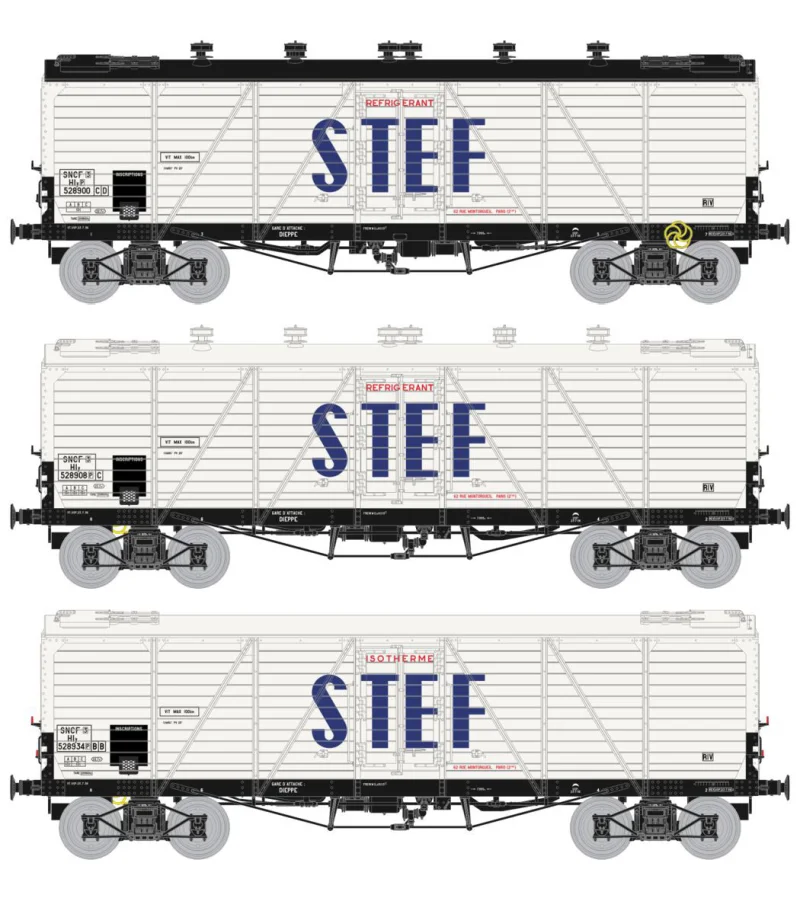
SNCF - Coffret de 3 wagons TP FRIGO
Recommended retail price: N/A
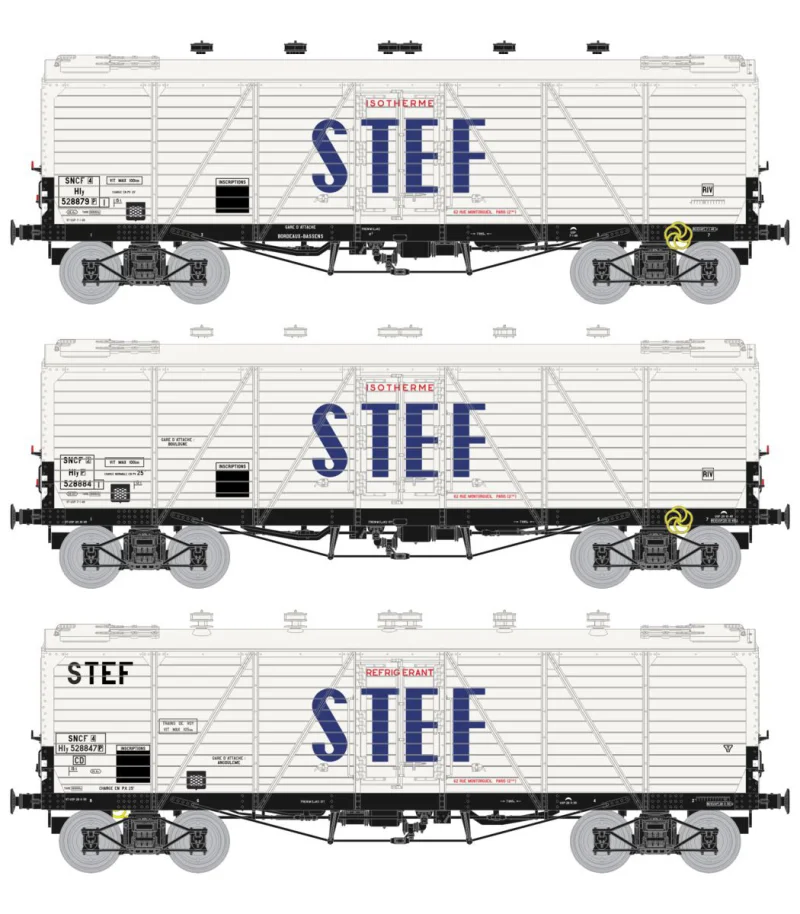
SNCF - Coffret de 3 wagons TP FRIGO
Recommended retail price: N/A
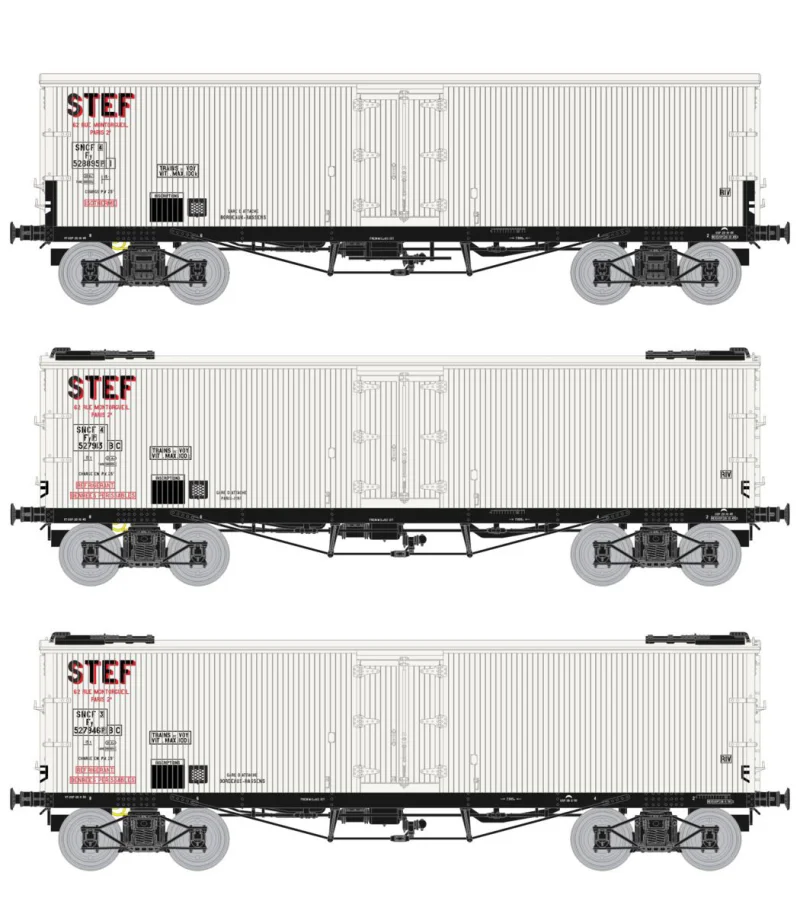
SNCF - Coffret de 3 wagons TP FRIGO
Recommended retail price: N/A
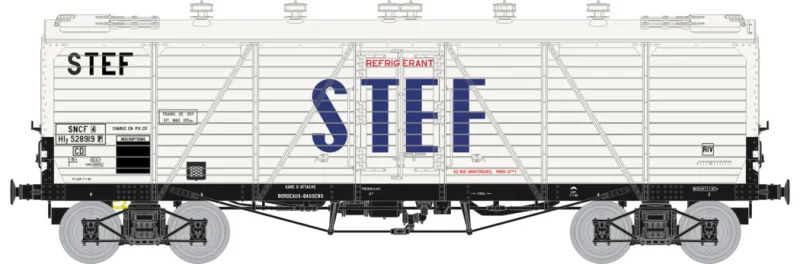
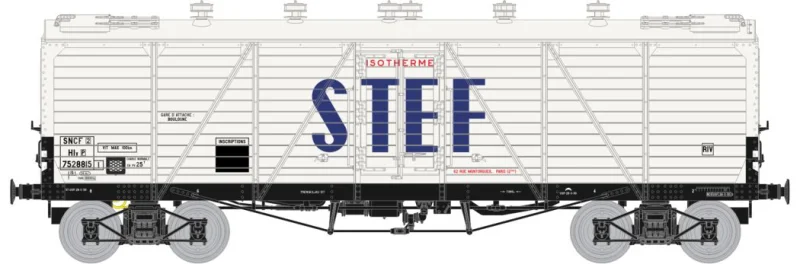
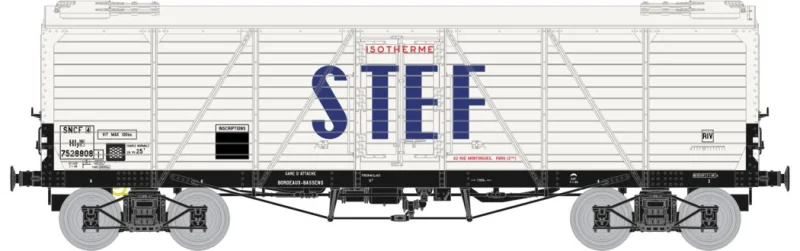
SNCF - Wagon TP FRIGO
Recommended retail price: N/A
Advertising:

The identity card, photos and videos for thousands of railway vehicles all around Europe!
