
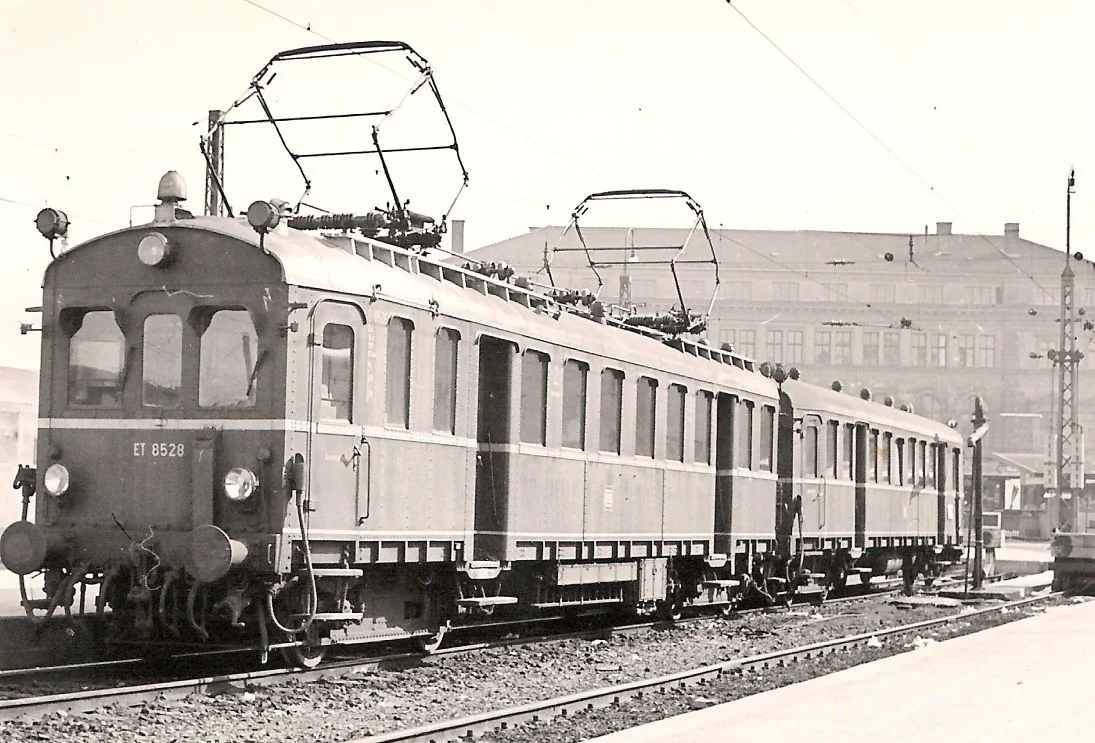
Also known as: BR 485/885 / ET/ES/EB 85 / D4i elT / D4i elS / C3i el
Vehicle type: Electric multiple unit - EMU
Registration country: Germany
Railway companies: DB - Deutsche BundesbahnDRG / DRB - Deutsche Reichsbahn
1924
Following the successful conversions, the Deutsche Reichsbahn ordered 32 newly built railcars based on the same concept. Constructed between 1927 and 1932/33 by Waggonfabrik Fuchs and MAN, with electrical equipment supplied by Brown, Boveri & Cie. (BBC), they were eventually numbered ET 85 05–36. Unlike the four converted prototypes, which retained wooden bodies, the production vehicles were built with steel bodies.
The ET 85 was a single-phase AC electric railcar designed for the German 15 kV 16⅔ Hz overhead system. The powered vehicles had a Bo′2′ axle arrangement, with two traction motors mounted in the powered bogie. Electrical equipment, including the transformer and switchgear, occupied a machinery compartment behind one of the driver’s cabs. The railcars developed a continuous output of approximately 500 kW, with an hourly rating of 550 kW, and normally had a maximum speed of 75 km/h. ET 85 05 and ET 85 09 were temporarily equipped for operation at up to 100 km/h.
The railcars were normally operated with matching ES 85 driving trailers and EB 85 intermediate trailers. A total of 34 driving trailers were built, eventually numbered ES 85 01–34. The original EB 85 intermediate vehicles were converted from 70 three-axle Bavarian passenger coaches and numbered EB 85 01–70. This combination allowed the ET 85 to operate as a push-pull electric train suitable for intensive suburban and regional passenger services.
The first ET 85 railcars were based at München Hbf and initially worked services from Munich towards Starnberg and Herrsching. The class subsequently became closely associated with Munich suburban traffic. After the Second World War, 24 ET 85 railcars were taken over by the Deutsche Bundesbahn. In addition to Munich-area services, they were later used on routes in southern Germany including the Dreiseenbahn and Wehratalbahn in the Black Forest and the Bad Aibling–Feilnbach branch.
Several vehicles underwent temporary or permanent modifications. In 1956, ET 85 05, 11 and 19 received first-class accommodation and were renumbered ET 65 101–103, but the modification and renumbering were reversed in 1960. A more substantial derivative appeared in 1949–1950, when ET 85 13, 14 and 16 were converted for steep-gradient operation and became ET 90 01–03. These vehicles were primarily associated with the Königsseebahn between Berchtesgaden and Königssee and were later designated DB Class 490.
With the introduction of the Deutsche Bundesbahn’s computer-compatible numbering system in 1968, the remaining ET 85 powered cars became Class 485. Their driving trailers were incorporated into Class 885, while the replacement three-axle intermediate trailers were numbered in the 885.8 series. The ET 85 family remained in service until 1977, giving the design a working life of more than half a century from the conversion of the first vehicles.
One complete example of the powered type survives: former ET 85 07, later DB 485 007, together with driving trailer ES 85 15, later 885 615. The vehicles are preserved as representatives of one of the pioneering electric railcar designs used in southern Germany.
Do you have additional informations regarding this vehicle?
Help us writing the history of Class 485/885! Your knowledge is precious for us and the entire community, do not hesitate to share your facts, photos or videos:
Latest update on the 1st of September 2026 at 12:34
Contributor(s): Tudor C.
Advertising:
Class 485/885 - Associated miniature models:
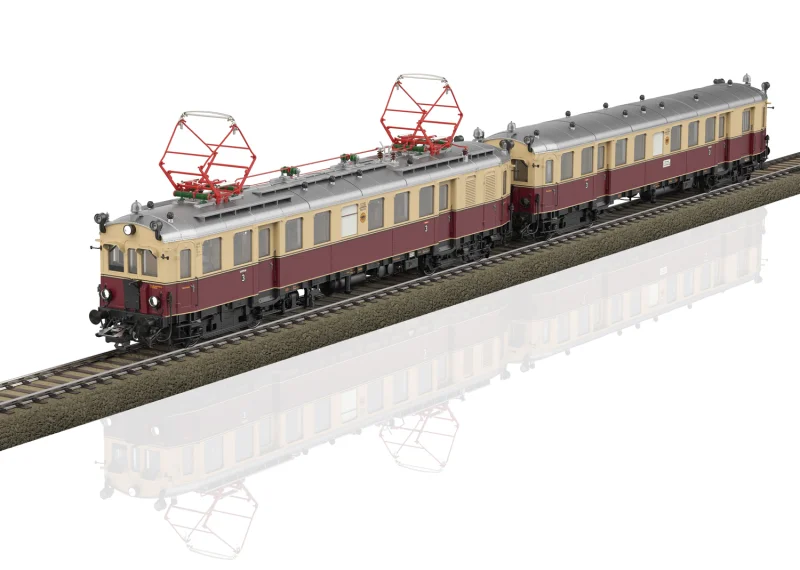
DRG / DRB - Class elT rail car & elS control car
Recommended retail price: 639,00 €
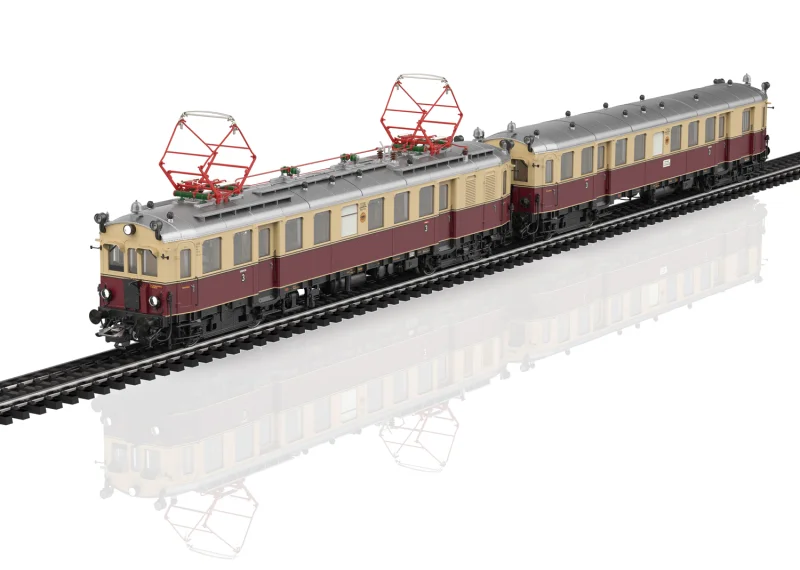
DRG / DRB - Class elT rail car & elS control car
Recommended retail price: 589,90 €
Advertising:

The identity card, photos and videos for thousands of railway vehicles all around Europe!
