
Also known as: BR 270
Vehicle type: Steam locomotive
Registration country: Austria
Railway companies: BBÖ - Bundesbahnen ÖsterreichkkStB - k.k. österreichische Staatsbahnen
1917
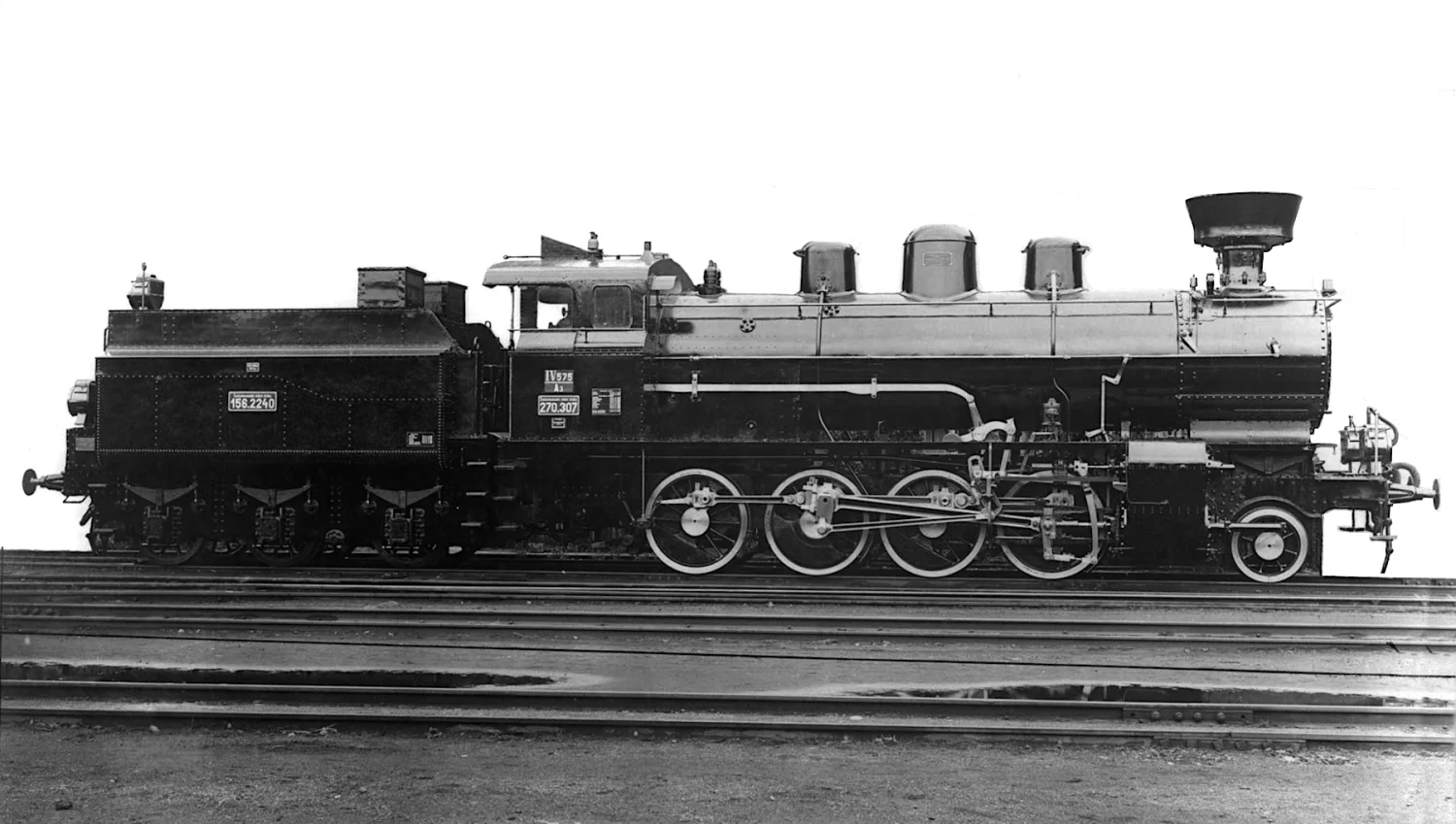
Despite the widespread adoption of superheated steam elsewhere in Europe during the early twentieth century, the Austro-Hungarian railway authorities had continued to favour the relatively simple and robust saturated-steam locomotives. Military requirements played an important role in this preference, as straightforward construction and maintenance were considered particularly advantageous during wartime.
In 1915, Johann Rihosek, who succeeded Karl Gölsdorf as head of locomotive design following his death in 1916, developed a new version of the Class 170 incorporating superheated steam and a two-cylinder simple-expansion engine. The detailed engineering work was undertaken by the Böhmisch-Mährische Maschinenfabrik (BMMF) in Prague.
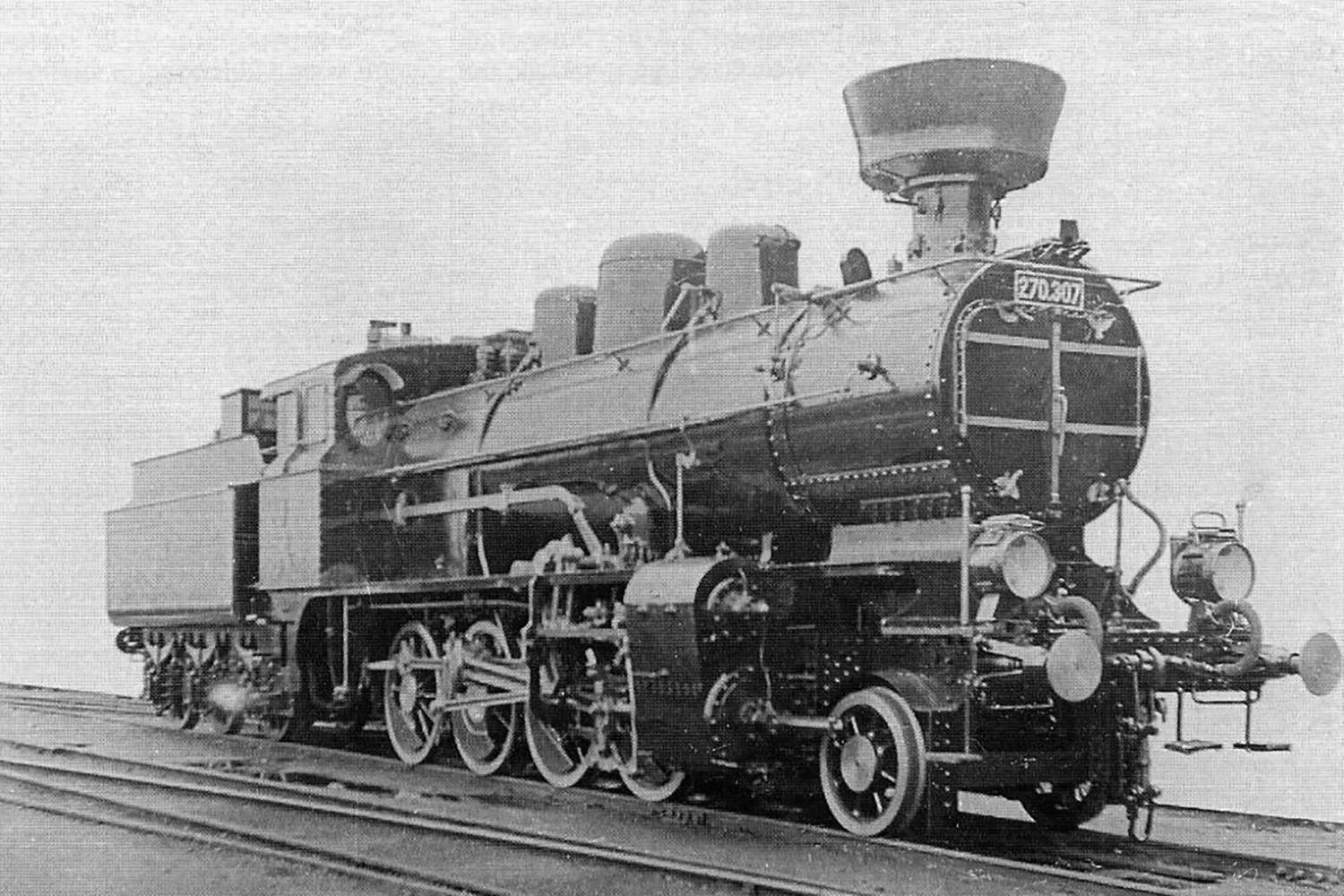
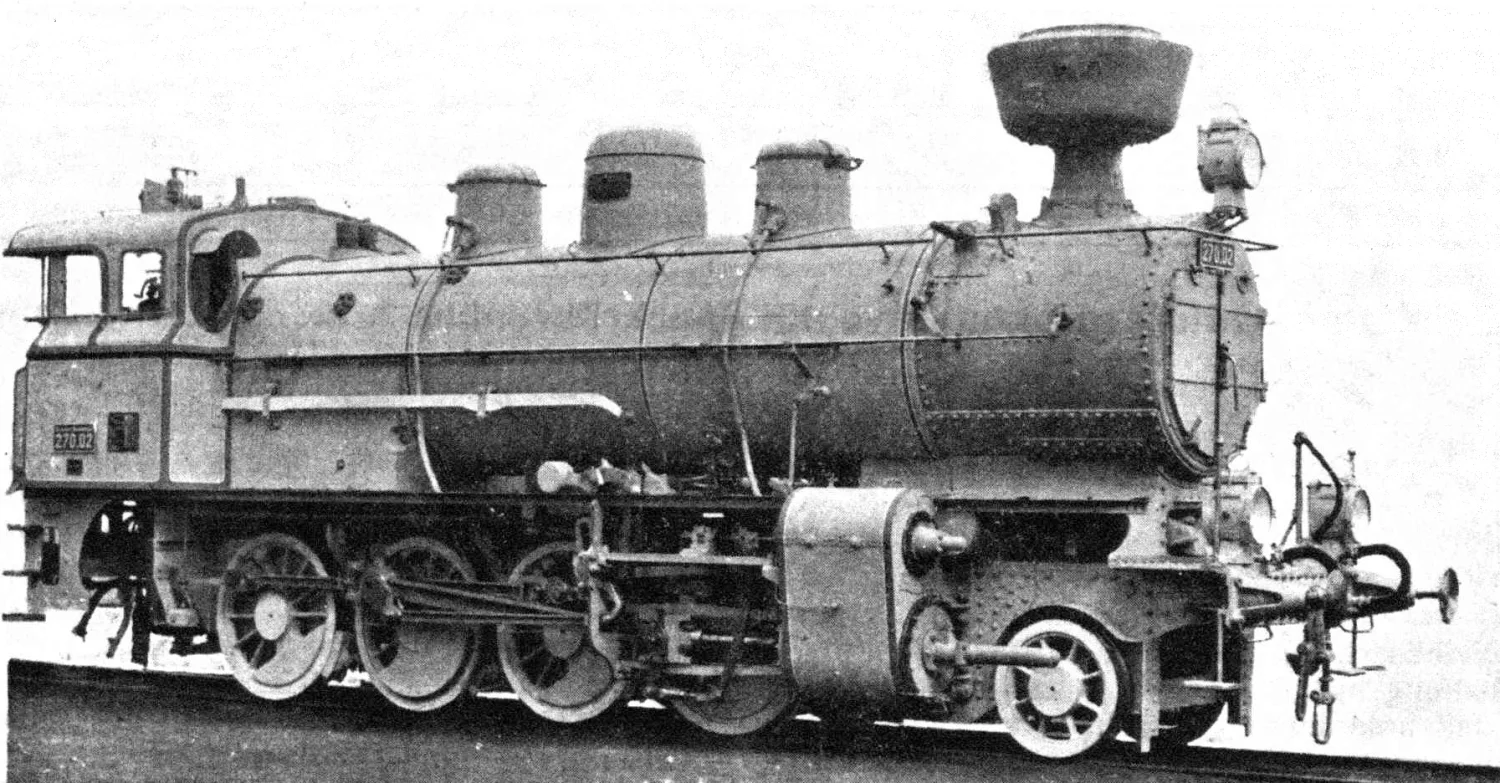
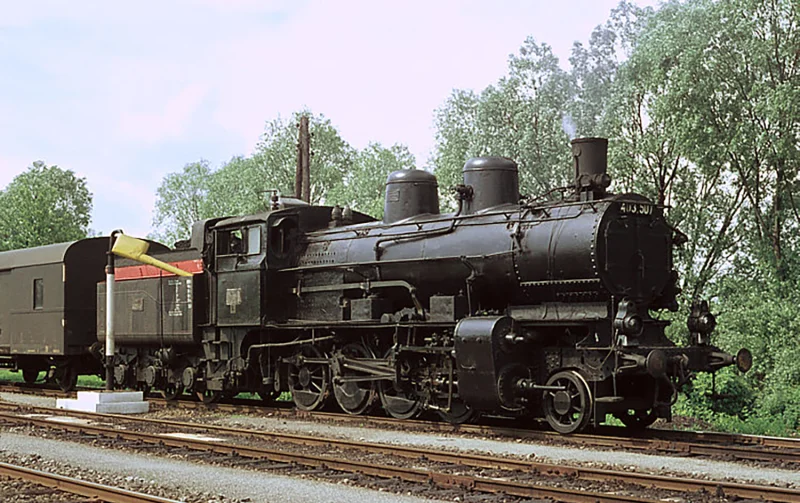
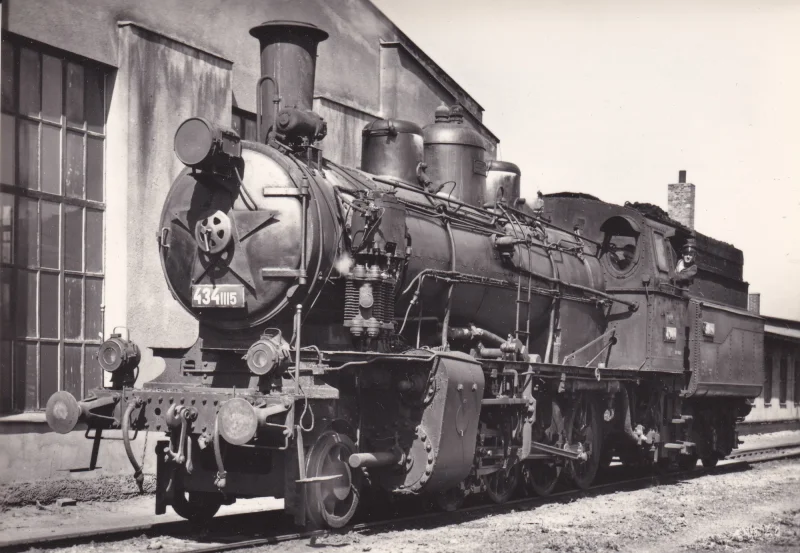
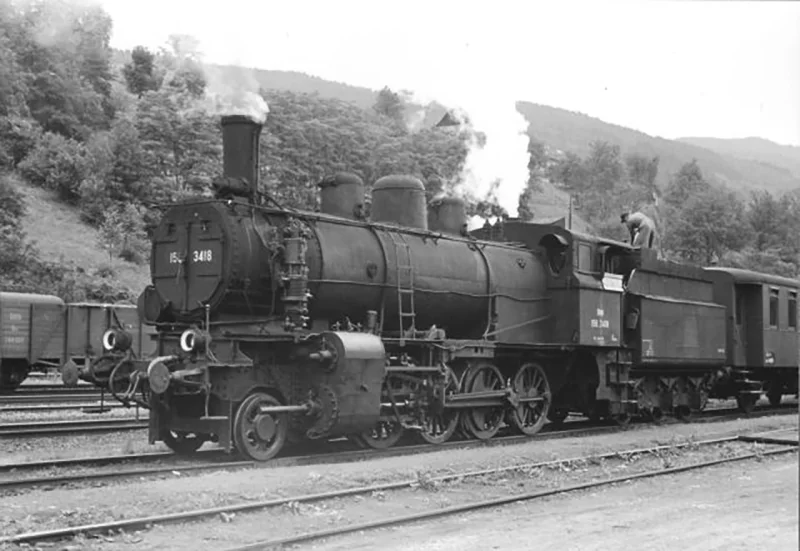
The new Class 270 retained the proven 1′D wheel arrangement and much of the running gear of its predecessor, including the Gölsdorf system of laterally movable coupled axles, which allowed the relatively long wheelbase to negotiate tight curves.
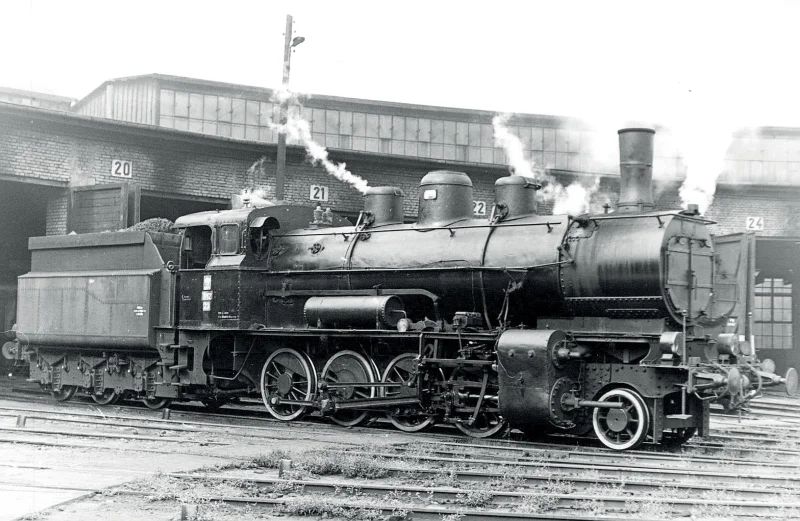
The most significant changes concerned the boiler and steam engine. The saturated-steam arrangement of the Class 170 was replaced by a superheated-steam system, improving thermal efficiency and reducing steam consumption. The two interconnected steam domes of the earlier design were replaced by a single steam dome and two sand domes.
The superheater was deliberately designed with a relatively modest heating surface, reflecting concerns about the ability of domestically produced lubricating oils to withstand higher operating temperatures.
These improvements resulted in substantially better performance than the original Class 170. The new locomotives were reportedly capable of hauling trains weighing up to 1'220 tonnes at 60 km/h, demonstrating the considerable potential of the modernised design.
Production began during the First World War, but shortages of materials and industrial capacity delayed deliveries. The first seven locomotives were completed by BMMF in 1917, followed by additional examples during 1918.
By the end of the war, 27 locomotives had been constructed.
The dissolution of the Austro-Hungarian Empire in November 1918 fundamentally changed the future of the class. The railway network of the former empire was divided among several newly established or enlarged states, and the locomotives already in service were distributed between the successor railway administrations.
Although the original kkStB ceased to exist, the Class 270 design continued to be developed and manufactured after the war.
1918
Despite the severe economic difficulties faced by post-war Austria, construction of the Class 270 continued. The new Austrian railway network still required powerful freight locomotives, and the proven design provided a practical solution without the need to develop an entirely new type.
Additional locomotives were consequently built between 1920 and 1922, principally by the Lokomotivfabrik Floridsdorf in Vienna. Together with the locomotives inherited from the former kkStB, these deliveries eventually brought the Austrian Class 270 fleet to 100 locomotives.
The Austrian numbering was not continuous. The locomotives occupied various numbers within the 270 series, rather than forming a simple sequence of 270.01 - 270.100. This reflected both the complicated circumstances surrounding the collapse of the Austro-Hungarian Empire and the allocation of locomotives and outstanding production orders among its successor states.
During the interwar period, the Class 270 became an established part of the BBÖ freight locomotive fleet. The locomotives were used principally for freight traffic, where their combination of substantial tractive effort and relatively moderate axle load made them particularly useful on the Austrian network.
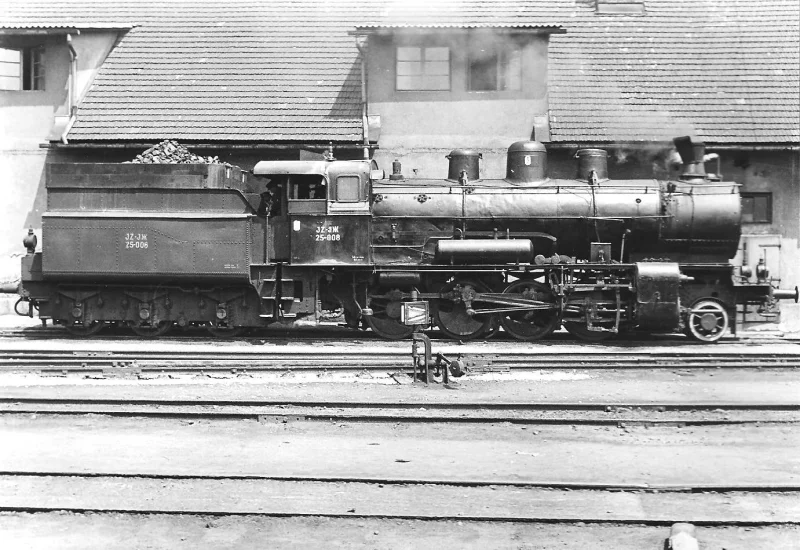
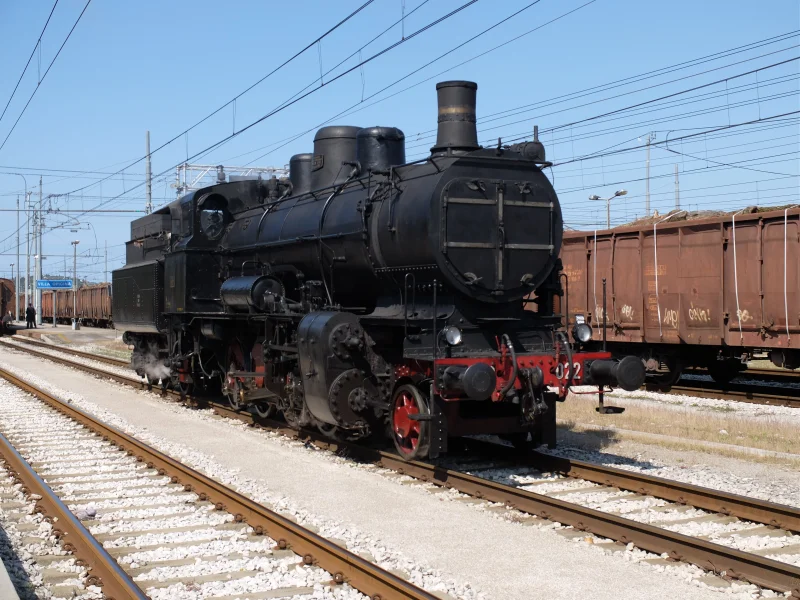
At the same time, the Class 270 design developed into a much larger international locomotive family. Locomotives based on the Austrian design were built or operated by several of the successor states of Austria-Hungary, where they received new classifications and developed their own individual service histories.
The Austrian Class 270 designation remained unchanged throughout the BBÖ period. This ended following the annexation of Austria by Nazi Germany in March 1938. The BBÖ was absorbed into the Deutsche Reichsbahn, which incorporated all 100 Austrian Class 270 locomotives into its numbering system. They were subsequently classified as Deutsche Reichsbahn Class 56.34-35 and numbered 56.3401 - 3500.
Do you have additional informations regarding this vehicle?
Help us writing the history of Class 270! Your knowledge is precious for us and the entire community, do not hesitate to share your facts, photos or videos:
Latest update on the 10th of October 2026 at 12:04
Contributor(s): Tudor C.
Advertising:
Class 270 - Related rolling stock from category "kkStB - Class 270 locomotive family":


Advertising:

The identity card, photos and videos for thousands of railway vehicles all around Europe!
