
1918
Following the dissolution of Austria-Hungary in 1918, the newly
established Kingdom of Serbs, Croats and Slovenes began
reorganising the railway networks inherited from the former
Austro-Hungarian Empire. Among the locomotives incorporated into
the railway administration’s fleet were several examples of the
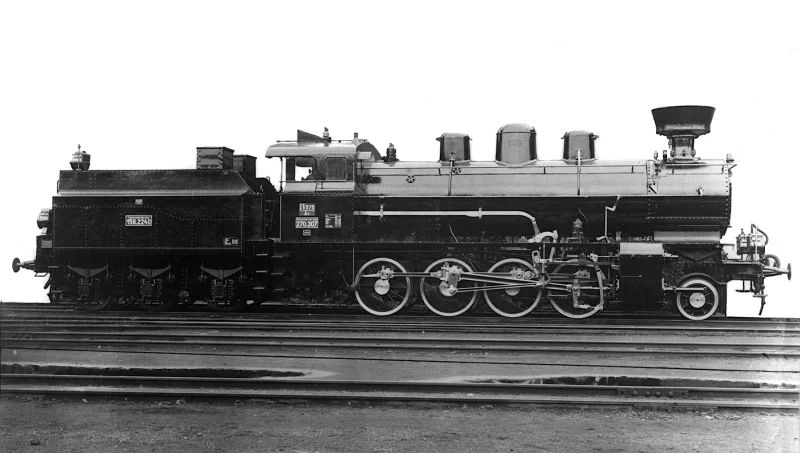
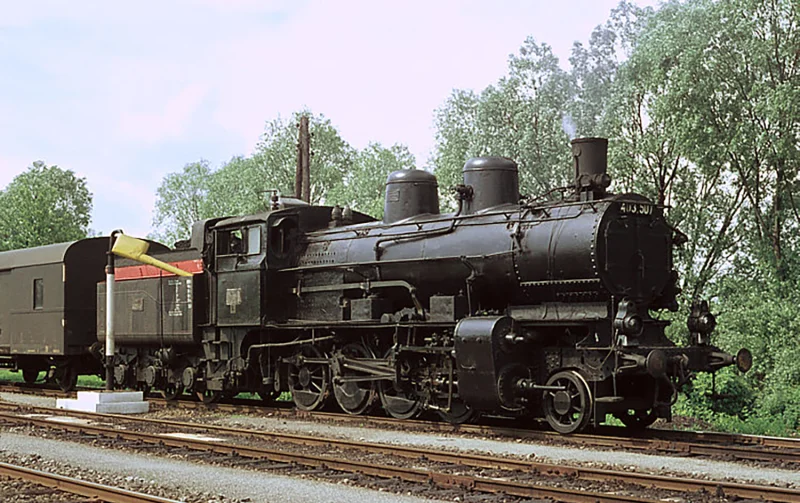
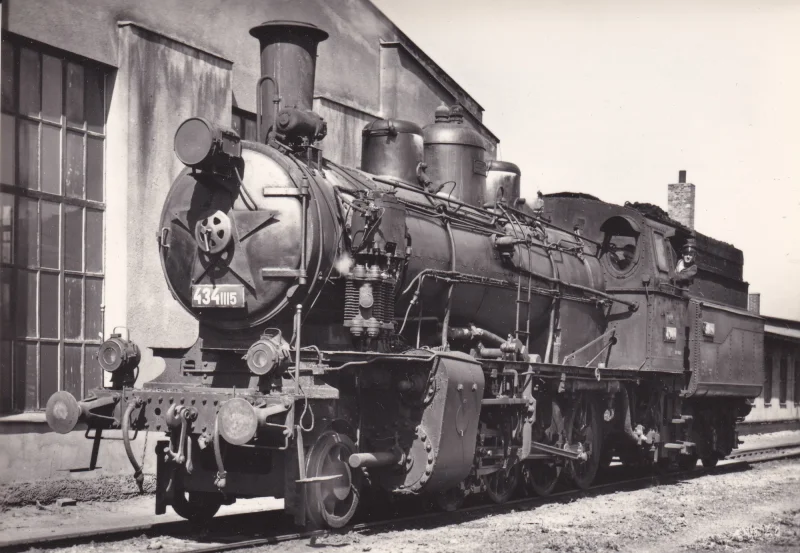
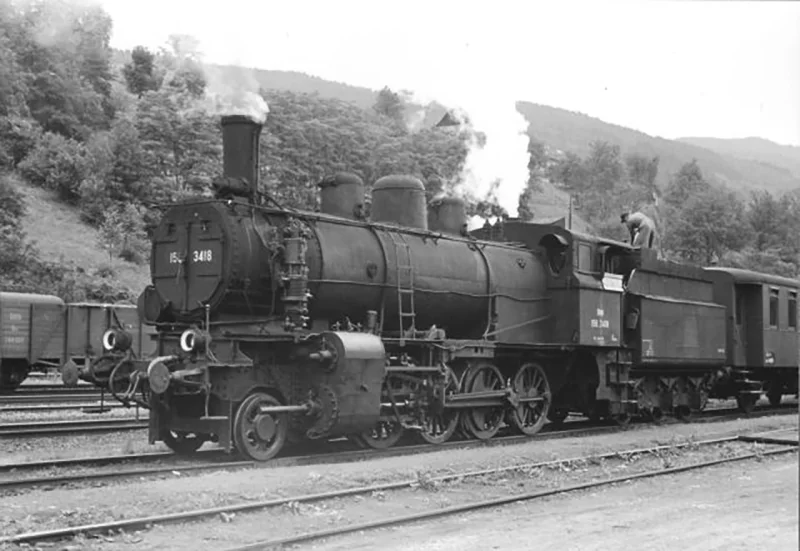
Austrian kkStB Class 270,
a modern superheated freight locomotive developed during the final
years of the monarchy.
The original Yugoslav fleet consisted of nine locomotives, subsequently numbered 270.97, 270.100 - 270.102 and 270.201 - 270.205 under the railway administration of the Kingdom of Serbs, Croats and Slovenes (SHS). Four locomotives were manufactured by the Lokomotivfabrik Floridsdorf in Vienna in 1919 (270.97 and 270.100 - 270.102), while another five were built by the Wiener Neustädter Lokomotivfabrik between 1922 and 1923 (270.201 - 270.205).
Unlike Poland and Czechoslovakia, Yugoslavia did not undertake large-scale domestic production of the Class 270 design. Instead, the relatively small original fleet remained in service alongside other locomotive types inherited or acquired during the interwar period.
The original Yugoslav fleet consisted of nine locomotives, subsequently numbered 270.97, 270.100 - 270.102 and 270.201 - 270.205 under the railway administration of the Kingdom of Serbs, Croats and Slovenes (SHS). Four locomotives were manufactured by the Lokomotivfabrik Floridsdorf in Vienna in 1919 (270.97 and 270.100 - 270.102), while another five were built by the Wiener Neustädter Lokomotivfabrik between 1922 and 1923 (270.201 - 270.205).
Unlike Poland and Czechoslovakia, Yugoslavia did not undertake large-scale domestic production of the Class 270 design. Instead, the relatively small original fleet remained in service alongside other locomotive types inherited or acquired during the interwar period.
1933
In 1933, following the introduction of a new locomotive
classification system by the Yugoslav State Railways
(Jugoslovenske državne železnice,
JDŽ), the nine locomotives were
reclassified as JDŽ Class 25,
receiving the numbers 25.001 - 25.009.
1941
The outbreak of the Second World War and the subsequent invasion of
Yugoslavia in April 1941 resulted in the division of the railway
network between Germany, Italy and other occupying powers.
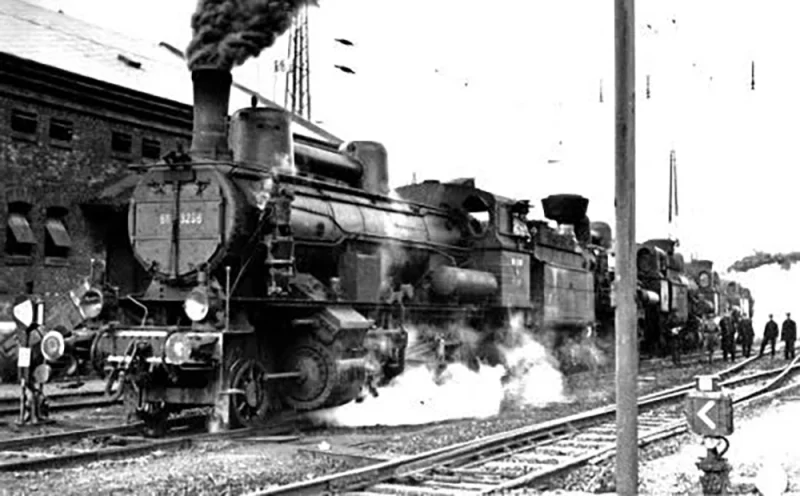
Several Class 25 locomotives were incorporated into the Deutsche Reichsbahn fleet. Four locomotives received the German numbers 56.3534 - 56.3537, continuing the numbering sequence already used for former Austrian and Polish locomotives belonging to the kkStB Class 270 family.
Other locomotives came under Italian control and continued operating within the railway territories administered by the Ferrovie dello Stato.
Several Class 25 locomotives were incorporated into the Deutsche Reichsbahn fleet. Four locomotives received the German numbers 56.3534 - 56.3537, continuing the numbering sequence already used for former Austrian and Polish locomotives belonging to the kkStB Class 270 family.
Other locomotives came under Italian control and continued operating within the railway territories administered by the Ferrovie dello Stato.
1945
Following the end of the war in 1945, the Yugoslav railway
administration began rebuilding its locomotive fleet. The
Class 25 group was considerably expanded through
the acquisition of locomotives originating from several other
European railway administrations.
Six former Austrian BBÖ Class 270 locomotives, which had subsequently been incorporated into the Deutsche Reichsbahn as Class 56.34-35, entered the Yugoslav fleet. They received the numbers 25.010 - 25.015.
The most substantial addition consisted of 19 former Italian FS Class 728 locomotives, transferred to Yugoslavia following the Second World War. They were incorporated into the Yugoslav Class 25 fleet under numbers distributed between 25.016 and 25.034.
One additional locomotive originated from Poland. Former PKP Tr12-62, subsequently numbered DRB 56.3525, entered Yugoslav service as JDŽ 25.027. However, its Yugoslav career was relatively short, as the locomotive was returned to Poland on 12 May 1949, where it became PKP Tr12-35.
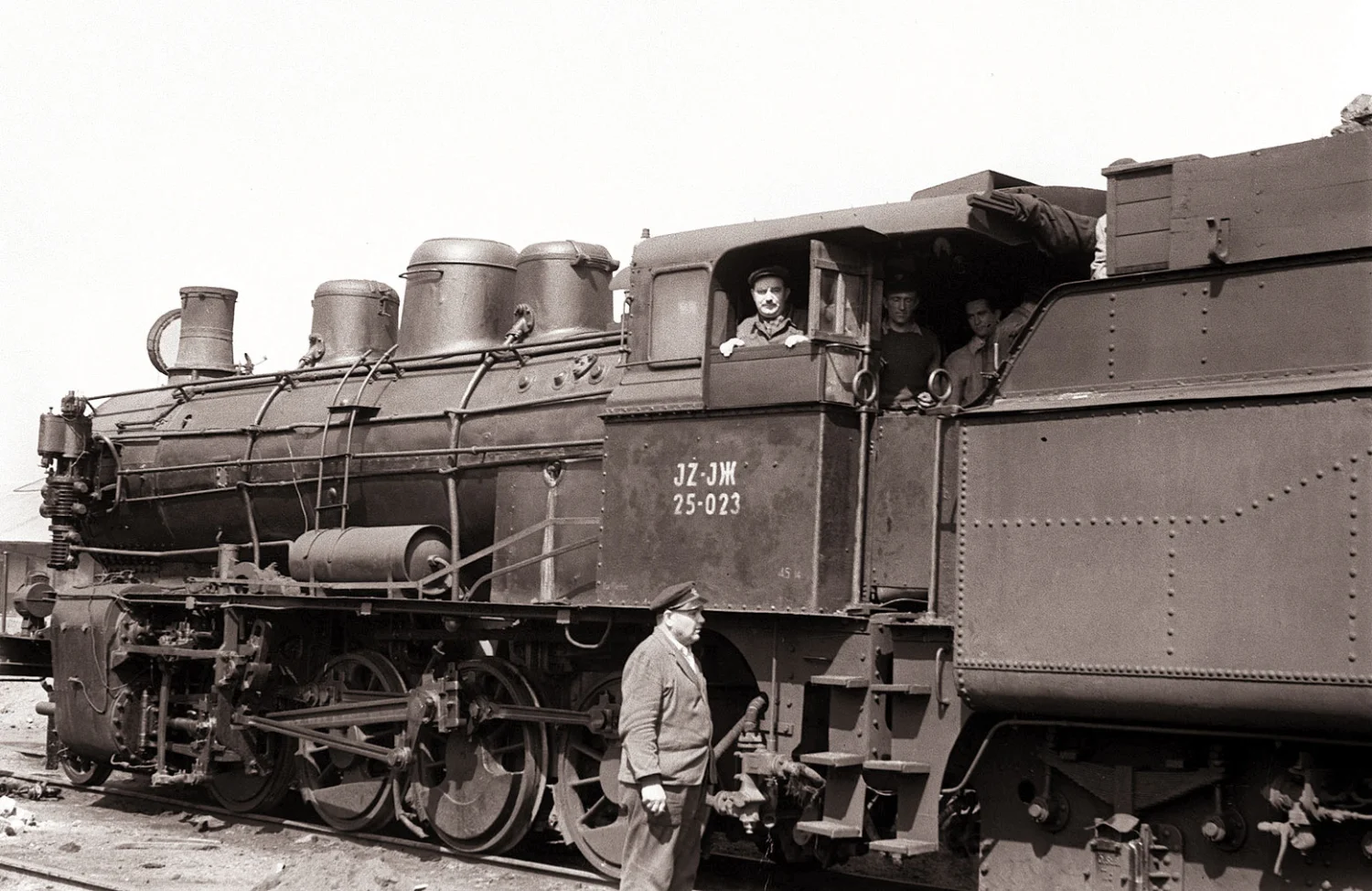
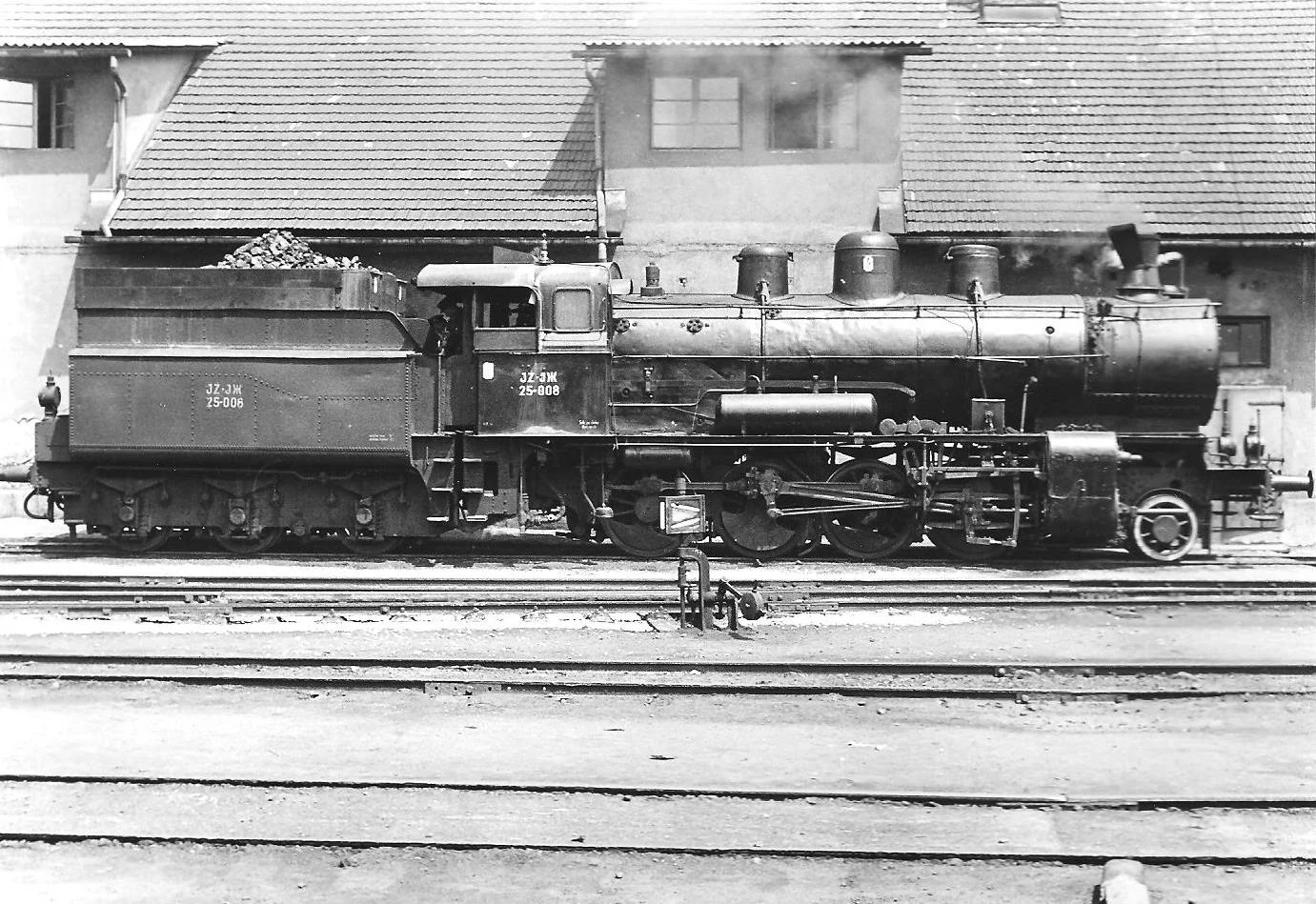
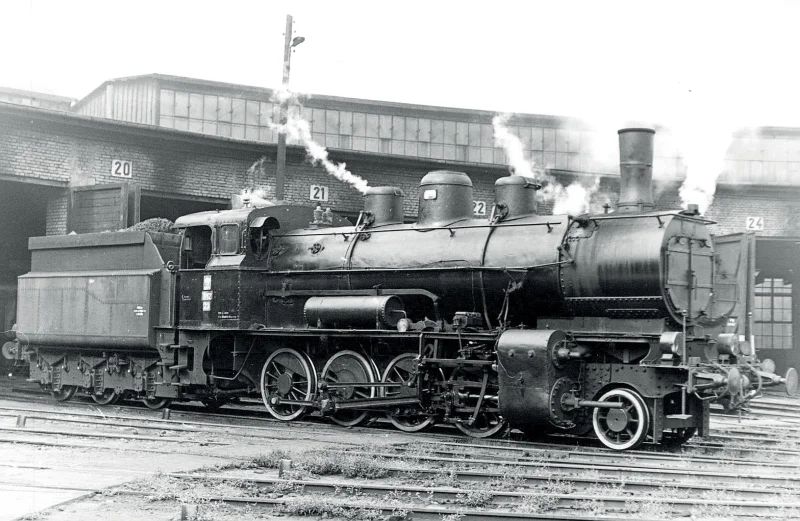
They were employed primarily on freight services, particularly on secondary railway lines in Slovenia and other parts of Yugoslavia. Their relatively moderate axle load made them suitable for routes where heavier locomotives could not operate.
As diesel and electric traction progressively replaced steam locomotives, the remaining Class 25 locomotives were gradually withdrawn from regular service.
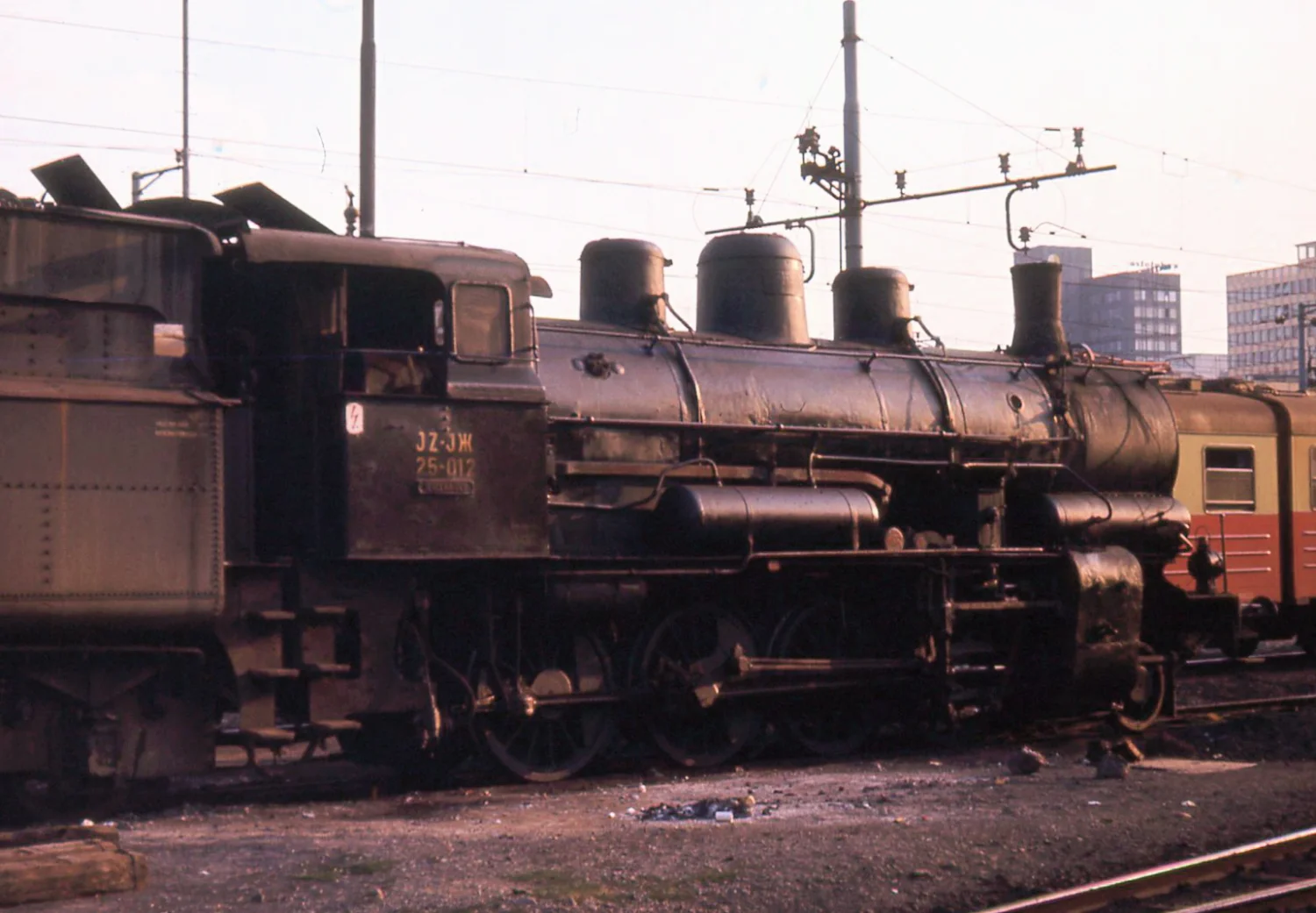
Several examples survived into preservation, particularly in Slovenia. Among them, 25.002, 25.005, 25.018, 25.019 and 25.026 have been preserved or retained as historical railway vehicles. Locomotive 25.019 is particularly significant, having hauled the last regularly scheduled steam-hauled train in Slovenia. Another notable survivor is 25.026, originally Austrian BBÖ 270.164 and subsequently Italian FS 728.028, which was restored for operation on Slovenian heritage railways.
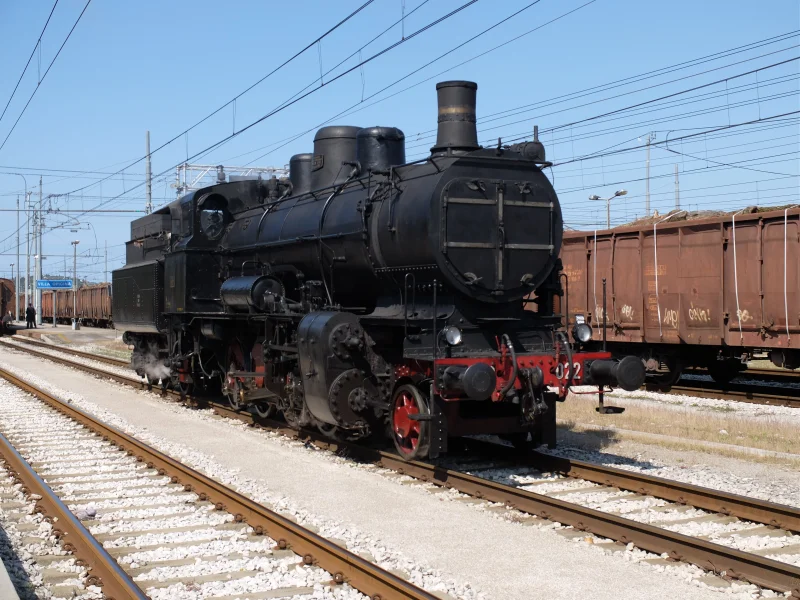
Former JŽ 25.022, originally Italian FS 728.022, was returned to Italy in 1980 and subsequently restored to operational condition, becoming the sole preserved representative of the Italian Class 728.
Six former Austrian BBÖ Class 270 locomotives, which had subsequently been incorporated into the Deutsche Reichsbahn as Class 56.34-35, entered the Yugoslav fleet. They received the numbers 25.010 - 25.015.
The most substantial addition consisted of 19 former Italian FS Class 728 locomotives, transferred to Yugoslavia following the Second World War. They were incorporated into the Yugoslav Class 25 fleet under numbers distributed between 25.016 and 25.034.
One additional locomotive originated from Poland. Former PKP Tr12-62, subsequently numbered DRB 56.3525, entered Yugoslav service as JDŽ 25.027. However, its Yugoslav career was relatively short, as the locomotive was returned to Poland on 12 May 1949, where it became PKP Tr12-35.
They were employed primarily on freight services, particularly on secondary railway lines in Slovenia and other parts of Yugoslavia. Their relatively moderate axle load made them suitable for routes where heavier locomotives could not operate.
As diesel and electric traction progressively replaced steam locomotives, the remaining Class 25 locomotives were gradually withdrawn from regular service.
Several examples survived into preservation, particularly in Slovenia. Among them, 25.002, 25.005, 25.018, 25.019 and 25.026 have been preserved or retained as historical railway vehicles. Locomotive 25.019 is particularly significant, having hauled the last regularly scheduled steam-hauled train in Slovenia. Another notable survivor is 25.026, originally Austrian BBÖ 270.164 and subsequently Italian FS 728.028, which was restored for operation on Slovenian heritage railways.
Former JŽ 25.022, originally Italian FS 728.022, was returned to Italy in 1980 and subsequently restored to operational condition, becoming the sole preserved representative of the Italian Class 728.
Do you have additional informations regarding this vehicle?
Help us writing the history of Class 25! Your knowledge is precious for us and the entire community, do not hesitate to share your facts, photos or videos:
Latest update on the 10th of October 2026 at 18:55
Contributor(s): Tudor C.
Advertising:


Advertising:

The identity card, photos and videos for thousands of railway vehicles all around Europe!
Copyright © 2026 T&H Services - All rights reserved
Powered by
