

Scale:
Markings:
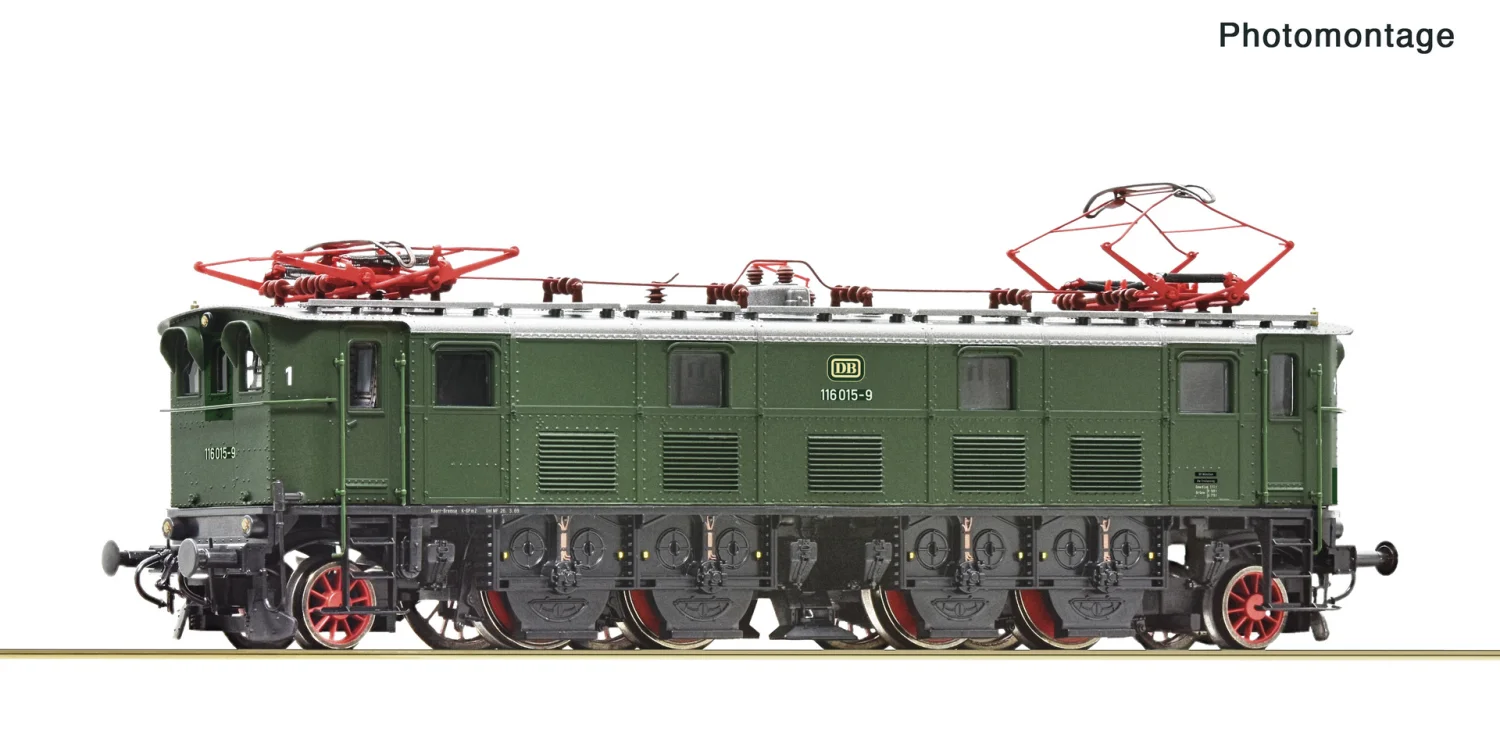
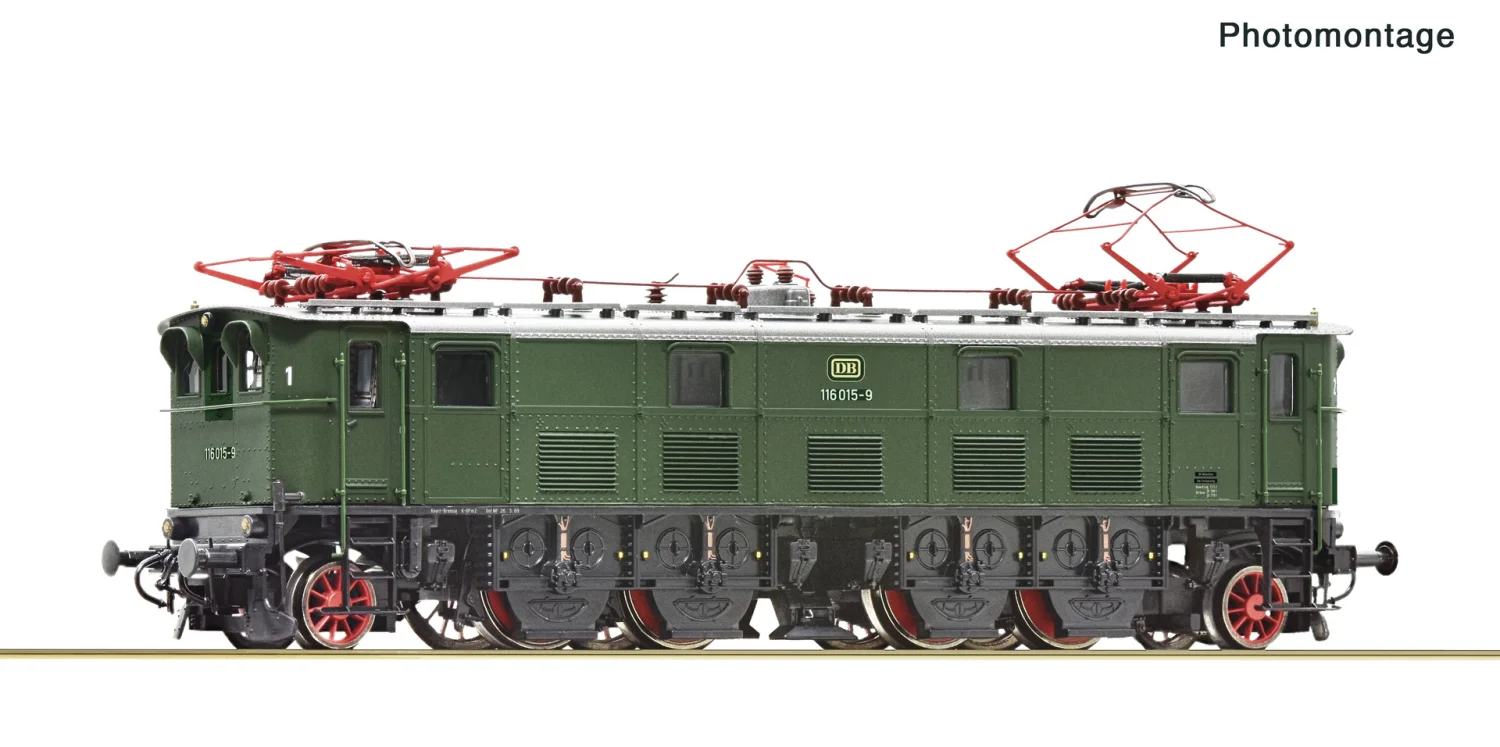
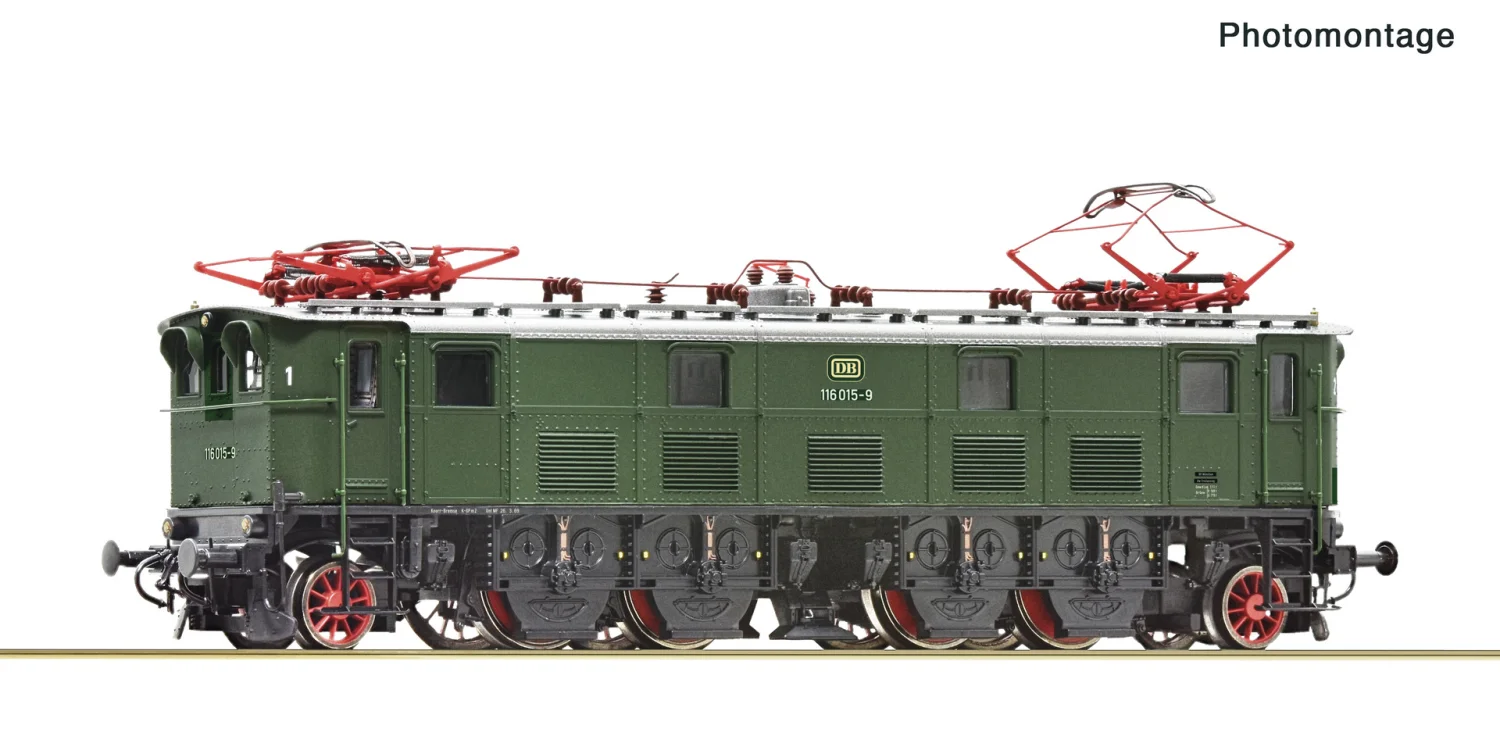
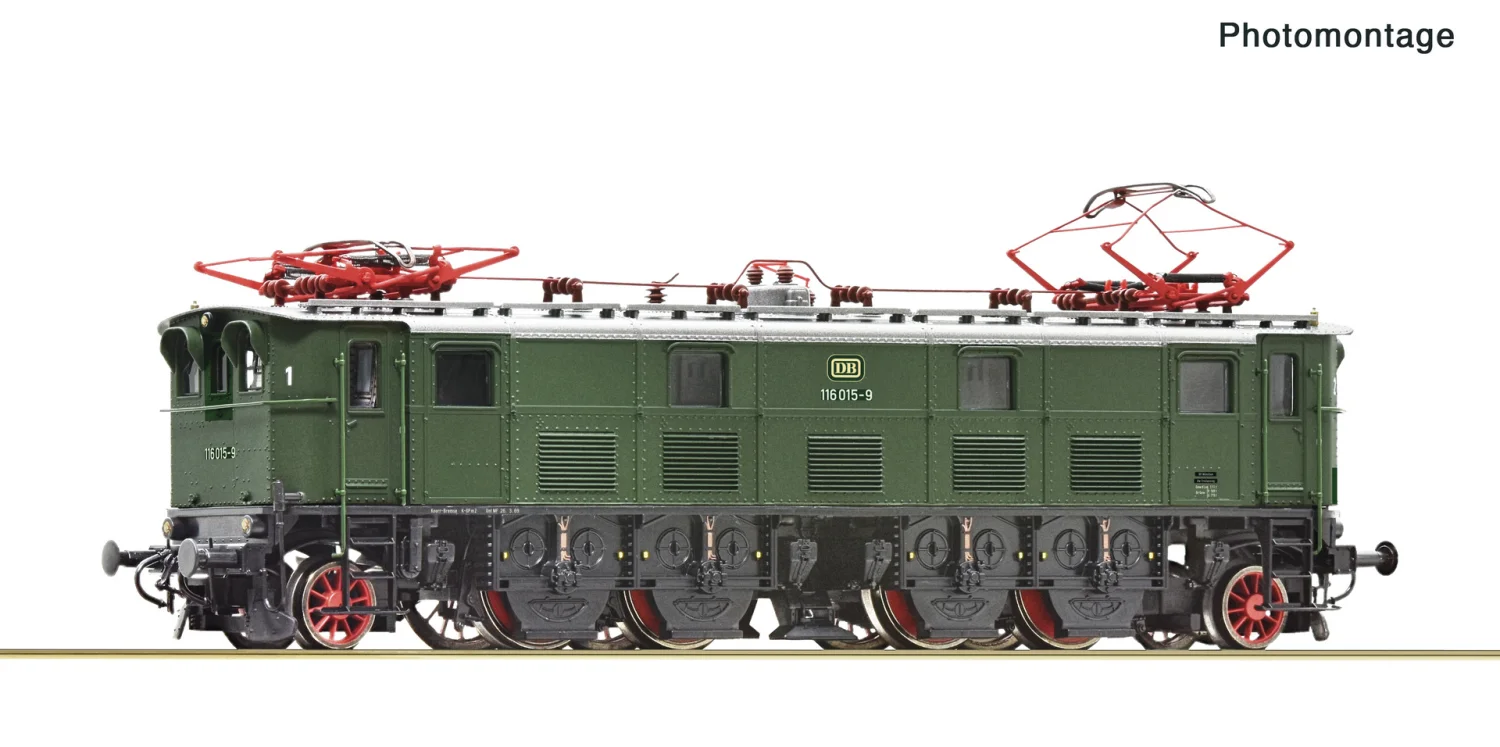
■ Paintwork in faded operational condition with touch-up spots
■ Finely detailed model with separately applied plug-in parts
■ Authentic replica of the Buchli drive unit
■ Printed engine room and driver's cab
■ Driver's cab and engine room lighting installed; can be switched in digital mode
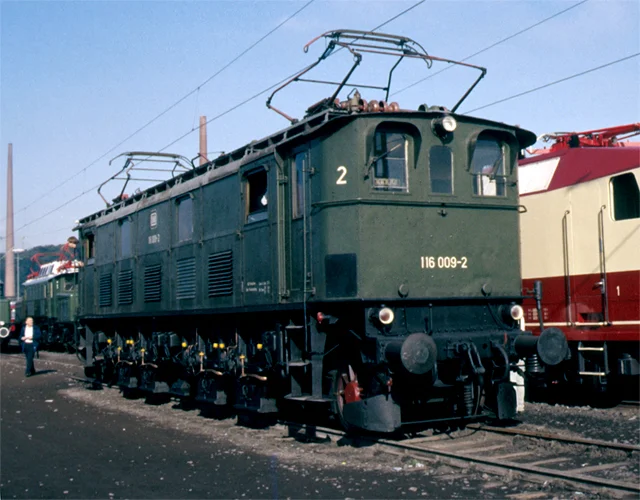
The E 16 class was the only German locomotive type to feature a Buchli drive. After an extended tender phase, the Gruppenverwaltung Bayern of the Deutsche Reichsbahn initially ordered one electric express locomotive from BBC in 1923 for its main lines slated for electrification. Following an intensive testing period, a further batch of 16 units was commissioned to keep the designation ES 1.
These locomotives, featuring a 1’Do1’ wheel arrangement, were powered by the single-sided, single-axle drive developed by Swiss engineer Jakob Buchli, which had already proven itself in the SBB Ae 3/6 I series.
The two production batches, which differed in the design of the steering bogies, were delivered in 1926 and 1927. The maximum speed was 110 km/h (later increased to 120 km/h), with an hourly rating of 2,340 kW. Thanks to their good performance, a further seven units were ordered, entering service as E 16 11 to 17 in 1928 and 1929. These later units were fitted with more powerful traction motors, increasing the hourly rating to 2,580 kW.
To meet the requirements of the Munich–Stuttgart route, four modified versions were built in 1932 and 1933, designated E 16.1. These units differed significantly from the E 16 01-17, most notably by the larger inbuilt transformers housed in the roof area. Their hourly rating was increased to 2,944 kW.
During their 52 years of service, the class, redesignated as E 16 under the new numbering system and later as 116 in 1968, proved highly reliable, despite the complex maintenance required by the Buchli drive. The locomotives were known for their exceptionally smooth running.
In their early years, the E 16s were assigned to prestigious express trains departing from Munich, and throughout their career, they regularly hauled express and fast trains in Bavaria and to Austria. At their peak, they were entrusted with three F-Zug (premium express) services, including the famous F 5/6 Orient Express, as well as 42 D-Zug pairs (limited-stop services).
At the end of 1958, the Deutsche Bundesbahn reassigned all E 16 locomotives to the Freilassing depot, where they received exceptional care and maintenance, allowing them to remain in front-line service until the 1970s. Scheduled service with this class ended in 1978.
FREILASSING EDITION
In the coming years, selected locomotive classes that once operated from the historic Freilassing railway depot will be reproduced under the exclusive ‘Freilassing Edition’ label. In 1905, the first locomotives, still steam-powered at the time, arrived at the engine shed, which had 20 tracks. Around two decades later, an electric locomotive workshop was added, with several other buildings constructed in the subsequent years.
ROCO also shares a special connection with the Bavarian town of Freilassing, as this is where the company established its first German sales office.
Look forward to a range of authentically detailed models in this special edition, inspired by the history and engineering excellence of Freilassing.
Available article numbers:




Advertising:

The identity card, photos and videos for thousands of railway vehicles all around Europe!
