



Scale:
Markings:
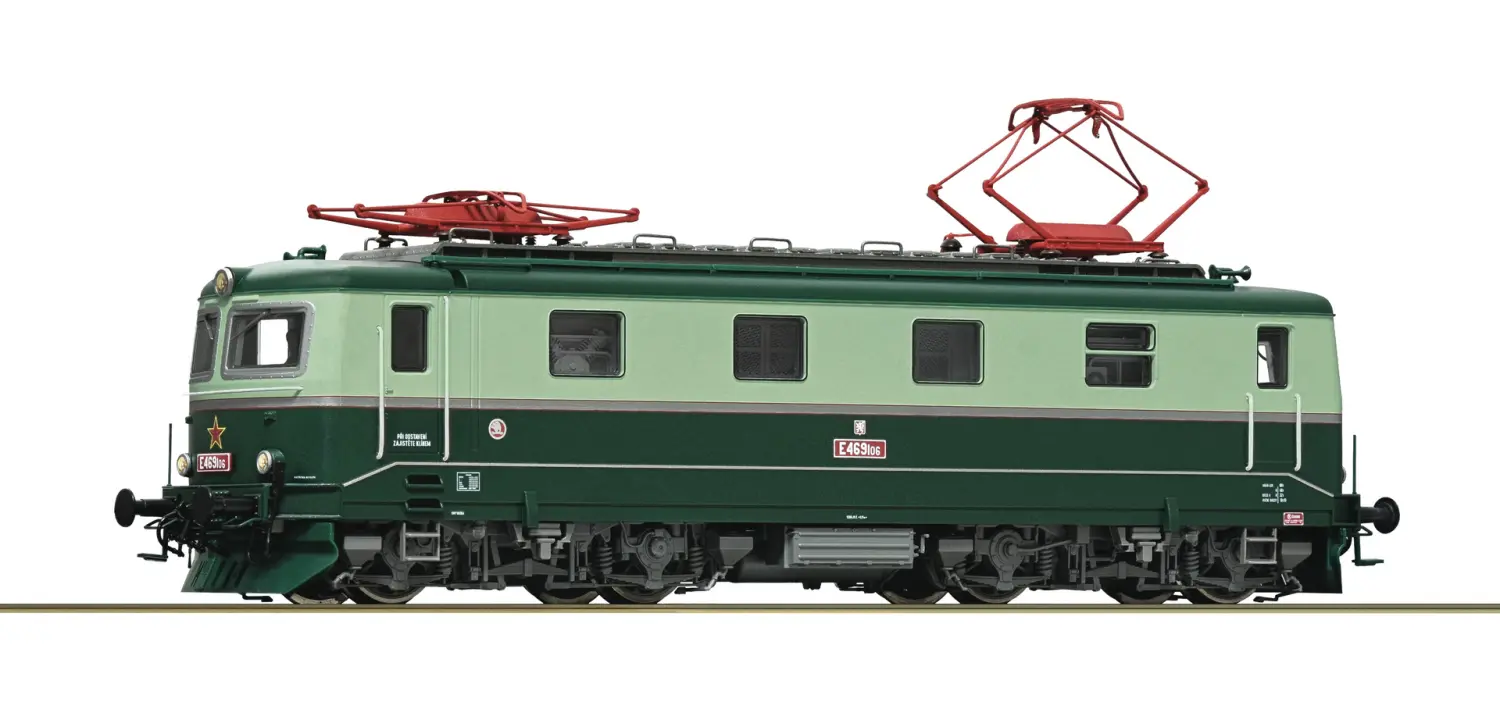
Add■ Design of Skoda factory type 43E
■ Design in delivery state
■ Locomotive signs supplied as etched parts
■ Finely-detailed design of the bogies as well as the spoked wheels
■ Fine metal wheels with low wheel flanges
■ Completely newly developed pantograph with innovative fastening
■ Switchable driver’s cab and engine room lighting and individually switchable headlight or tail light
In the early 1960s, the former Czechoslovak State Railways (CSD) needed a new, powerful electric freight locomotives for the 3 kV direct current system in the northern and eastern part of the country. Experience with the E 499.0 and E 499.1 classes – originally developed as universal locomotives – showed that they could be better utilised in passenger service.
Locomotive E 499.157 was therefore modified during production for use in freight service and designated the E 469.001. This locomotive had the same power but was equipped with a modified wheelset gearbox by the manufacturer. The service weight was also raised to 88 tonnes by a ballast weight. The series machines had a modified locomotive body. Unlike the E 499.0 with six circular windows per side section, the locomotives of the E 499.1 and E 469.1 classes had four angular windows installed. With a continuous output of 2,032 kW, they were able to achieve a maximum speed of 90 km/h. A total of 85 Skoda locomotives were delivered to the Czechoslovak State Railways.
The locomotives were mainly used for hauling freight trains on main lines with low gradients. Their preferred use was as coal block trains on the lines from the North Bohemian lignite basin to the east, but they were also used in Slovakia from the 1960s to the 1990s. As they were derived from the 499.1 class, the machines had electric train heating, meaning they could also be used with passenger trains. The main reason they were not often used in front of passenger trains was their low maximum speed. Most electrified lines had been designed for a maximum line speed of 100 or 120 km/h since the 1960s. That means the locomotives of the E 469.1 class were too slow for passenger trains. However, they could also be seen on selected routes in passenger service.
In 1988, the series designation E 469.1 was changed to 121. Some vehicles also went to the Slovakian railway company ZSSK. Several vehicles were modernised and acquired by private operators.
Available article numbers:





Advertising:

The identity card, photos and videos for thousands of railway vehicles all around Europe!
