

Source: John Stein
1969
Extensive testing proved that Bo’Bo’Bo’ locomotives with six driven axles on three two-axle bogies exerted less stress on the track and enabled higher speeds, despite their more complex design. As a result, four prototypes were ordered in 1969.
The new locomotive — later designated Re 6/6 — was jointly developed by SLM and BBC.
The essential design elements were based on the Re 4/4II / Re 4/4III series. However, the first two prototypes — 11601 and 11602 — featured a two-part articulated body with silent blocks, similar to the RhB Ge 6/6II 701 - 707. This allowed vertical articulation for better weight compensation over irregular track, while maintaining horizontal rigidity. The central bogie could shift laterally and was coupled to the end bogies via transverse links.
In contrast, the second pair — Re 6/3 11603 and 11604 — were built with a monobloc body and were initially equipped with pneumatic suspension instead of traditional helical springs.
Upon delivery, all four locomotives appeared in the classic green livery of SBB CFF FFS.
1972
This testing phase involves a comprehensive evaluation of the locomotives' performance and capabilities. Once all measurements are completed, their use is authorized in January 1973 for the category of trains R, which are designed to operate at a curved speed of 140 km/h. Following this authorization, the locomotives are officially put into service.
The two locomotives are assigned to the Erstfeld depot and are utilized for rapid train services between Zurich and Chiasso, as well as on the routes Bâle - Lucerne - Chiasso. They also serve as the motive power for the night rapid service from Bâte to Chiasso and for freight trains operating between Lucerne and Chiasso, as well as between Erstfeld and Chiasso. With a maximum speed of 140 km/h, these locomotives are additionally employed on the Simplon line for the transportation of rapid trains between Domodossola and Vallorbe, and they also pull freight trains along this route.
1973
1973
May 26
1982
1990
2000
Subsequently, the prototype locomotives were also allocated to SBB Cargo.
2015
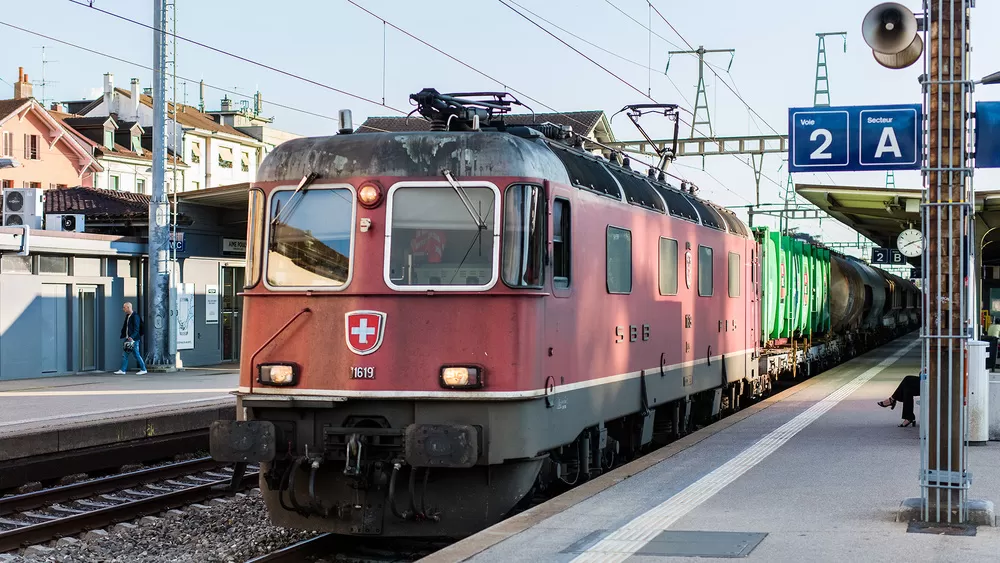
After 46 years of service and an average mileage of 5.97 million kilometers, locomotive 11601 was the first to be decommissioned on August 6th, 2015. Locomotive 11602 followed, being taken out of service on May 11th, 2016.
In 2019, both locomotives are sold to an association.
Do you have additional informations regarding this vehicle?
Help us writing the history of Re 6/6 11601 - 11602! Your knowledge is precious for us and the entire community, do not hesitate to share your facts, photos or videos:
Latest update on the 3rd of December 2025 at 20:31
Contributor(s): Tudor C.
Advertising:
Re 6/6 11601 - 11602 - Related rolling stock from category "SBB CFF FFS - Re 6/6 electric locomotives":
Re 6/6 11601 - 11602 - Associated miniature models:
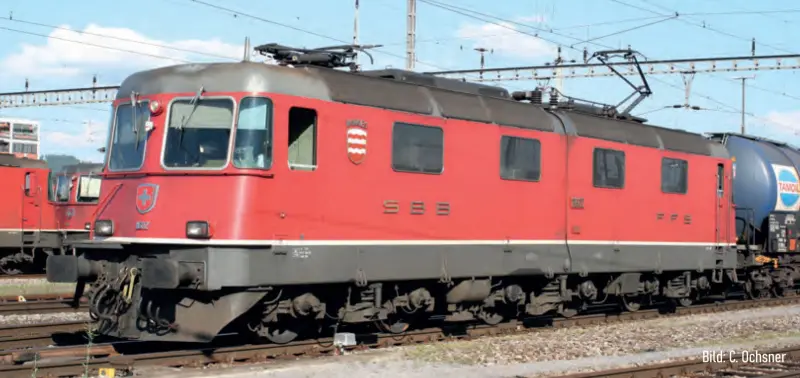
SBB CFF FFS - Re 6/6 11602 "Morges" electric locomotive
Recommended retail price: from 399,90 €
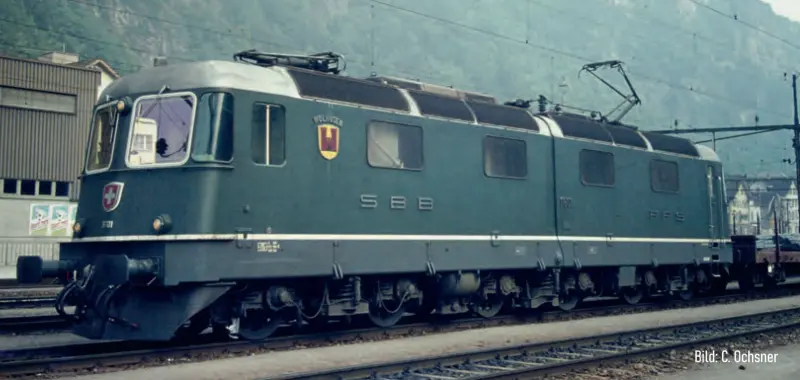
SBB CFF FFS - Re 6/6 11601 "Wolhusen" electric locomotive
Recommended retail price: from 399,90 €
Advertising:

The identity card, photos and videos for thousands of railway vehicles all around Europe!
