
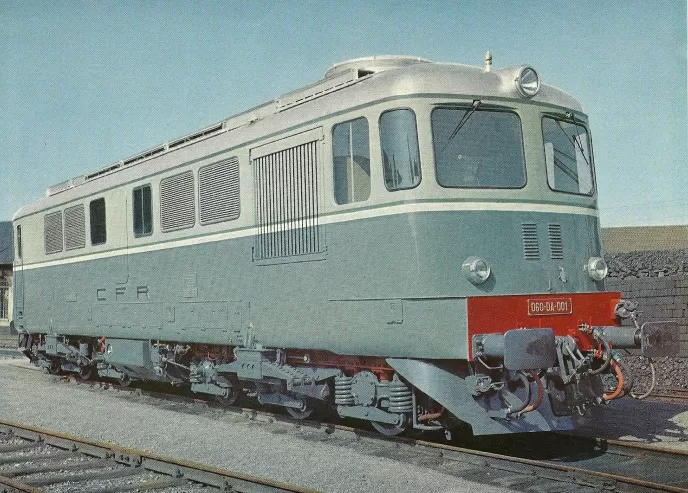
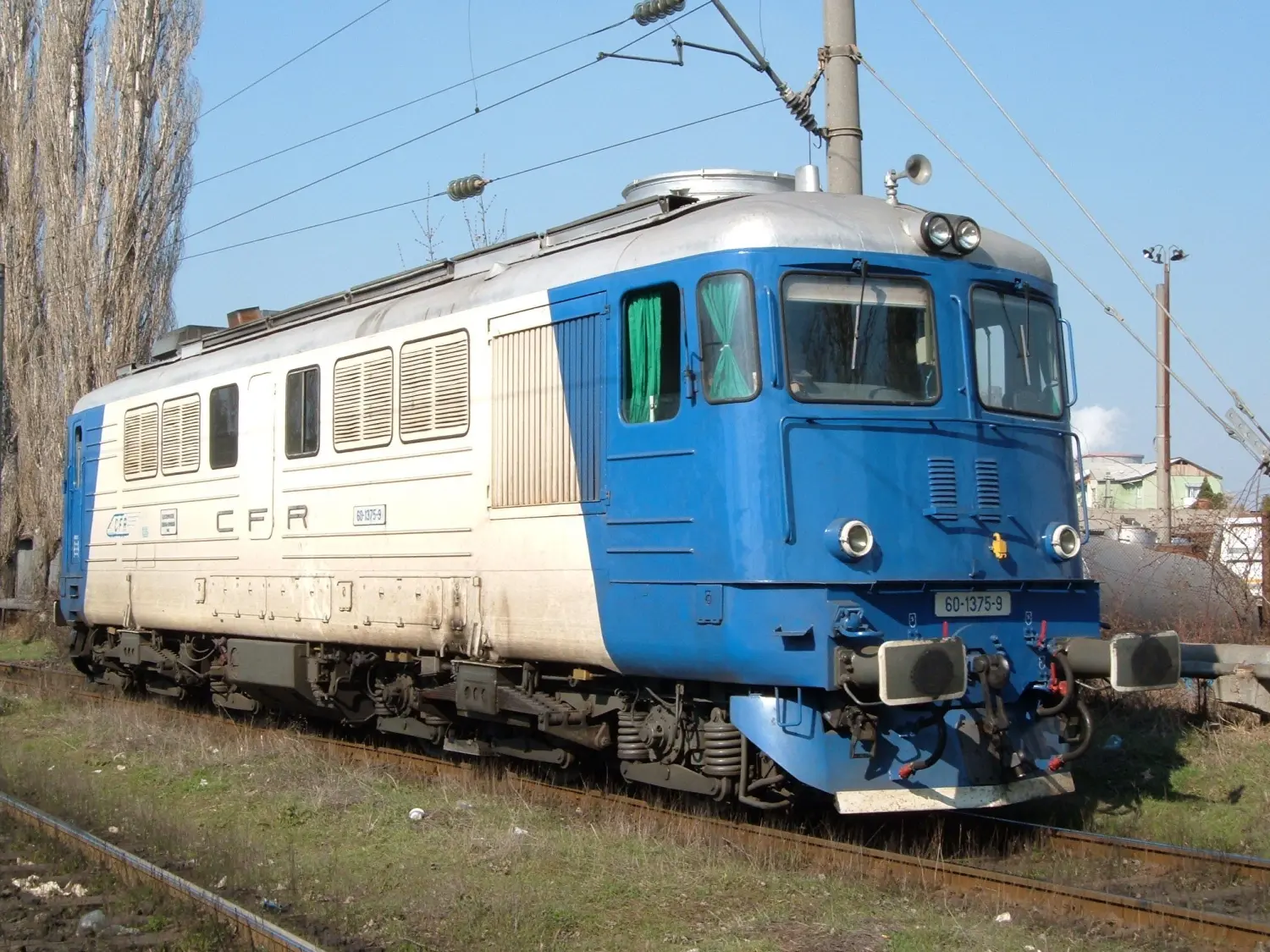
Source : Stefan Puscasu - cfr.stfp.net
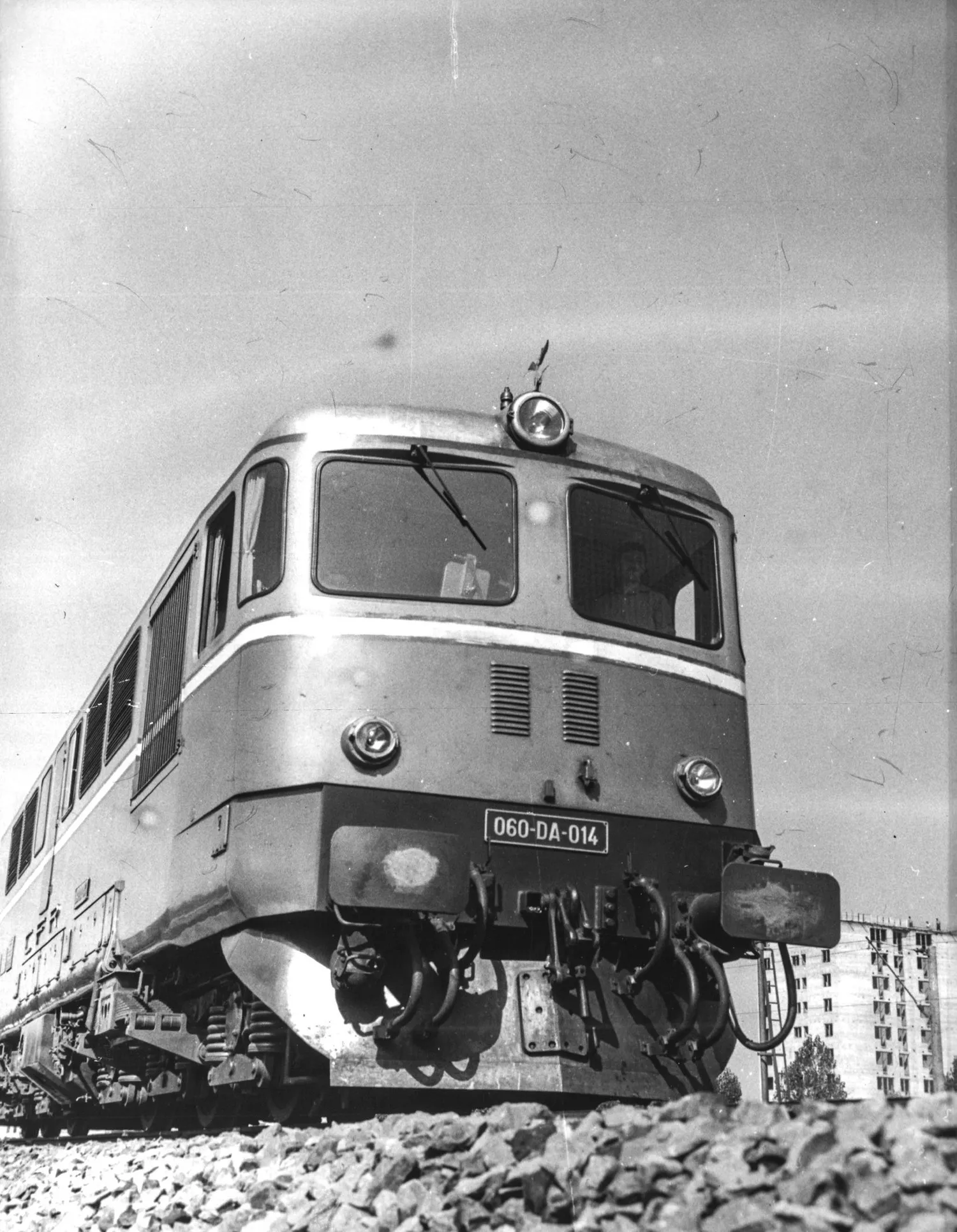
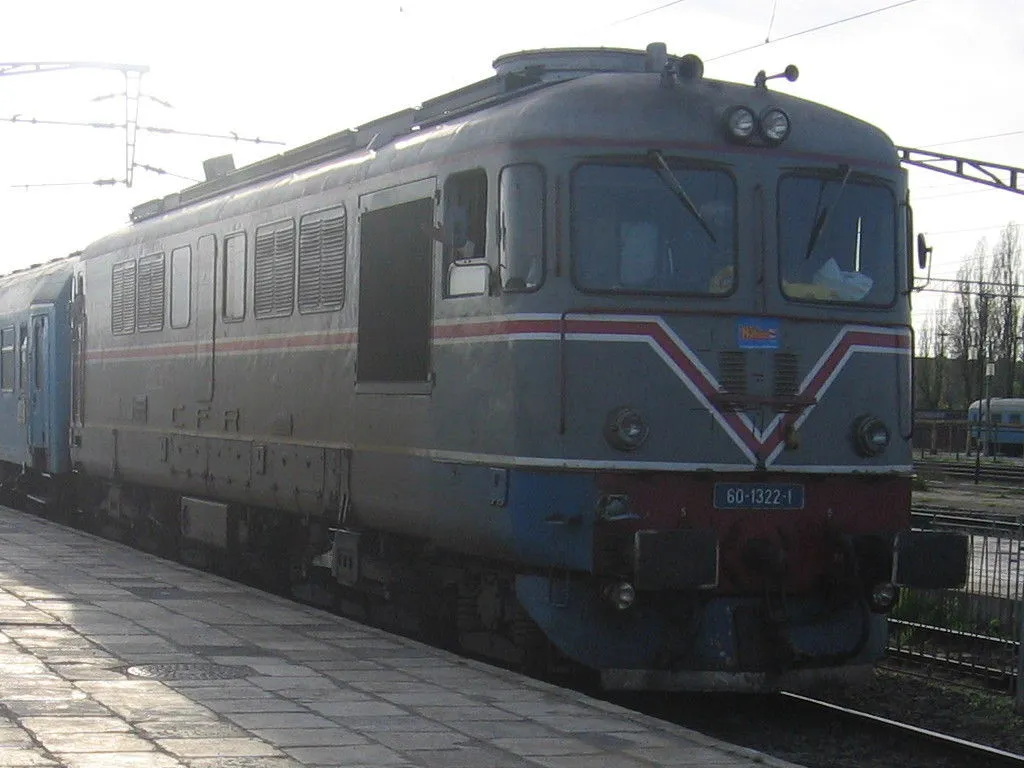
Source : Attila Zsiros - cfr.stfp.net
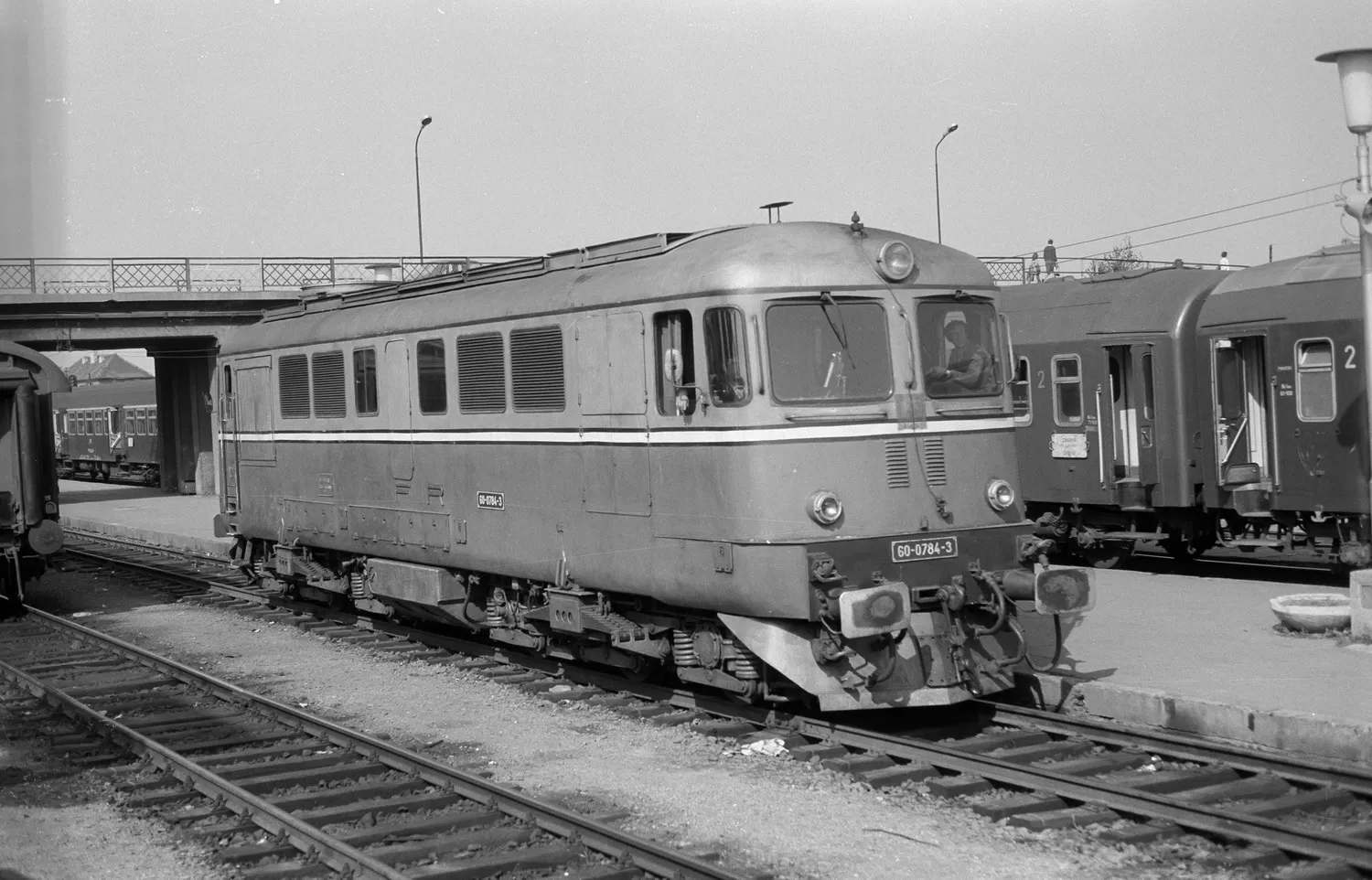
Source : Bärtschi, Hans-Peter - facebook.com
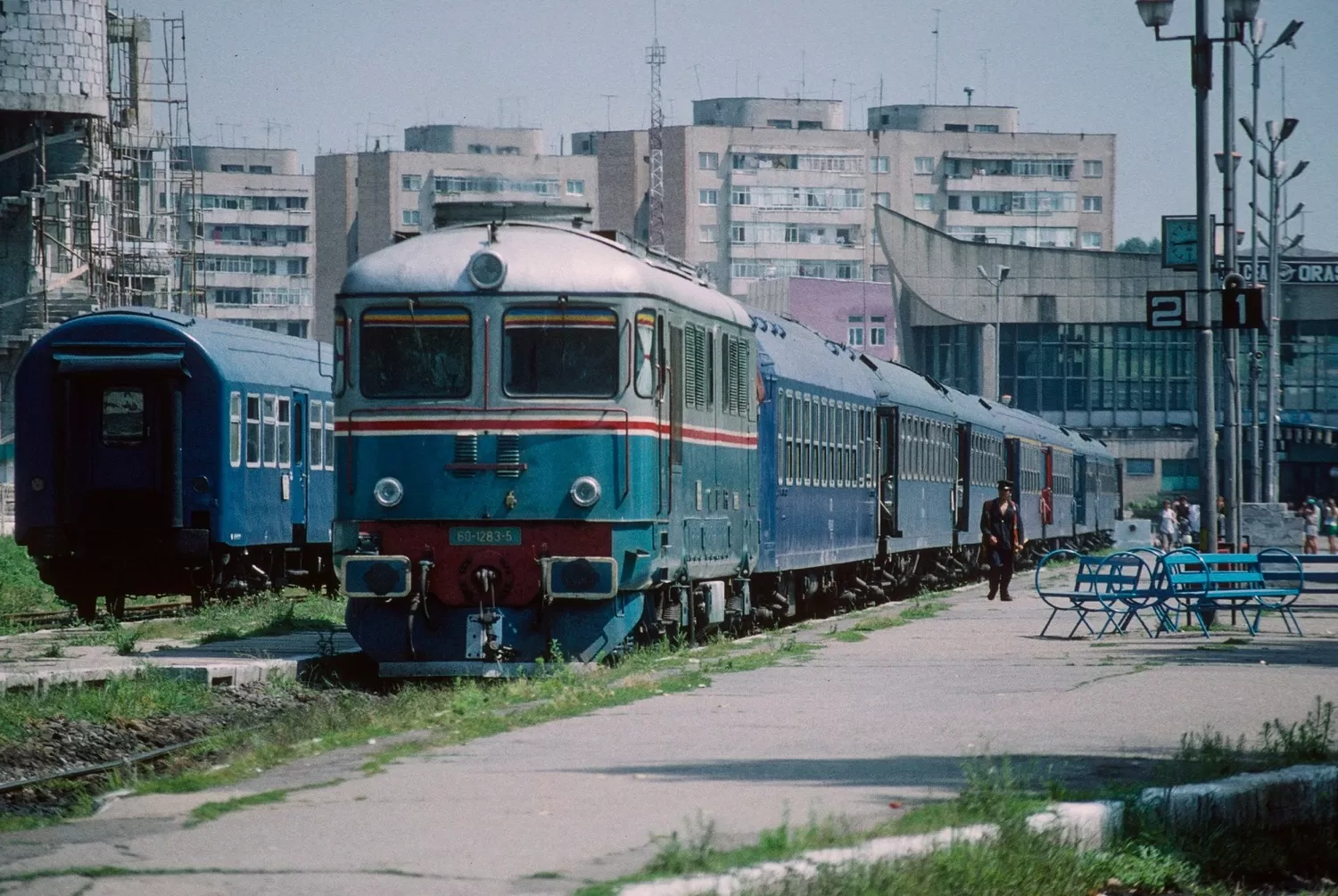
Source : Bärtschi, Hans-Peter - facebook.com
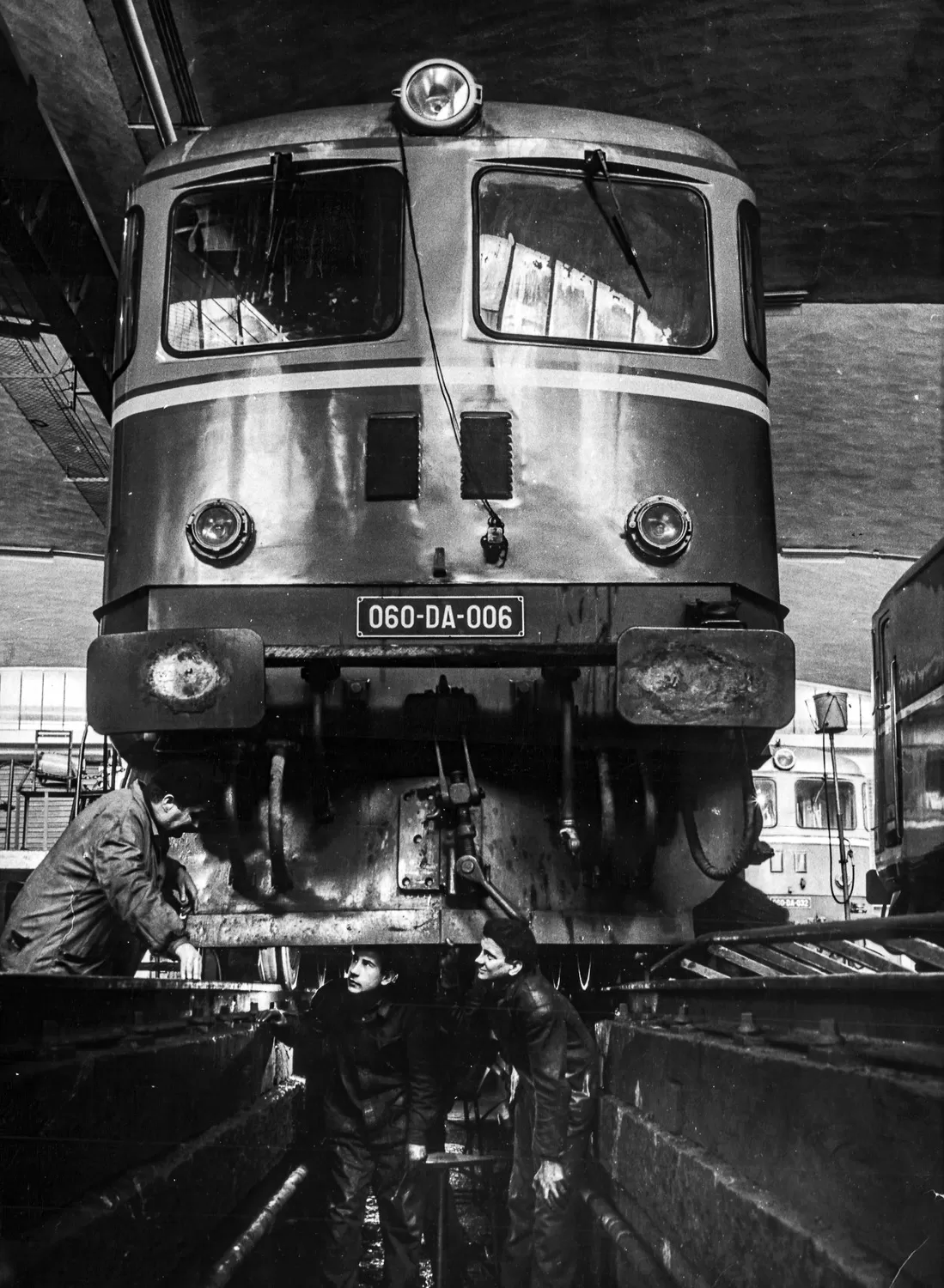
Source : facebook.com
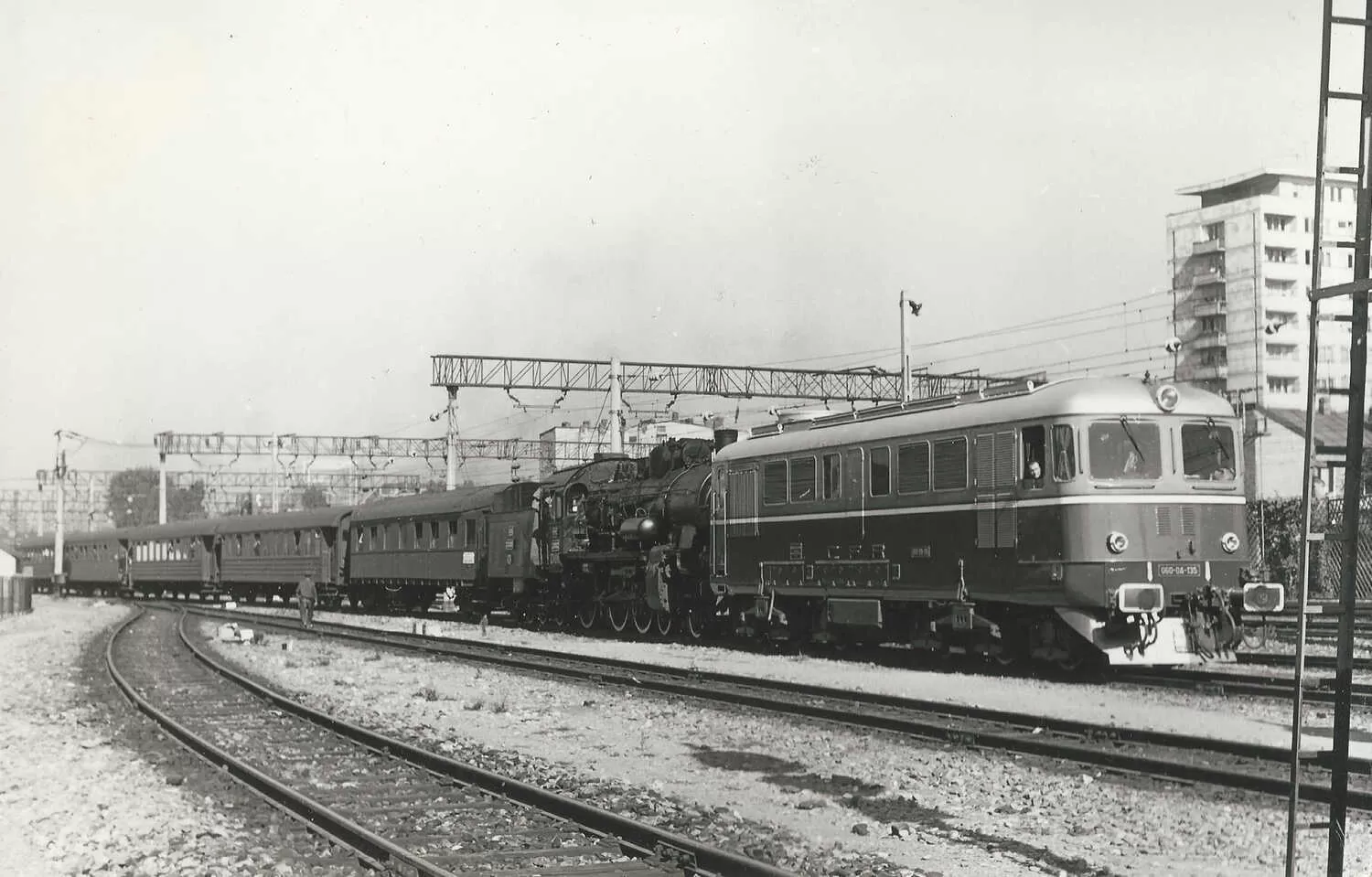
Source : Andrei Berinde - facebook.com
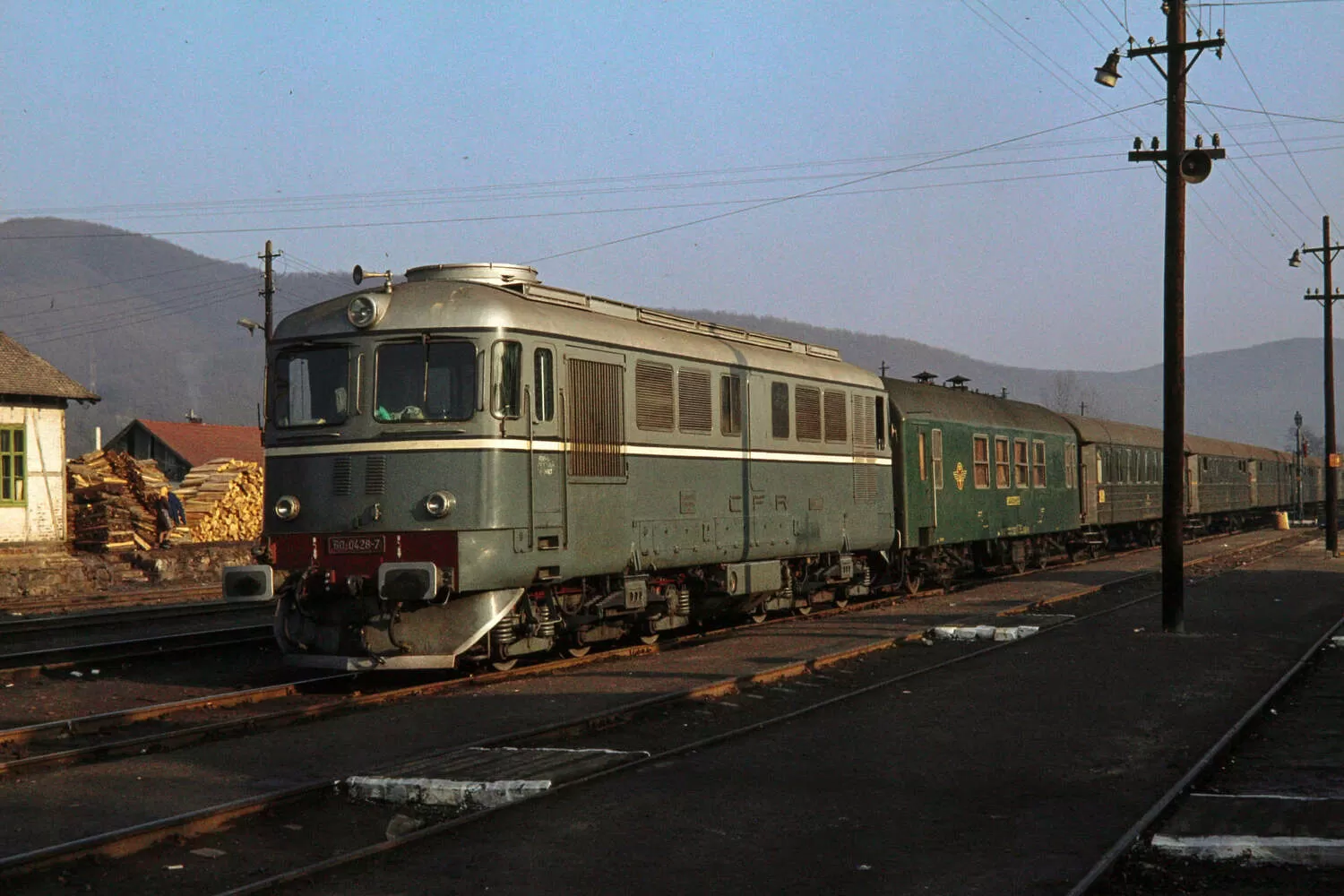
Source : GH Taylor - facebook.com
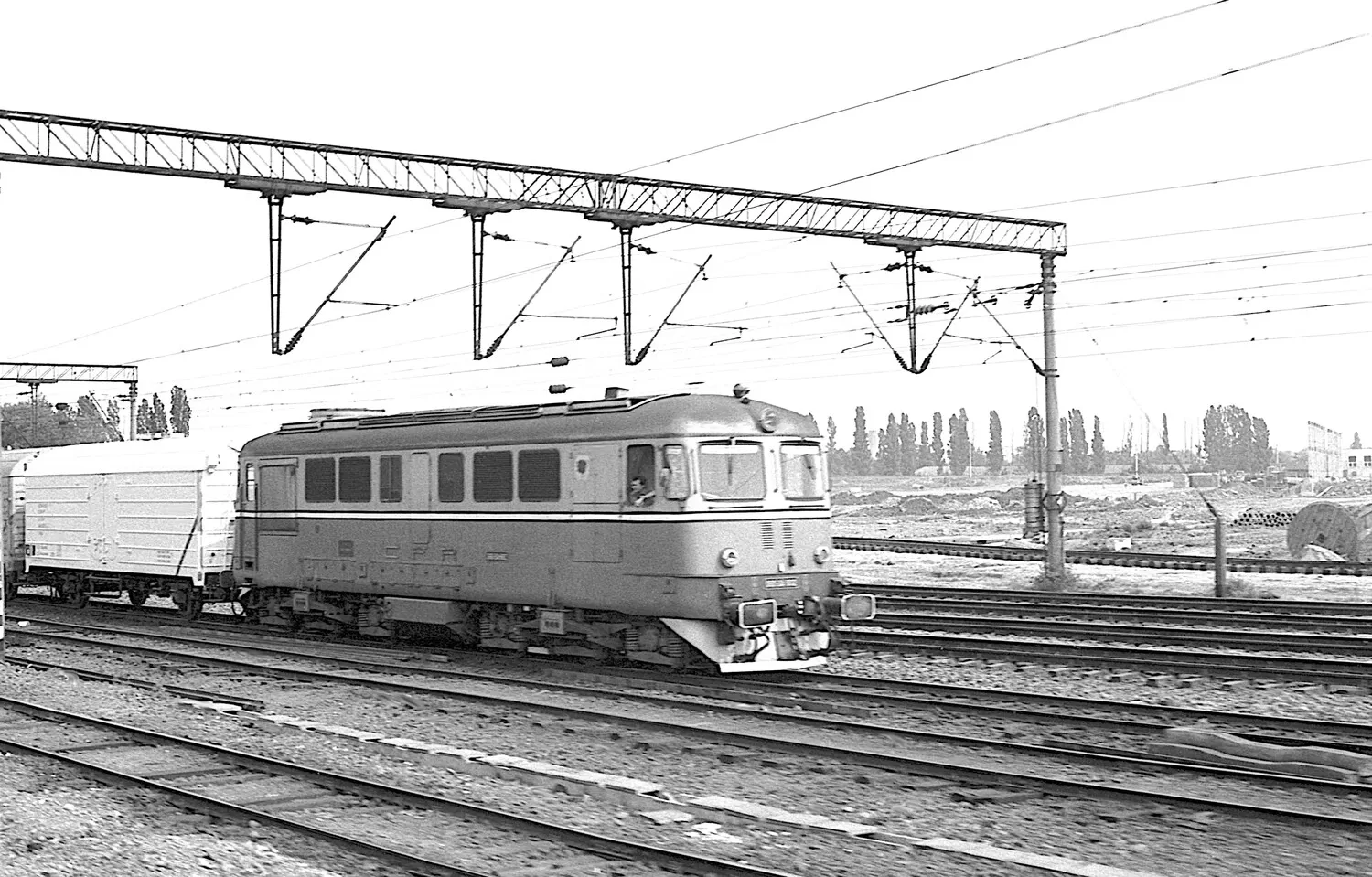
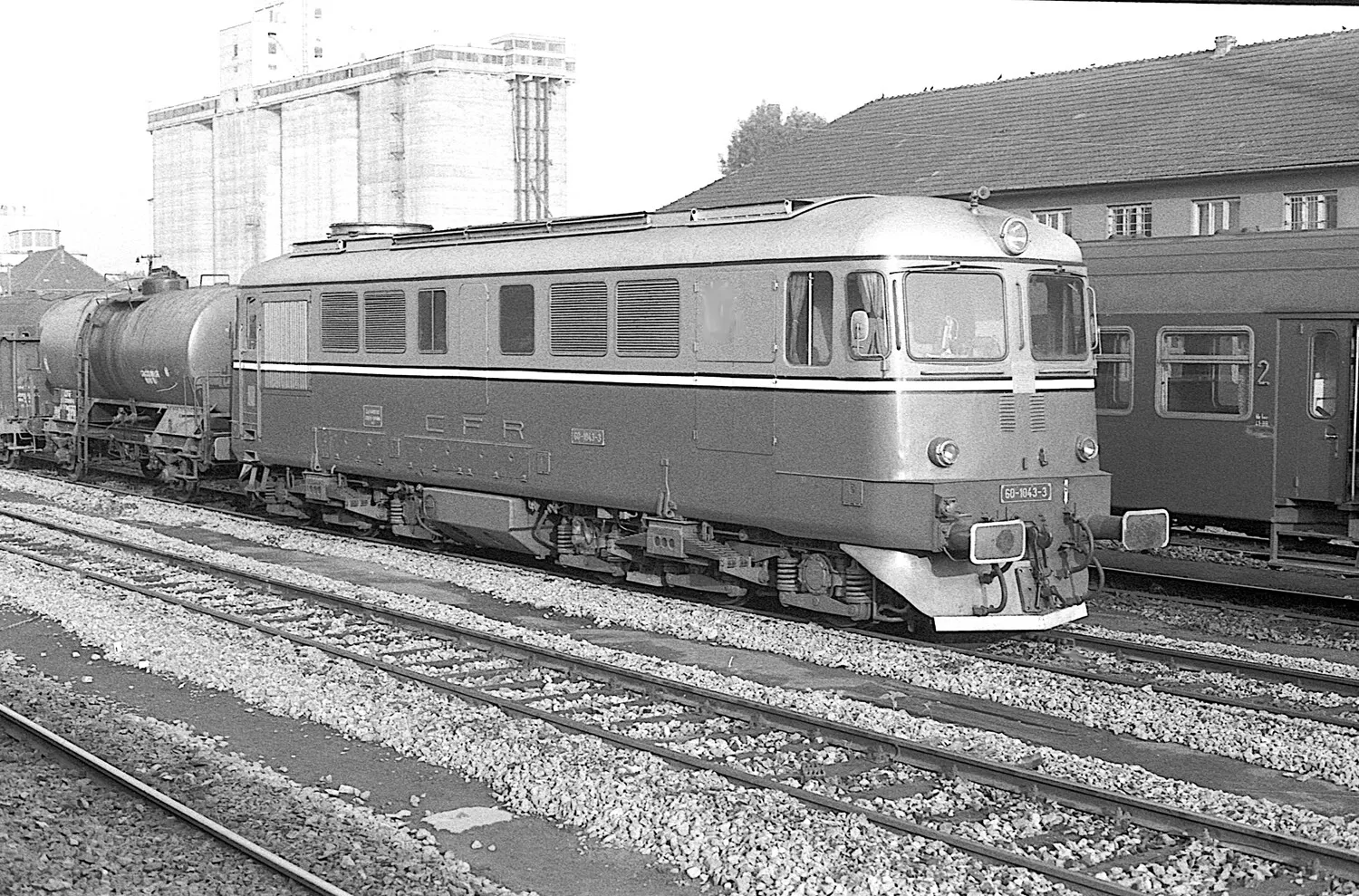
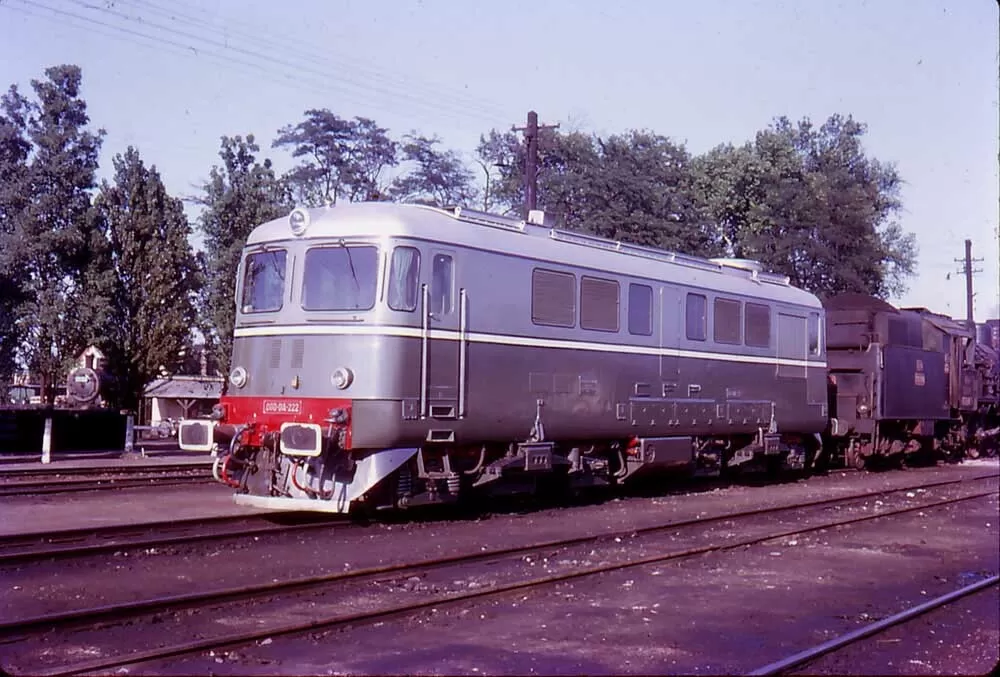
Source : Peter Bagshawe - deviantart.com
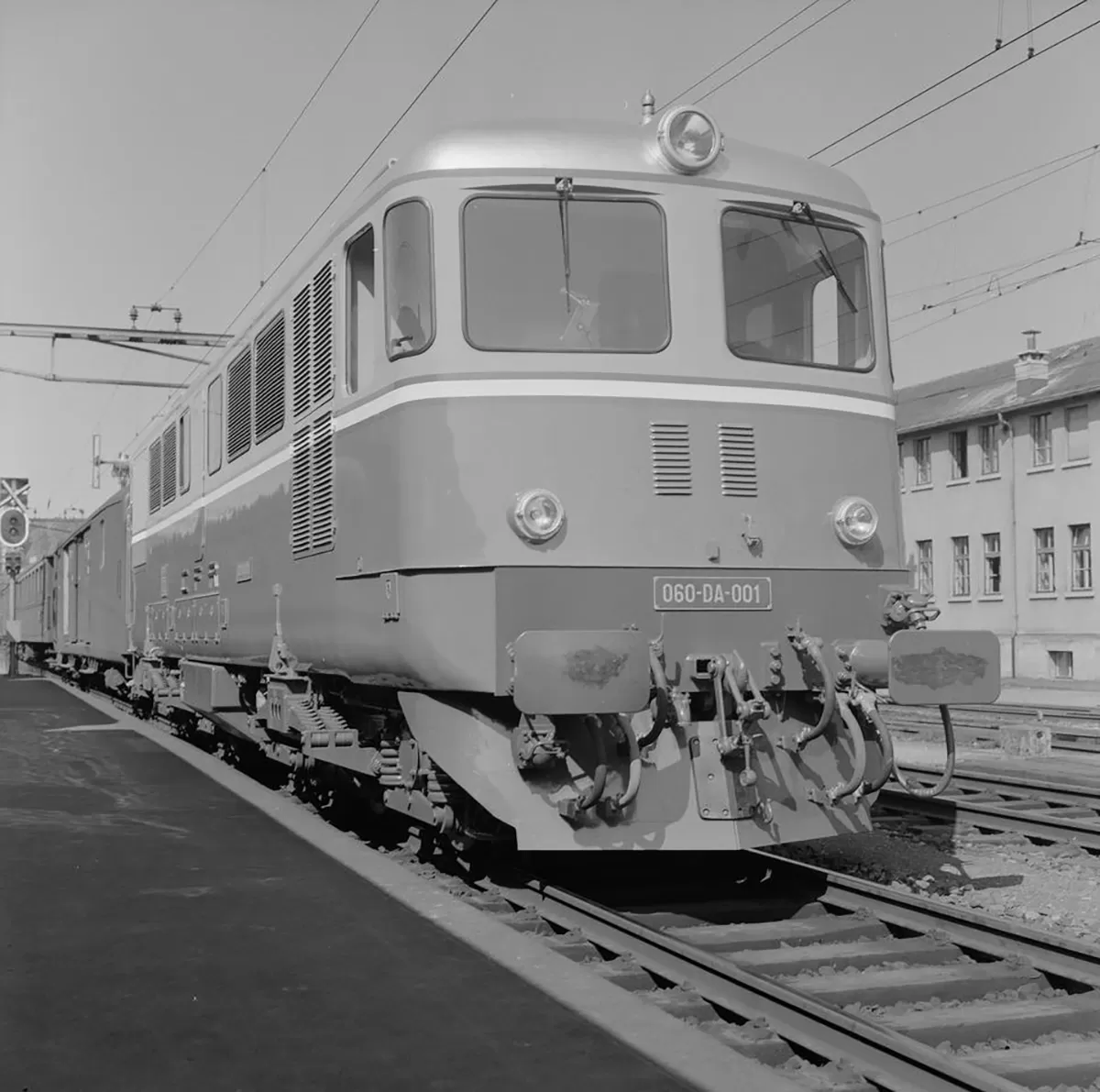
Source : sbbarchiv.ch
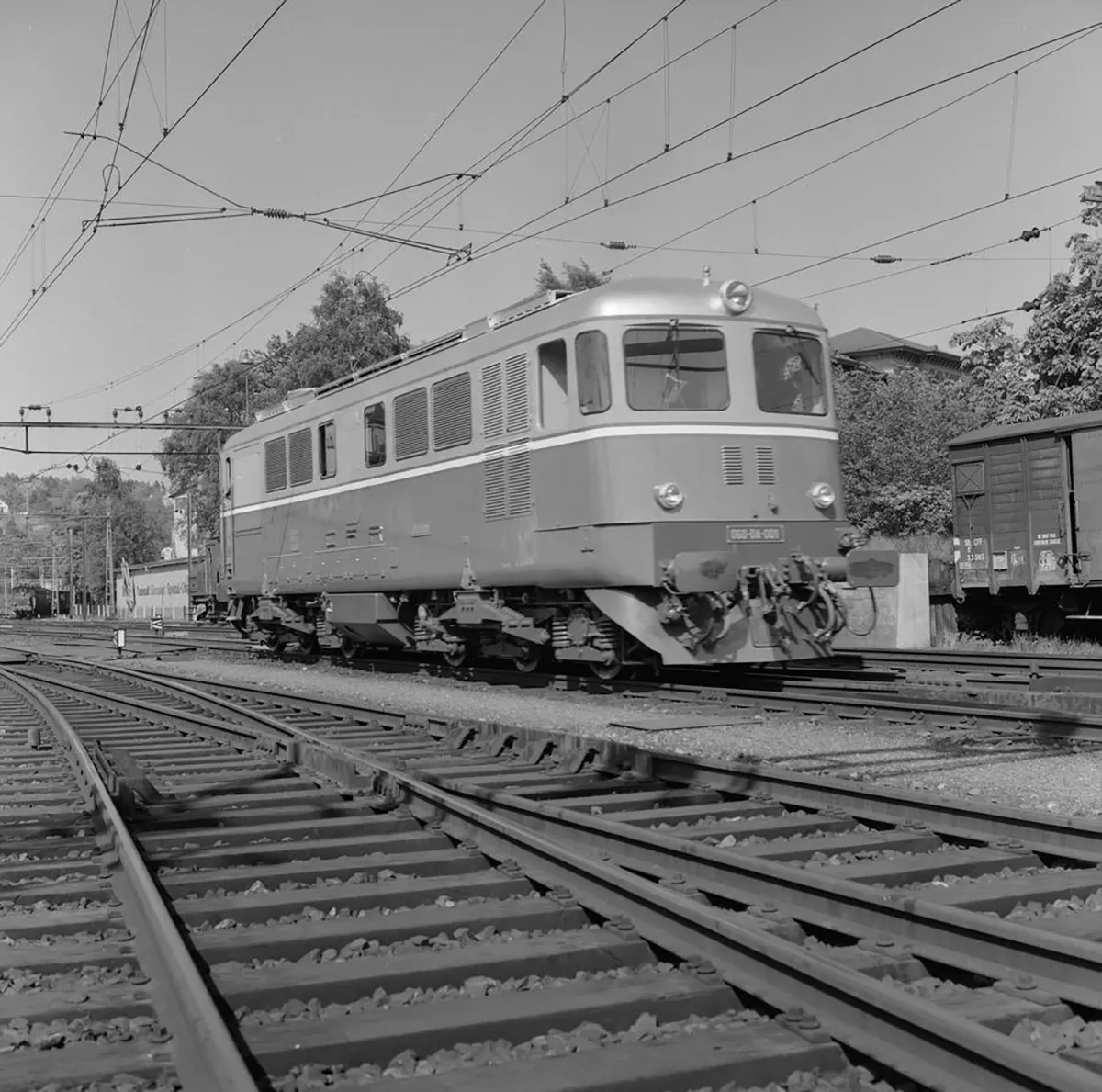
Source : sbbarchiv.ch
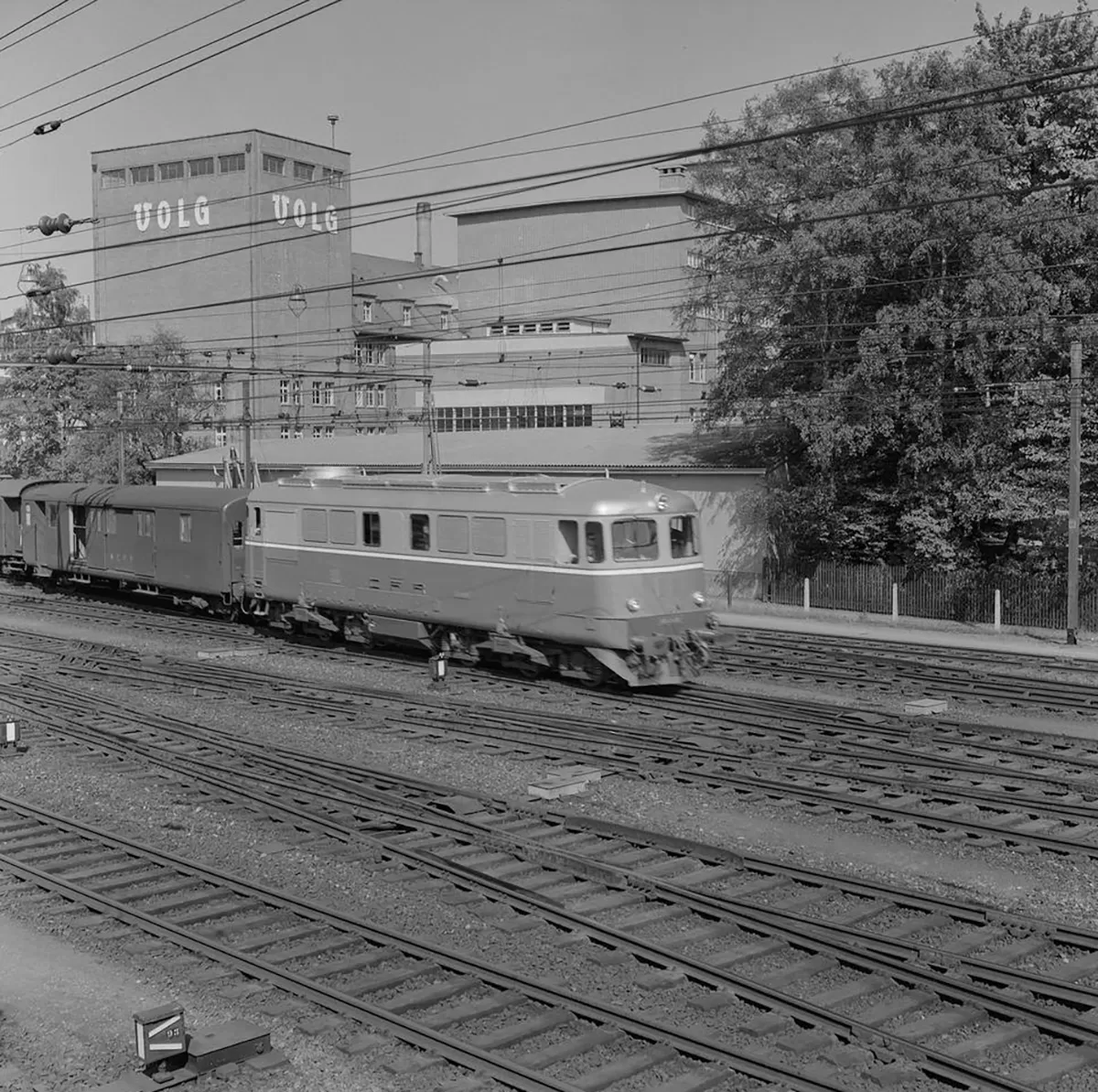
Source : sbbarchiv.ch
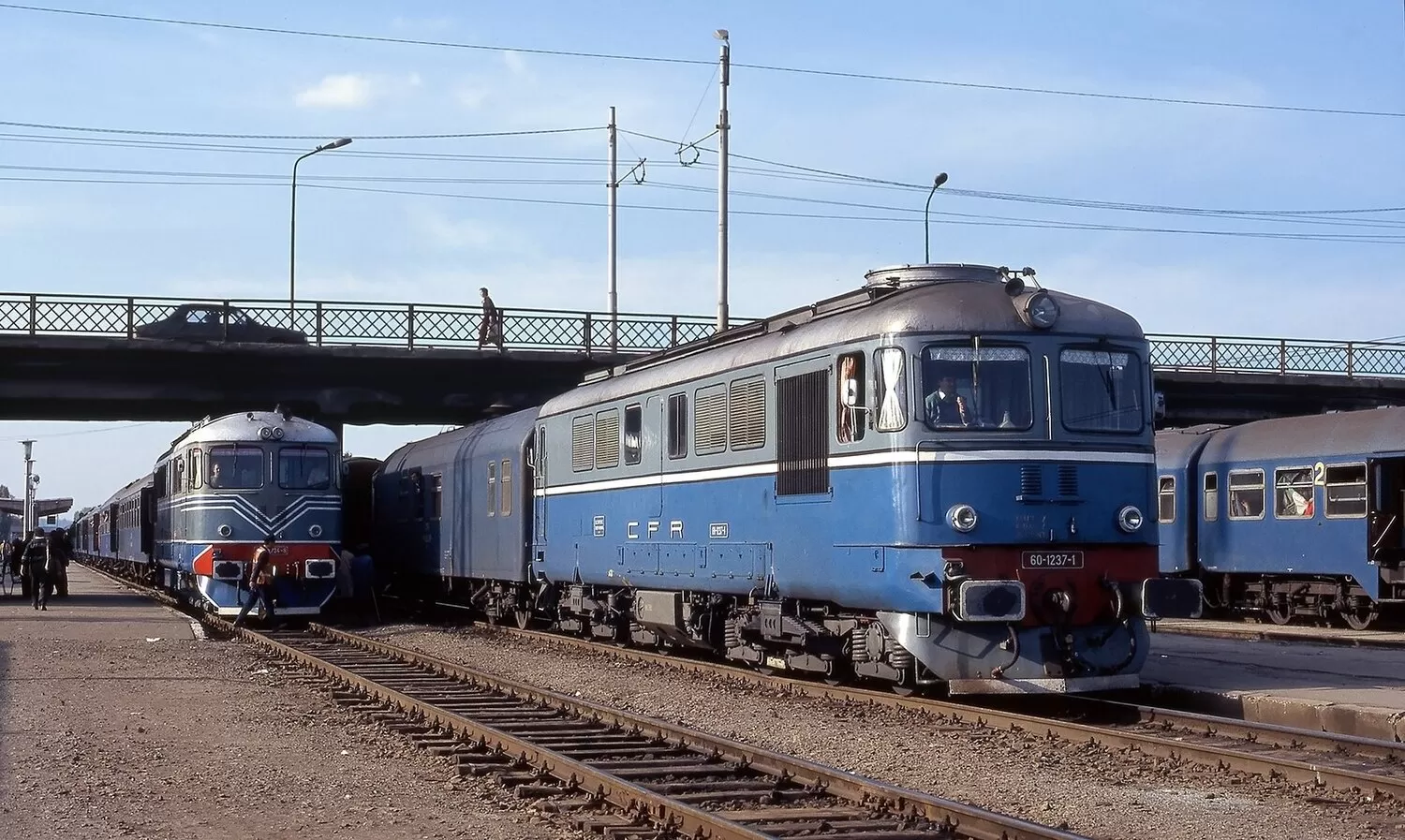
Source : John Tomlimson - facebook.com
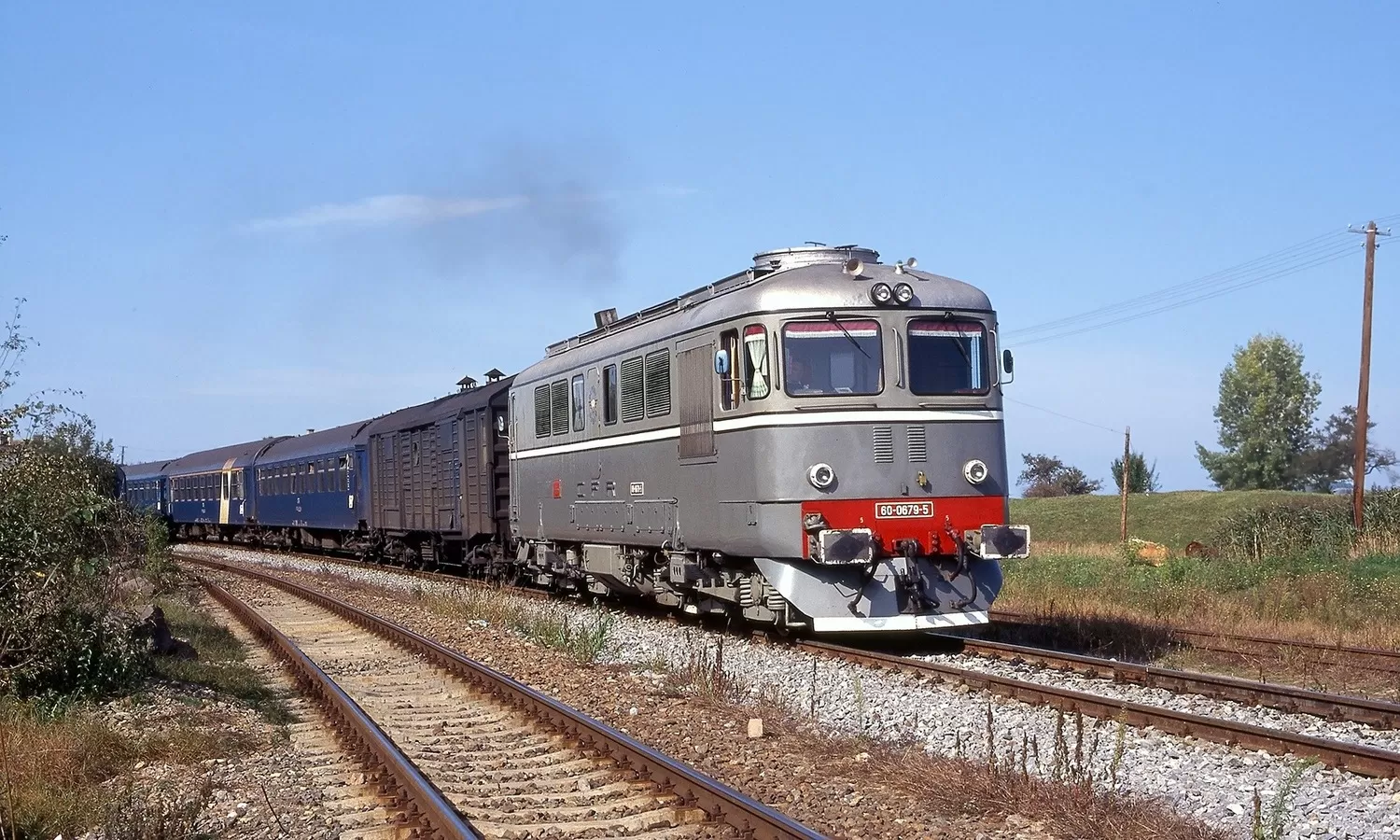
Source : John Tomlinson - facebook.com
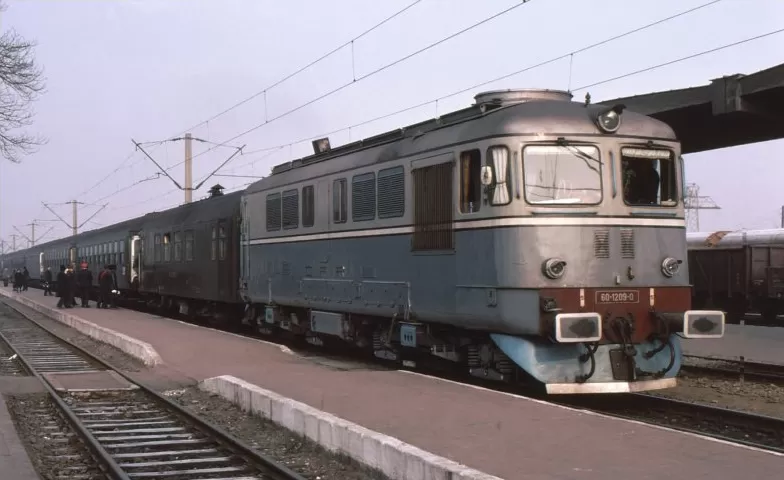
Source : cheminots.net
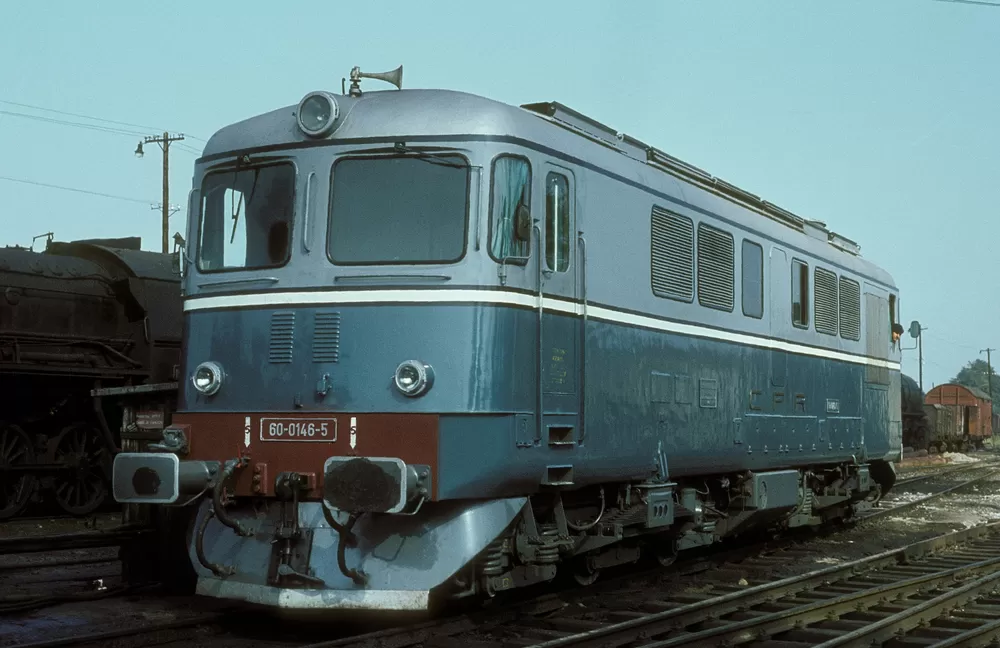
Source : P. Cvikevic - flickr.com

Source : P. Cvikevic - flickr.com
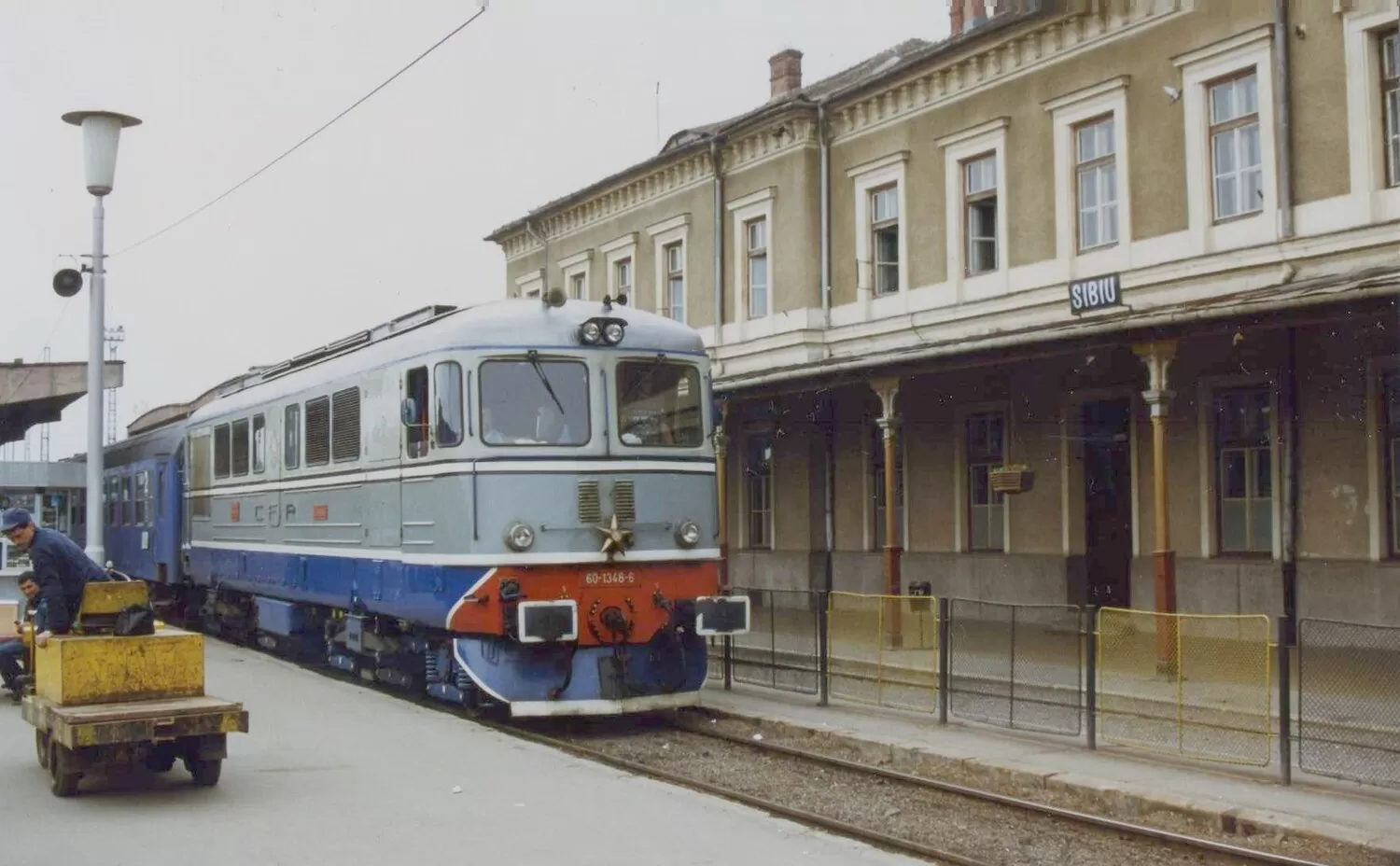
Source : Sludge G
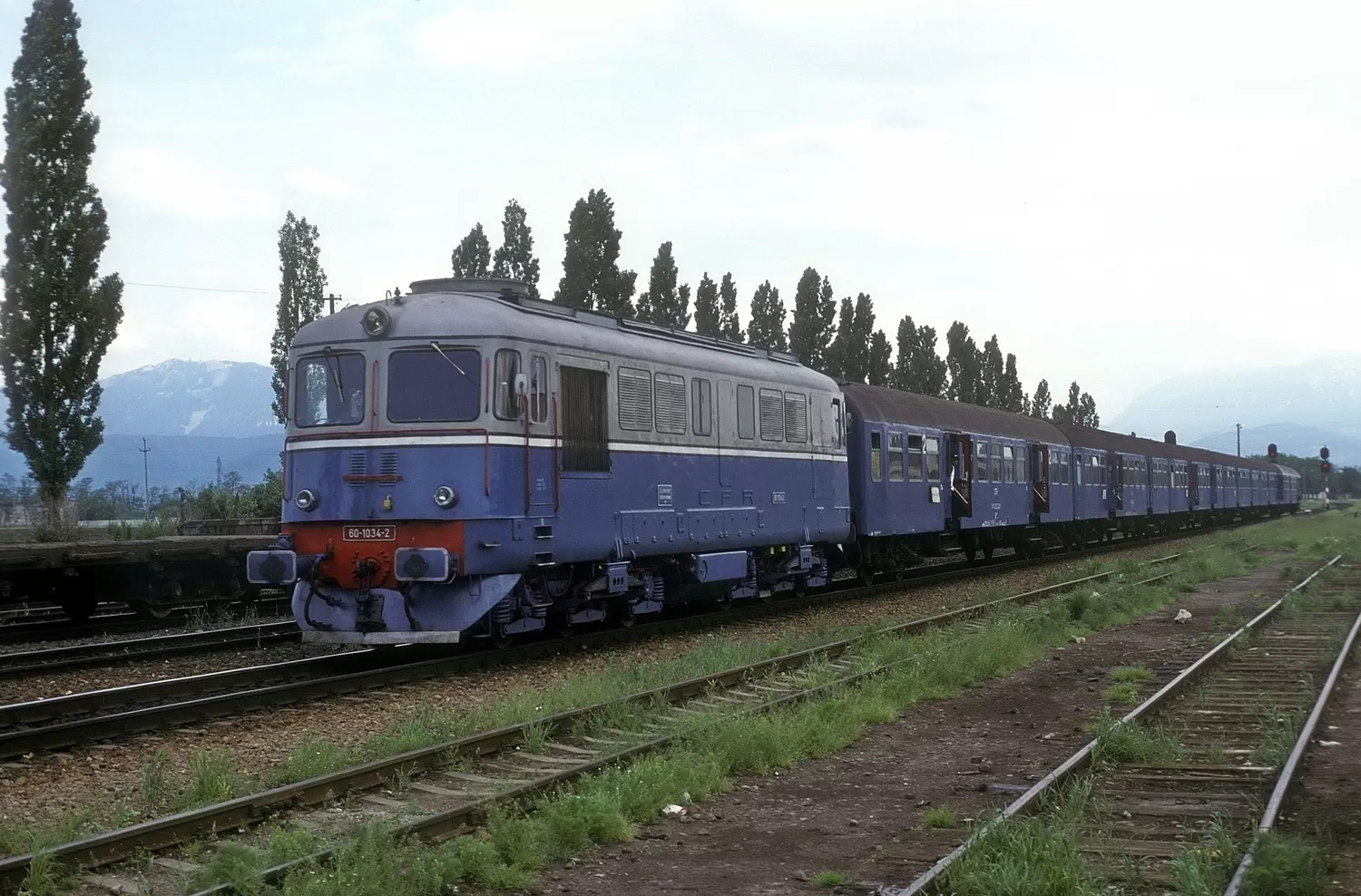
Source : Bahnbilder von W. + H. Brutzer
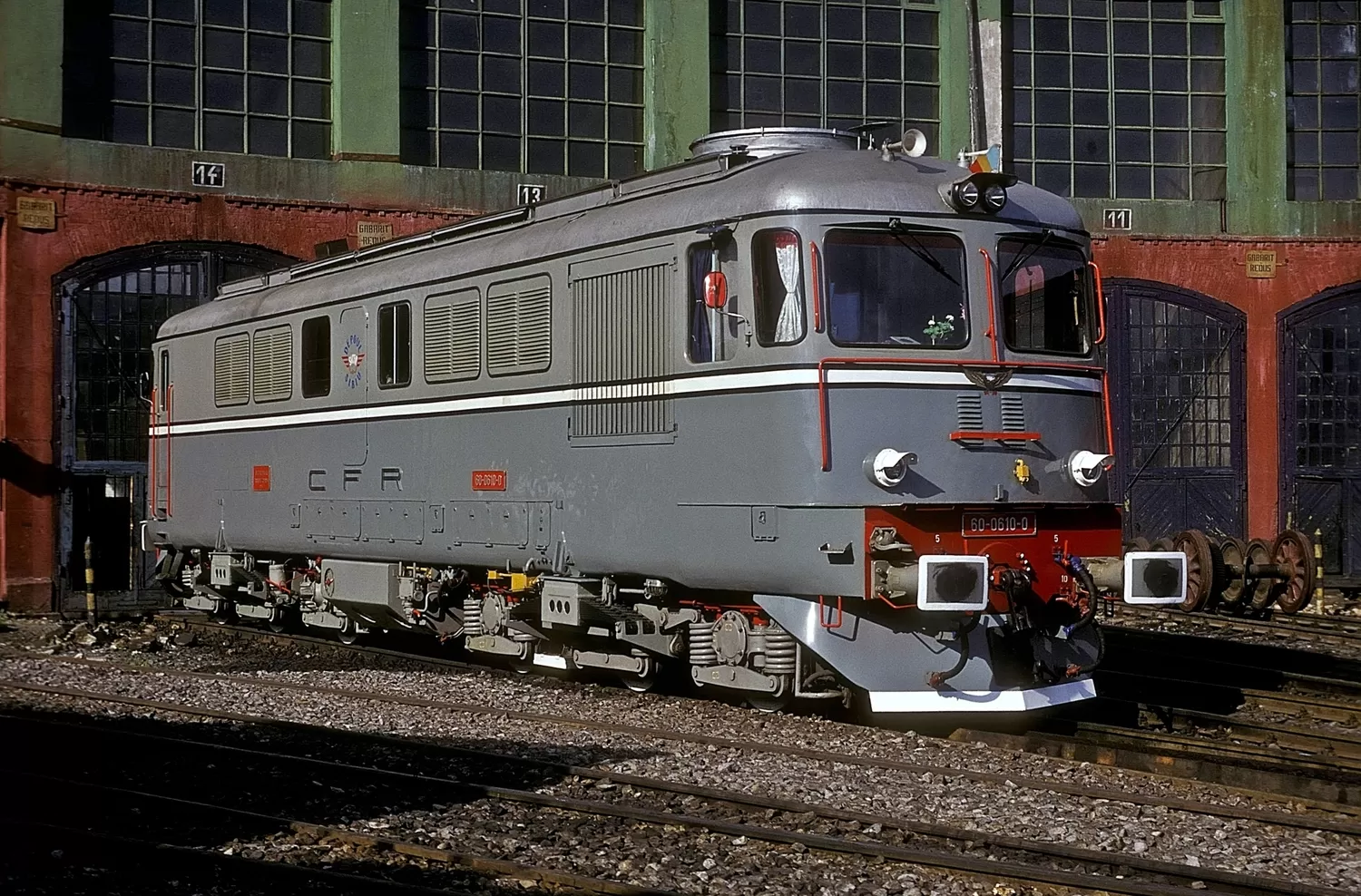
Source : Bahnbilder von W. + H. Brutzer
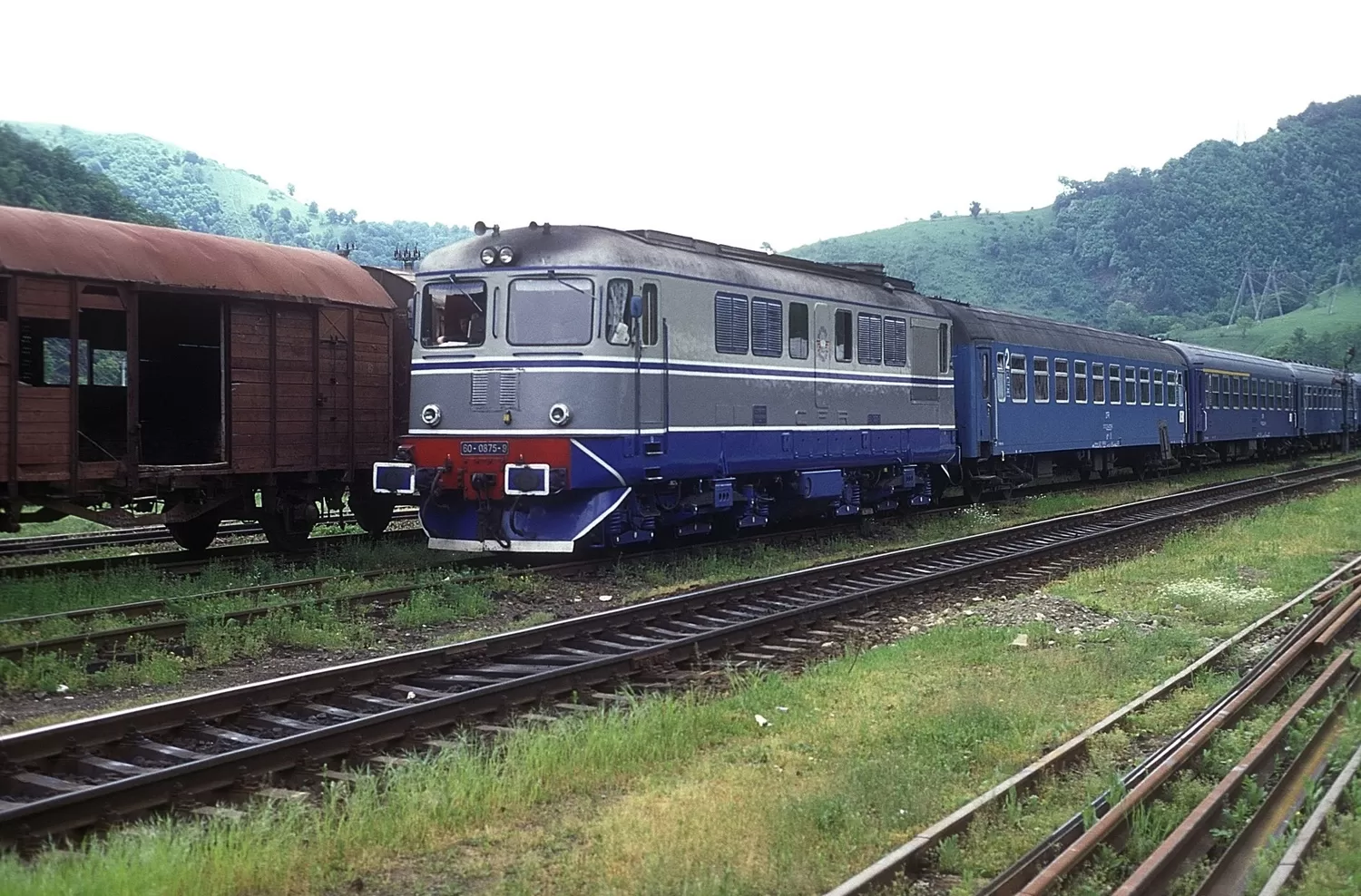
Source : Bahnbilder von W. + H. Brutzer
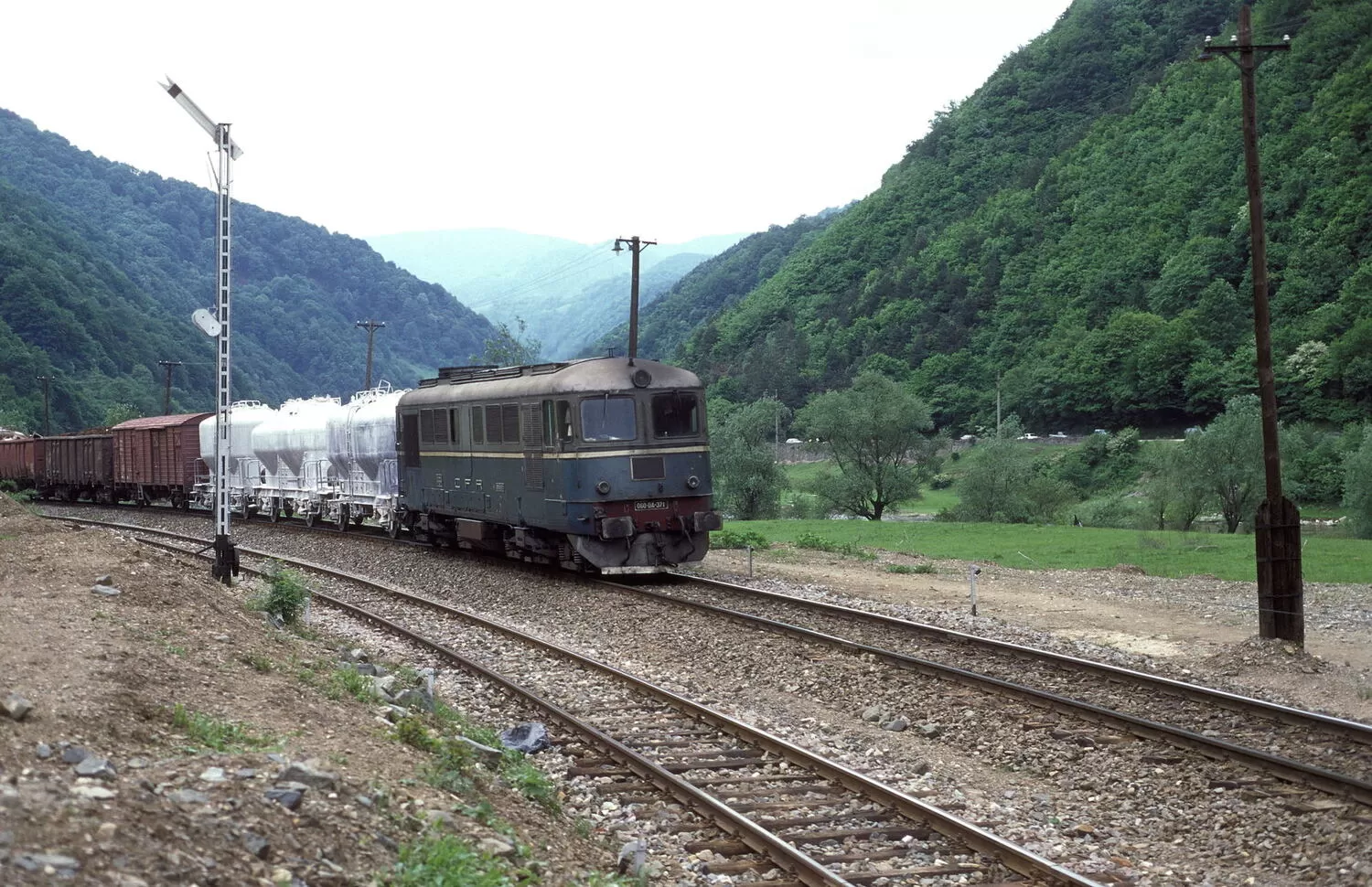
Source : Bahnbilder von W. + H. Brutzer
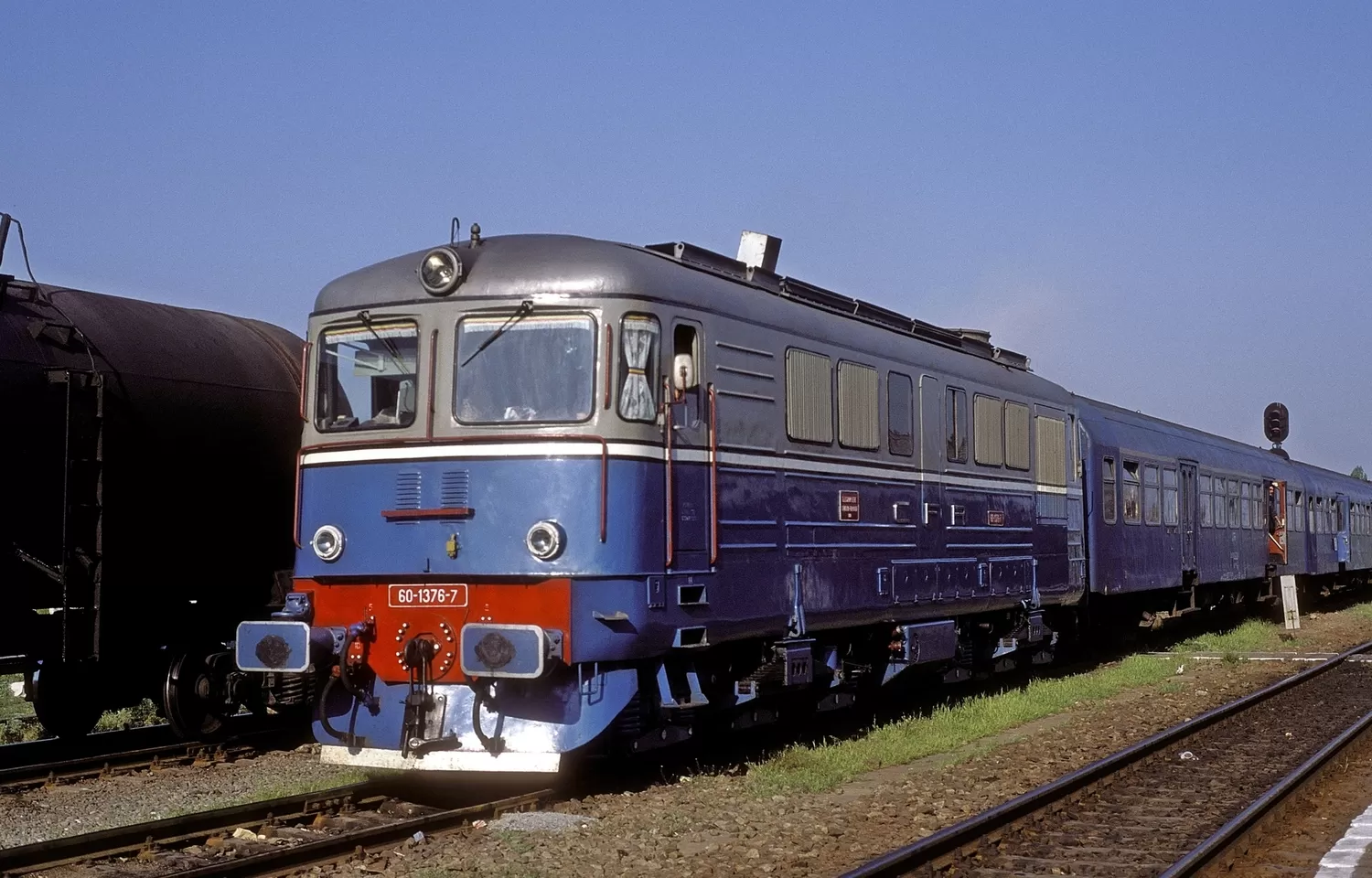
Source : Bahnbilder von W. + H. Brutzer
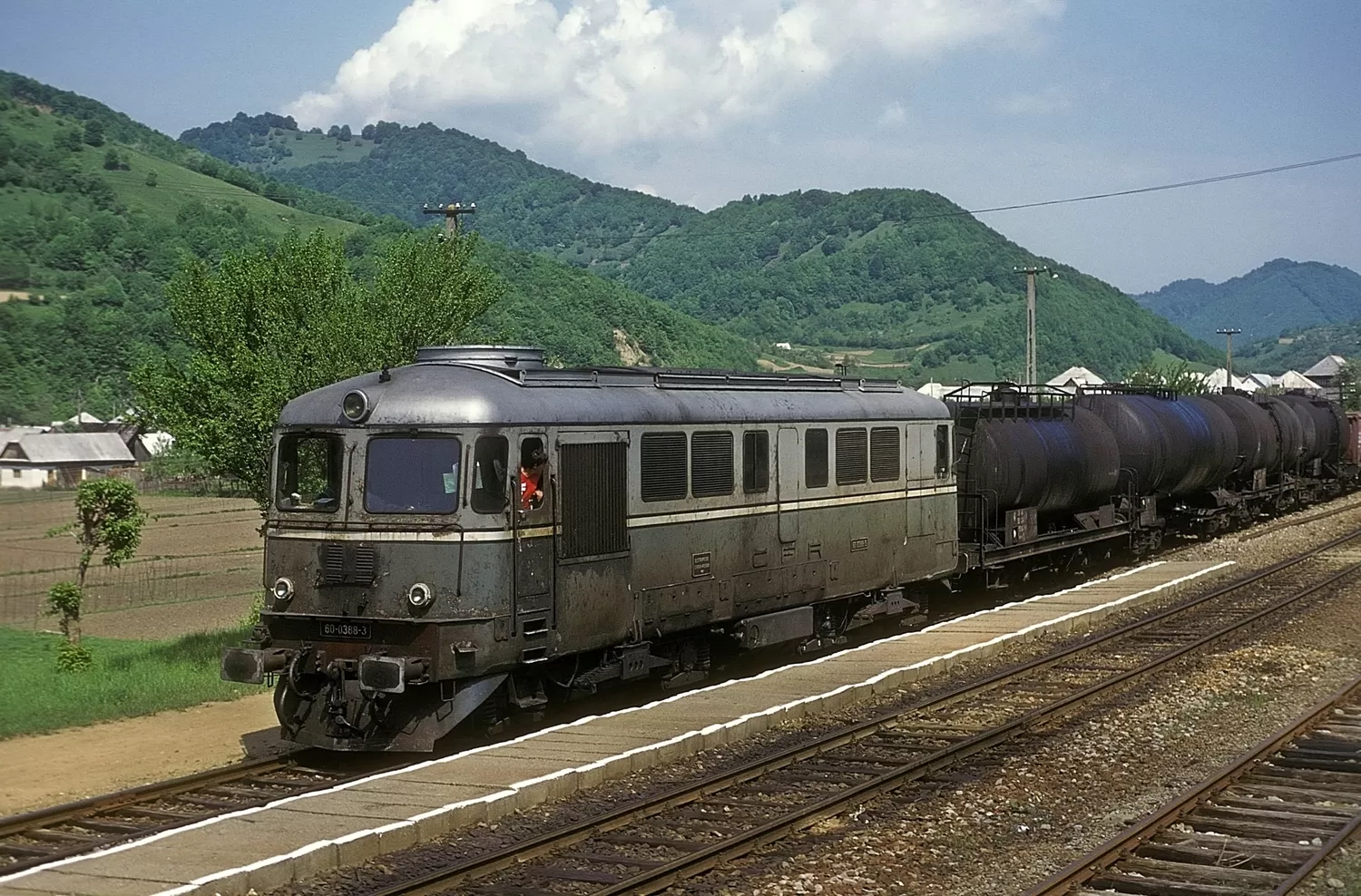
Source : Bahnbilder von W. + H. Brutzer
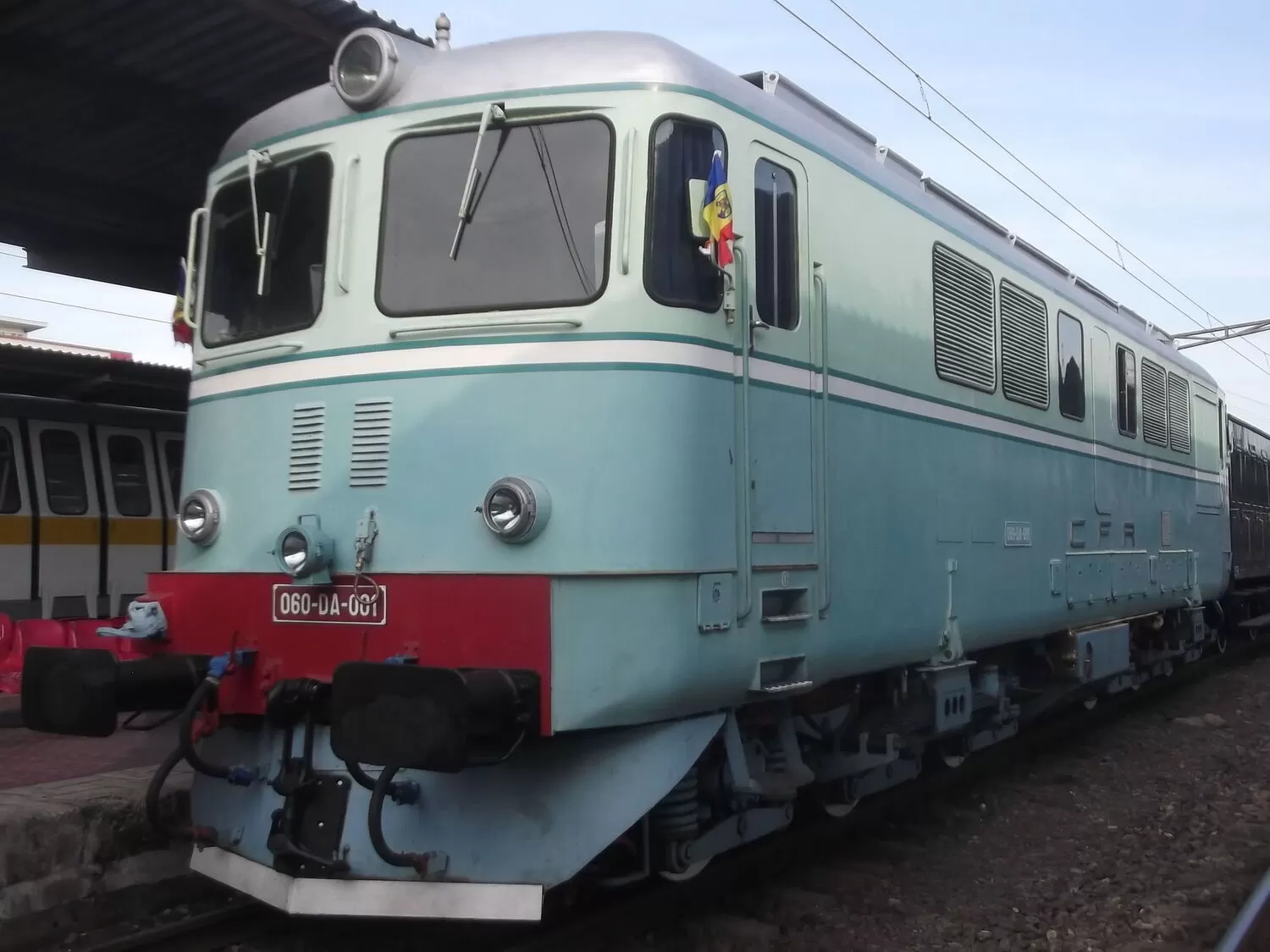
Source : Stefan Puscasu
Également connu sous le nom de: 060-DA
Numérotation UIC / EVN: 92 53 0 600 / 92 53 0 601
Type de véhicule: Diesel locomotive
Pays d'immatriculation: Romania
*with 2/3 supplies
2'100 hp
*starting
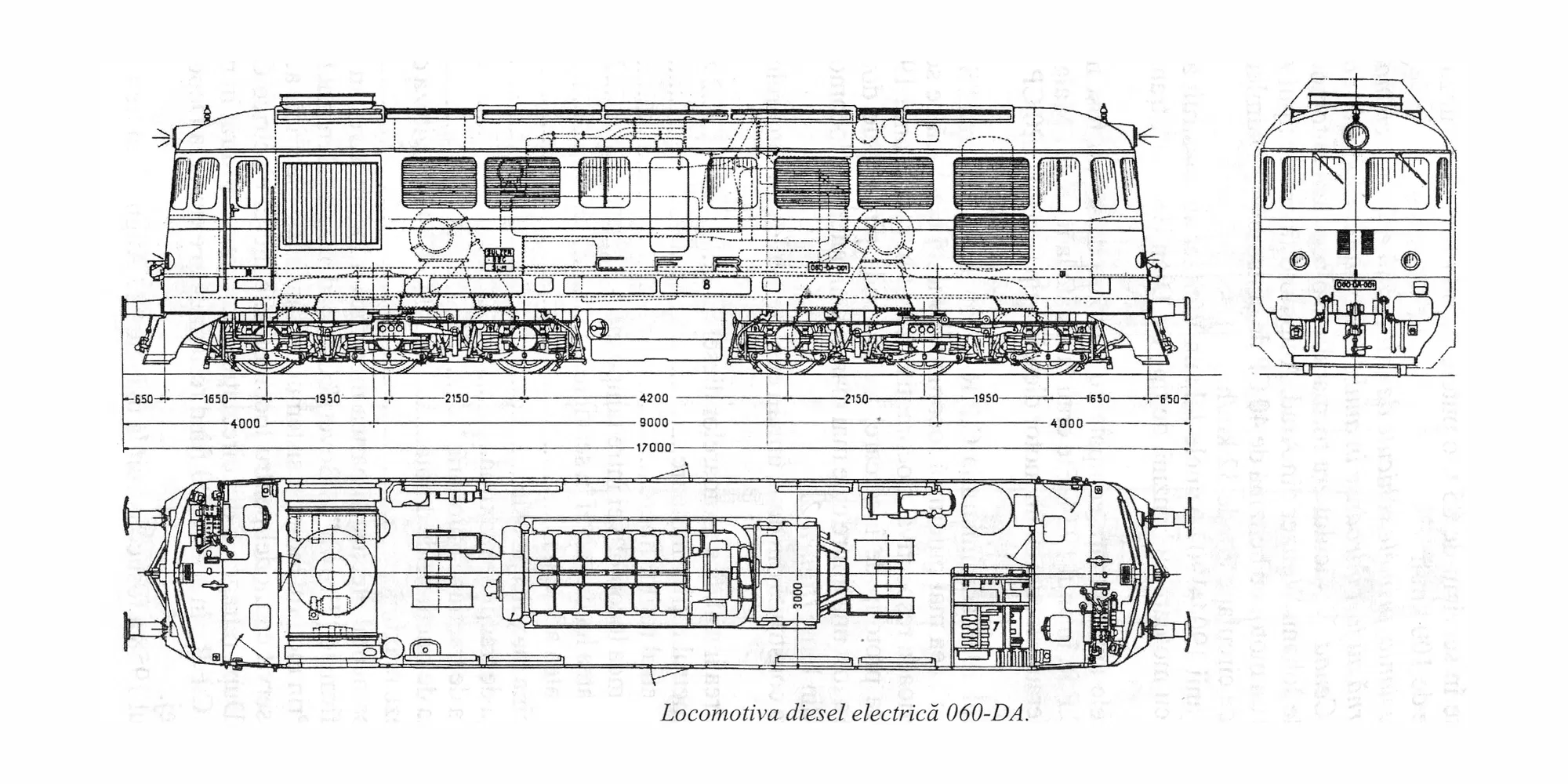
1956
À cette fin, un consortium est formé, composé de :
- les Ateliers de locomotives et de machines suisses (SLM) à Winterthur, principalement responsables des pièces mécaniques de la locomotive et de l'assemblage général de la locomotive ;
- Brown Boveri & Co à Baden (BBC), principalement responsable de l'installation de l'équipement électrique ;
- Sulzer Brothers à Winterthur, en charge du moteur diesel.
Traduction automatique. Texte original en: EN - afficher l'original / Sources: https://www.railnet.ro/viewtopic.php?f=119&t=4097, https://www.derbysulzers.com/cfr2100.html
1956
avril
- l'achat de 6 locomotives diesel-électriques et des pièces nécessaires (dix moteurs diesel et l'équipement électrique complet) pour construire 10 unités supplémentaires en Roumanie pour 6,9 M$ ;
- une licence pour fabriquer ce type de locomotive diesel-électrique en Roumanie ;
- le transfert de technologie et d'équipement nécessaires à la production de 40 locomotives diesel-électriques pour 1,2 M$.
Traduction automatique. Texte original en: EN - afficher l'original / Sources: https://railnetromania.blogspot.com/2013/11/Locomotiva-Diesel-electrica-060-DA-2100-CP.html, https://www.railnet.ro/viewtopic.php?f=119&t=4097
1959
Initialement, les locomotives sont équipées d'un contrôle de traction multiple, ce qui permettait de conduire deux locomotives ou plus depuis une seule position de conduite.
Considérées principalement comme des locomotives pour trains de marchandises, elles ne sont pas pourvues d'installations de chauffage de train, ce qui a déterminé l'utilisation par les Chemins de fer d'État roumains (CFR) de wagons WIT et même de locomotives à vapeur remorquées pour chauffer les trains de passagers !
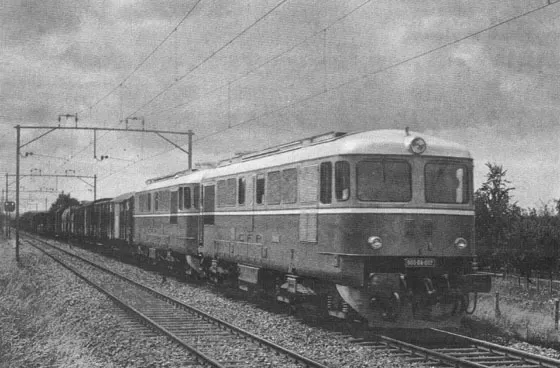
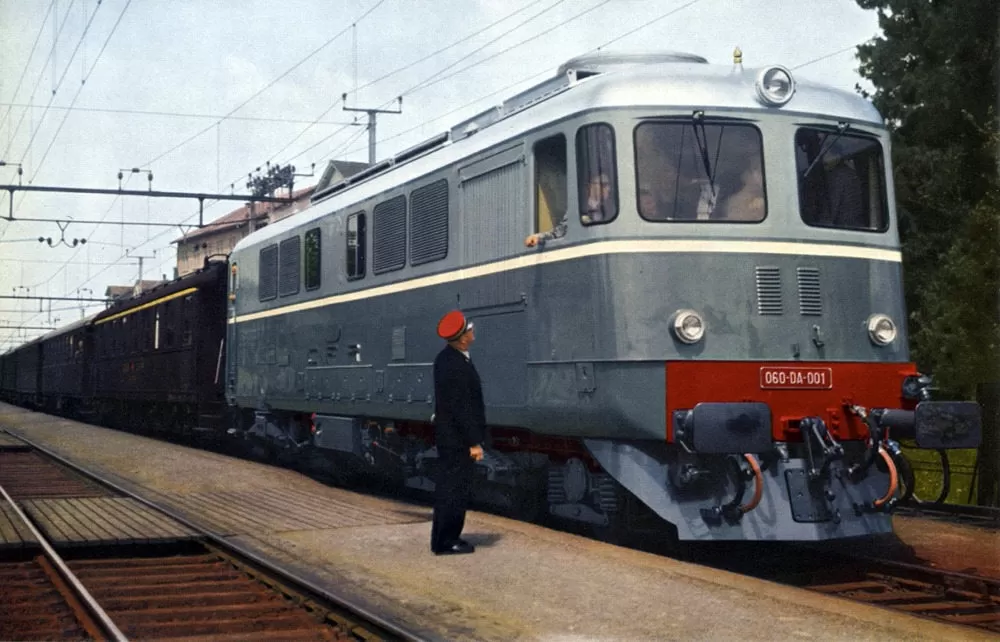
Avant d'être livrées en Roumanie, toutes les locomotives 6x subissent des essais d'acceptation sur le réseau ferroviaire suisse de mai à octobre 1959, principalement sur la ligne de Winterthur à St Gall ou Romanshorn.
La première locomotive a également effectué un voyage le long de la rive nord de la ligne du Gotthard jusqu'à Goschenen. Cela a impliqué une montée de 600 mètres sur 28,6 km. Avec un train de fret de 66 essieux totalisant 550 tonnes, la locomotive a pu atteindre 22 km/h en 3 minutes. Lors d'un autre test, un train de fret de 94 essieux pesant 1066 tonnes a été tracté par une locomotive sur la ligne de 55 km de Winterthur à Romanshorn. En pleine puissance, 60 km/h ont été maintenus sur des pentes légères près de Weinfelden. Au retour, avec l'ensemble du train arrêté sur la pente dominante de 1 sur 83, une vitesse de 30 km/h a été atteinte après trois minutes.
Deux locomotives, couplées en traction multiple, ont été testées sur la ligne de Romanshorn avec une charge remorquée de 1 227 tonnes. Avec un moteur éteint, le train a été redémarré sur une pente de 1 sur 200, accélérant à 40 km/h en trois minutes. Les performances enregistrées lors des tests étaient égales ou meilleures que les calculs théoriques établis pour ces nouvelles locomotives.
Traduction automatique. Texte original en: EN - afficher l'original / Sources: https://www.railnet.ro/viewtopic.php?f=119&t=4097, https://www.derbysulzers.com/cfr2100.html, https://railnetromania.blogspot.com/2013/11/Locomotiva-Diesel-electrica-060-DA-2100-CP.html
1959
Les 10 unités suivantes, enregistrées 060-DA-007 à 060-DA-016, ont été construites en utilisant l'équipement fourni par la Suisse. Les commandes au-delà de cela ont vu le groupe motopropulseur construit par Masini Resita, tandis que les bogies étaient construits par Caromet Caransebes.
Ces commandes initiales devaient remplacer les locomotives à vapeur sur une variété de trains de fret. En raison des excellents résultats de ces premières commandes, elles ont été choisies pour remplacer les locomotives à vapeur Pacific sur les lignes de passagers de Bucarest à Constanța, Urziceni - Galați et Roșiori - Craiova.
Avec la flotte CFR de locomotives 060 DA dépassant juste 1 400 lorsque la dernière a été construite, il devait y avoir des changements au sein d'une si grande flotte. La vitesse maximale de la locomotive était de 100 km/h, mais la pleine puissance n'était disponible qu'à environ 80 km/h, au-delà de cela, la puissance utile de la locomotive diminuait. Chez Electroputere, les moteurs de traction ont été modifiés pour permettre la pleine plage de puissance pour des vitesses allant jusqu'à presque 100 km/h.
D'autres locomotives ont vu leur vitesse maximale augmentée à 120 km/h en modifiant les rapports de démultiplication des moteurs de traction (ces locomotives étaient classées 060 DA1).
Traduction automatique. Texte original en: EN - afficher l'original / Sources: https://railnetromania.blogspot.com/2013/11/Locomotiva-Diesel-electrica-060-DA-2100-CP.html
1963
Un an plus tard, lors de la Foire Internationale de Poznan en Pologne, un contrat est négocié pour la livraison de 30 unités en 1965, enregistrées sous le nom de ST43 par la PKP. Beaucoup d'autres suivront.
Traduction automatique. Texte original en: EN - afficher l'original
1972
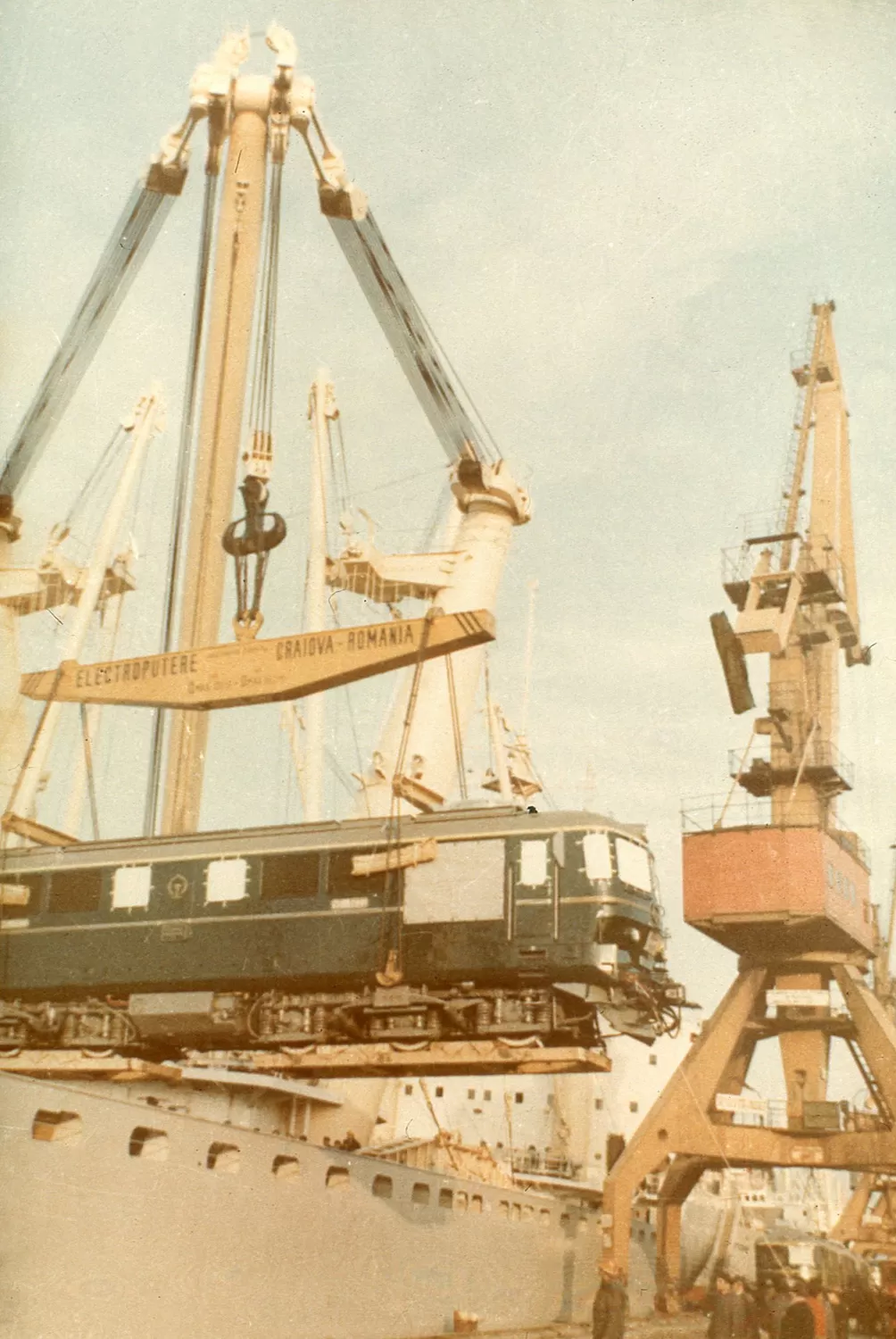
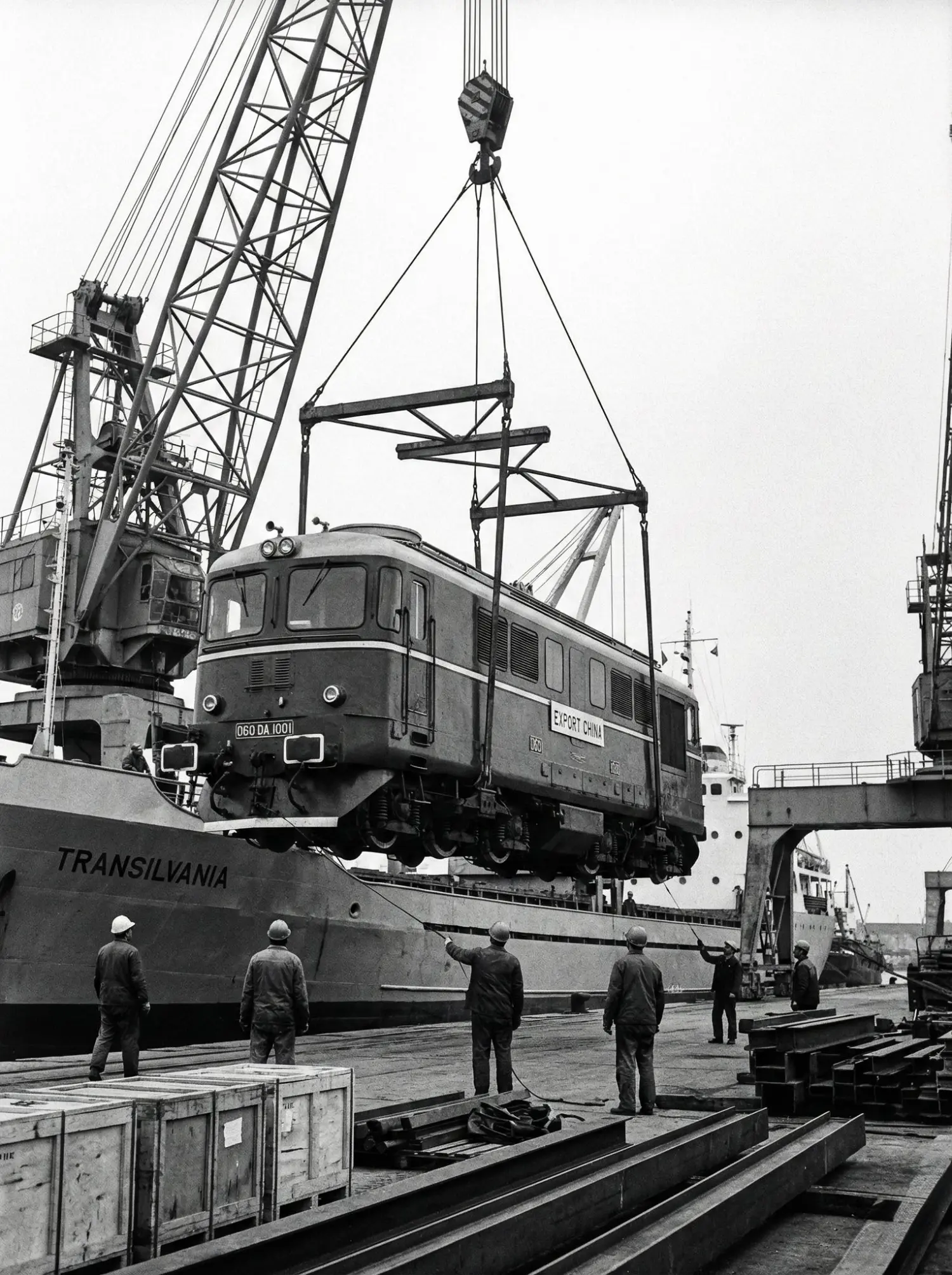 Afin de rembourser un prêt chinois, les autorités roumaines ont
commencé à exporter des locomotives diesel 060-DA vers la Chine en
1972.
Afin de rembourser un prêt chinois, les autorités roumaines ont
commencé à exporter des locomotives diesel 060-DA vers la Chine en
1972.Les locomotives exportées vers la Chine sont désignées sous le nom de ND2, où "N" représente les locomotives à combustion interne, "D" représente la transmission électrique, et "2" représente le deuxième modèle de locomotive à combustion interne importé. Ce lot de locomotives est constitué de locomotives de passagers basées sur les locomotives 060 DA et améliorées selon les exigences d'utilisation des chemins de fer chinois. Les principaux changements incluent le remplacement de la porte de cabine unilatérale d'origine de la locomotive 060 DA par une porte bilatérale, et le déplacement de la console du conducteur de droite à gauche pour se conformer aux spécifications d'utilisation de la Locomotive des Chemins de fer de Chine. De plus, le design avant de la locomotive a été amélioré. L'avant de la cabine a été modifié, passant d'un plan à un angle légèrement incliné sur la partie supérieure et la partie inférieure inclinée vers l'intérieur. Forme de tête émoussée.
Le premier lot de locomotives ND2 est arrivé en Chine en 1972. D'abord, elles appartenaient au Dépôt de Locomotives de Changsha du Bureau Ferroviaire de Guangzhou et au Dépôt de Locomotives de Shanghai du Bureau Ferroviaire de Shanghai, et ont été mises en service sur les trains de passagers des chemins de fer Beijing-Shanghai, Beijing-Guangzhou et Zhejiang-Jiangxi. La même année, l'Institut des Sciences Ferroviaires du Ministère des Chemins de fer a collaboré avec le Bureau Ferroviaire de Shanghai pour effectuer des tests d'acceptation sur les locomotives ND2 importées. Les locomotives de test étaient 060-dc-0001 et 060-dc-0002, et le test a été effectué sur le chemin de fer circulaire de Pékin selon la puissance de calibration du moteur diesel (2 300 chevaux). En raison des bonnes performances des locomotives ND2 en service et de la capacité de production insuffisante des locomotives diesel en Chine à l'époque, le Ministère des Chemins de fer a commandé davantage de locomotives ND2 en Roumanie. Entre 1972 et 1987, la société roumaine Craiova a produit un total de 284 locomotives diesel ND2 pour la Chine, dont les 50 premières ont été fournies à la Chine dans le cadre d'un échange "dette contre dette", et le reste a été acheté par la Chine en Roumanie. Les sections de locomotives principales assignées sont le Dépôt de Locomotives de Changsha du Bureau Ferroviaire de Guangzhou (Section du Chef de Bureau Guangbo, renommée plus tard Section Longue du Chemin de fer de Guangzhou), le Bureau Ferroviaire de Guangzhou (Section Guangdaoguang), la Section de Locomotives de Haikou du Groupe Ferroviaire de Guangzhou (Section Hai de Guangzhou), le Bureau Ferroviaire de Shanghai (Section de Locomotives de Nanjing), le Dépôt de Locomotives de Nanchang du Bureau Ferroviaire de Shanghai (Section Shangchang), la Section de Locomotives de Hefei du Bureau Ferroviaire de Shanghai (Section Hehe de Shanghai), la Section de Locomotives de Jinhua du Bureau Ferroviaire de Shanghai (Section Jin de Shanghai), la Section de Locomotives de Shanghai du Bureau Ferroviaire de Shanghai (Section de Shanghai), et la Section de Locomotives de Nanchang du Bureau Ferroviaire de Nanchang (Section Sud).
Lors de l'introduction des locomotives ND2, un litige a eu lieu concernant le fret international. Les 23 et 24 avril 1986, le 65ème navire de charge Datian de la Tianjin Ocean Transportation Company (aujourd'hui COSCO Bulk Transportation Co., Ltd.) était chargé de transporter 15 locomotives diesel ND2 commandées par la China Machinery Import and Export Corporation en provenance de Roumanie et a quitté le port de Constanţa, Roumanie, à destination du port de Shanghai. Cinq d'entre elles étaient chargées dans le troisième compartiment de charge, les 10 autres étaient installées dans la cabine au sol du deuxième compartiment de charge, et la deuxième locomotive était chargée de fines plaques d'acier et d'urée en sacs. Pendant le voyage, en raison de la distribution irrationnelle de l'urée, l'effondrement du deuxième pont du deuxième compartiment de charge s'est produit. Après la fusion de l'urée, une grande quantité d'ammoniac a été produite, provoquant la corrosion à divers degrés de 10 locomotives au fond du compartiment de charge. Les 10 locomotives devaient être réparées avant de pouvoir être utilisées, et le coût de réparation a dépassé 1,29 million de yuans. L'accident a conduit à un litige entre l'assureur de fret (la branche de Shanghai de la China People's Insurance Company) et le transporteur (China Ocean Shipping Company) et a été porté devant le tribunal concernant l'unité de calcul de la limitation des dommages.
En 2004, Grupul Feroviar Roman, la plus grande entreprise ferroviaire privée de Roumanie, a racheté 20 locomotives ND2 au Bureau Ferroviaire de Shanghai, y compris celles provenant du Dépôt de Locomotives de Shanghai, du Dépôt de Locomotives de Hangzhou et du Dépôt de Locomotives de Nanjing. Les locomotives ont été expédiées en Roumanie depuis le port de Shanghai la même année. Après leur retour en Roumanie, les locomotives ont été rénovées par la société roumaine EUROEST à Constanţa, et des équipements de contrôle et de diagnostic par micro-ordinateur ont été installés, et elles ont été remises en service. Selon les spécifications ferroviaires roumaines, les locomotives ont été renommées Classe 60-1501-0-60-1520-0 ; ces locomotives de Classe 60 rénovées conservent encore les caractéristiques des locomotives ND2 des Chemins de fer de Chine, y compris les portes de cabine bilatérales et la cabine à forme émoussée, ce qui les rend facilement identifiables parmi de nombreuses locomotives de Classe 60.
Traduction automatique. Texte original en: EN - afficher l'original / Sources: https://zh.wikipedia.org/wiki/ND2型内燃机车
1975
Traduction automatique. Texte original en: EN - afficher l'original / Sources: http://www.railnet.ro/viewtopic.php?f=79&t=111&start=100
1981
Au total, plus de 2404x unités sont construites, y compris de nombreuses pour diverses industries privées en Roumanie, ainsi que pour les chemins de fer d'État de Pologne, de Bulgarie et de Chine.
NB : pour les locomotives construites pour la Roumanie, la numérotation a commencé à 060-DA-001 pour chaque nouveau client, c'est pourquoi il y a plusieurs locomotives immatriculées 060-DA-001.
Traduction automatique. Texte original en: EN - afficher l'original
1994
Traduction automatique. Texte original en: EN - afficher l'original
1999
Traduction automatique. Texte original en: EN - afficher l'original
Avez-vous des informations supplémentaires concernant ce véhicule?
Aidez-nous à écrire l'histoire de Class 60! Votre savoir est précieux pour nous et pour toute la communauté, n'hésitez pas à partager vos faits, photos ou vidéos:
Dernière mise à jour le 16th de November 2025 à 17:40
Contributeur(s): Tudor C.
Advertising:
Class 60 - Related videos:

Class 60 - Related rolling stock from category "LDE 2100":

Class 60 - Associated miniature models:

CFR - 060-DA diesel locomotive
Prix de vente conseillé: 219,00 €

CFR - 060-DA diesel locomotive
Prix de vente conseillé: 219,00 €

CFR - 060-DA diesel locomotive
Prix de vente conseillé: 229,00 €

CFR - 060-DA diesel locomotive
Prix de vente conseillé: 219,00 €


Advertising:

La carte d'identité, les photos et les vidéos pour des milliers de véhicules ferroviaires dans toute l'Europe !
