
Source: commons.wikimedia.org
Source: pesolillo.ch

Source: pesolillo.ch
Source: pesolillo.ch

Source: pesolillo.ch

Source: pesolillo.ch

Source: pesolillo.ch
Source: pesolillo.ch
Source: commons.wikimedia.org
Source: pesolillo.ch

Source: Horst Lüdicke
Also known as: Fc 2x3/4 / Krokodil
Vehicle type: Electric locomotive
Registration country: Switzerland
*rod buffers
19'400 mm*
*sleeve buffers
1900
During the First World War, coal shortages further exposed Switzerland’s dependence on imported fuel. At the same time, the country possessed abundant hydroelectric resources. These combined factors accelerated the strategic decision of the Swiss Federal Railways to electrify its main lines.
By 1916, SBB had already gained experience with electric traction on secondary lines and lighter locomotives. However, no existing design was capable of reliably hauling very heavy freight trains over the Gotthard route under all conditions. A new type of locomotive was required, designed from the outset for mountain freight service.
1917
June 30
One decisive element of the tender was curve negotiability. The Gotthard route imposed tight curve radii that made long rigid-frame locomotives unsuitable. Engineers therefore converged on an articulated design, a concept already proven in steam locomotives but still uncommon in heavy electric traction.
SBB awarded the mechanical construction to Swiss Locomotive and Machine Works (SLM), whose experience with articulated steam locomotives was considered essential. The complete electrical equipment—including traction motors, transformer, control systems and braking equipment—was assigned to Maschinenfabrik Oerlikon (MFO), one of the leading European specialists in AC traction.
The resulting design was not intended as an experimental prototype, but as a standardised production locomotive capable of immediate operational deployment.
1919
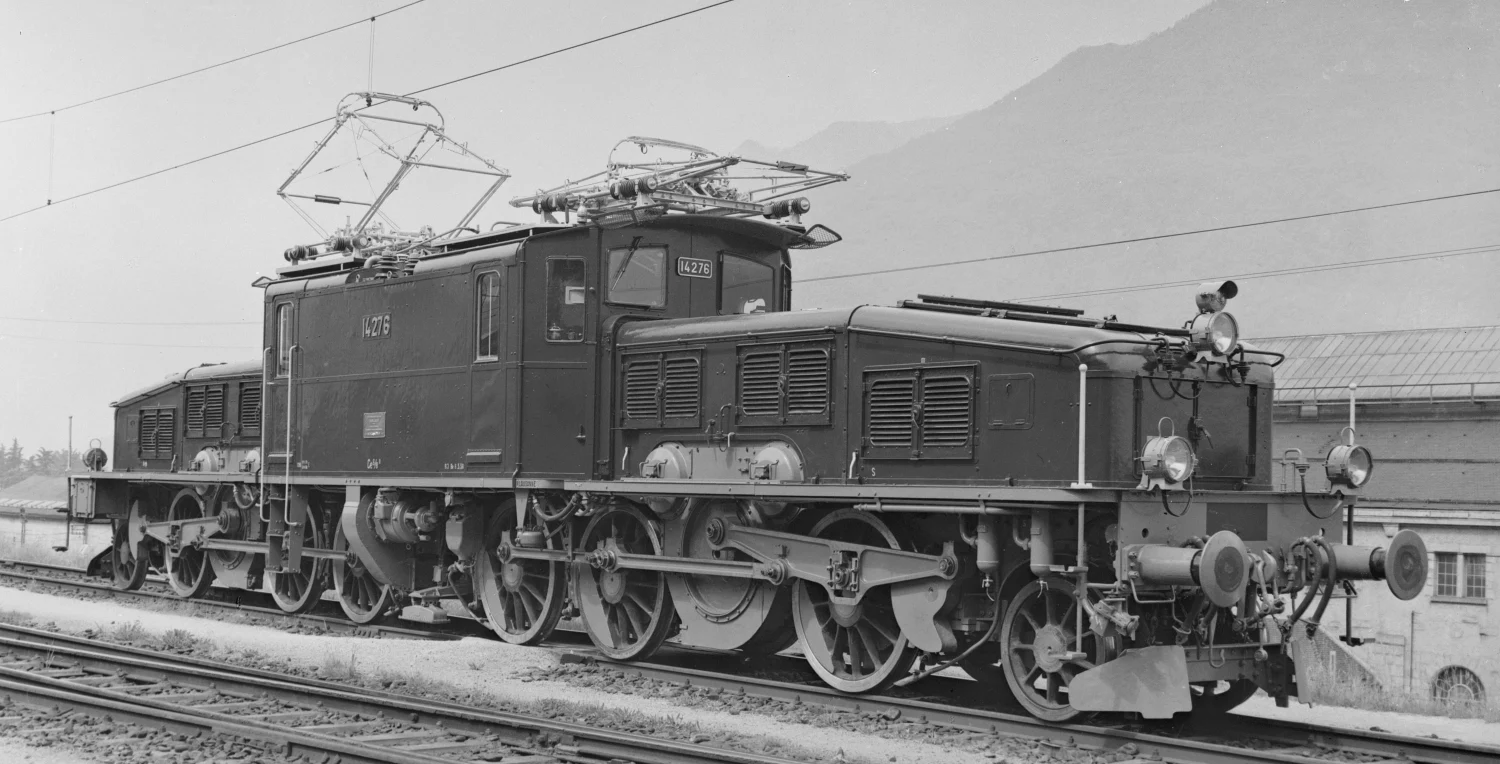
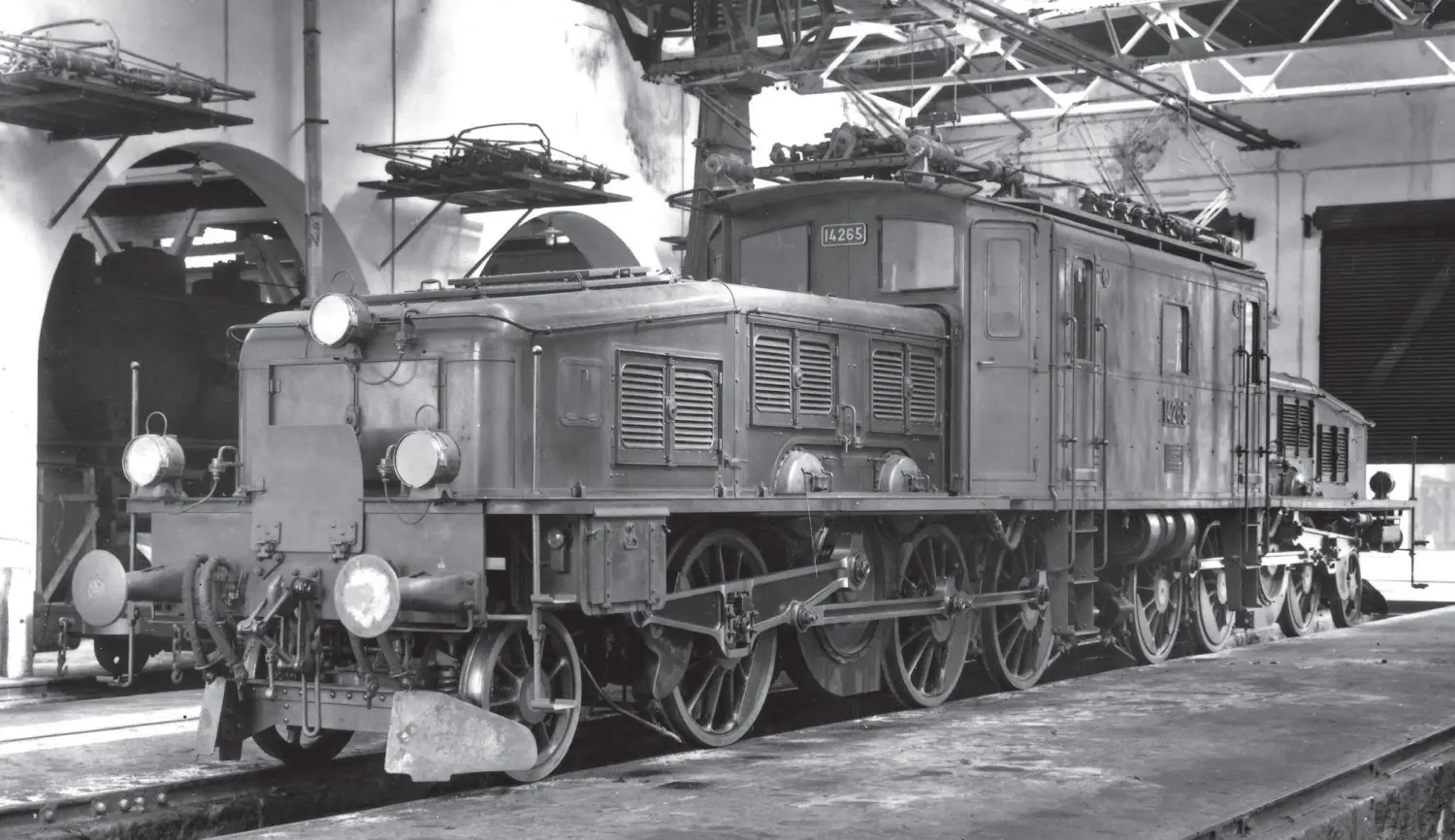
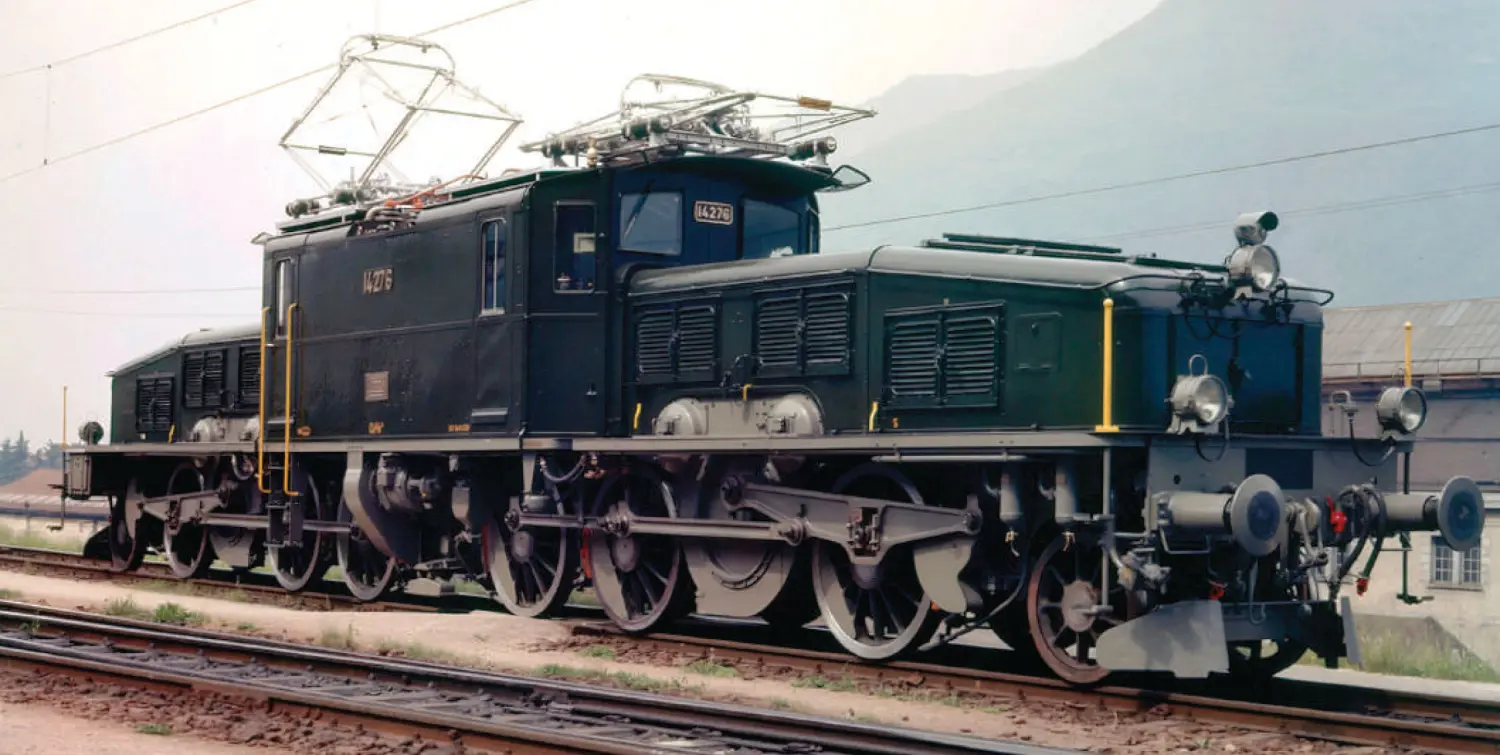
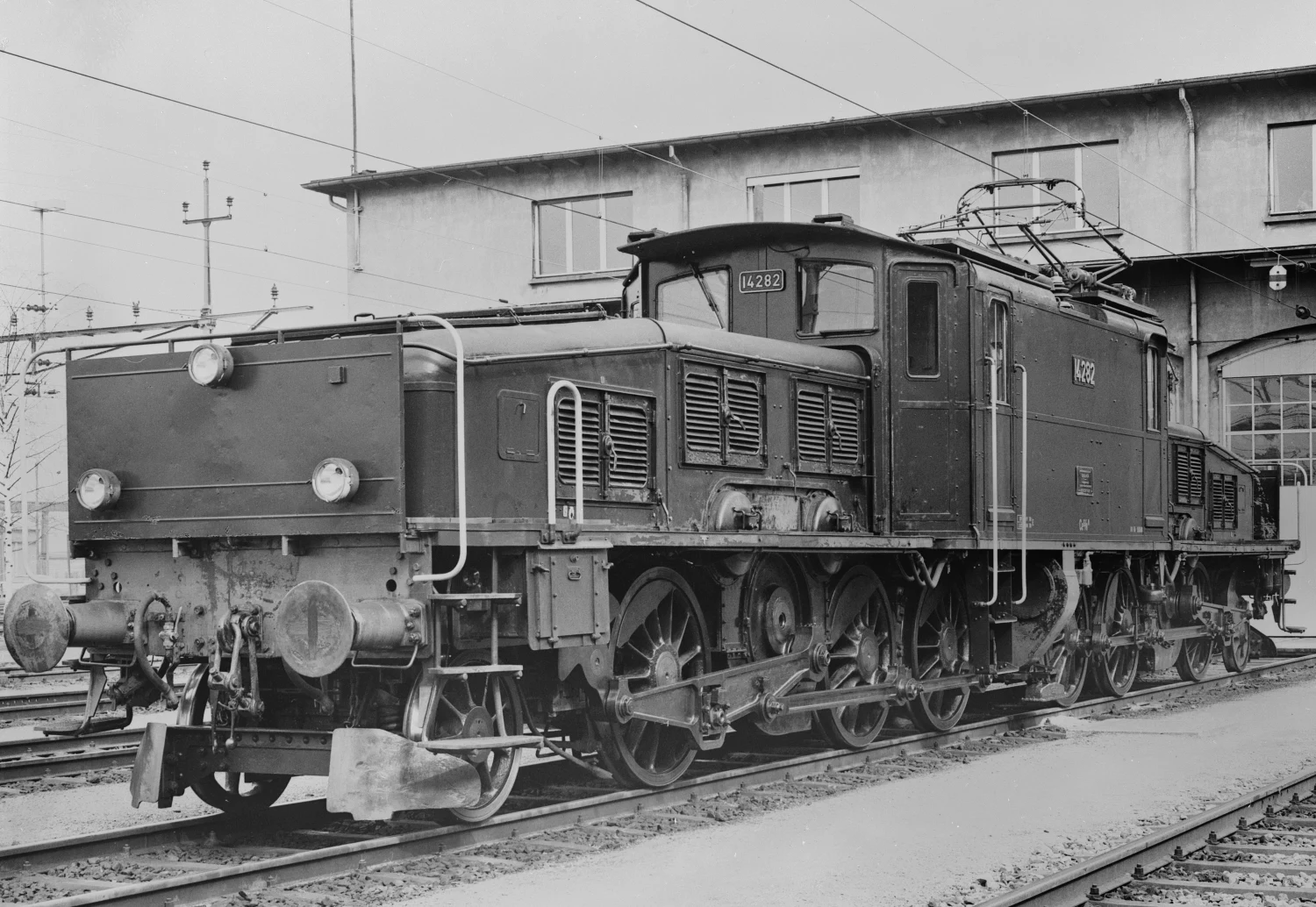
Structurally, the locomotive consisted of three permanently connected sections. At each end were long, narrow driving units, while the central section housed the driver’s cab, the main transformer and auxiliary electrical equipment. These sections were linked by articulated joints, allowing lateral movement between them. This articulation significantly reduced flange wear and track stress on curved alignments while preserving a high proportion of the locomotive’s weight on the driving axles, an essential factor for adhesion on steep gradients.
Each driving unit rested on three coupled driving axles, preceded by a single leading axle that improved guidance and stability. Traction was provided by one large electric motor per driving unit. Power transmission followed principles well established in steam locomotive practice: torque was transferred from the motor to a jackshaft and then distributed to the coupled axles via side rods. Although this arrangement already appeared conservative by contemporary standards, it offered clear advantages in terms of even torque distribution, mechanical durability and ease of maintenance under continuous heavy loads. The choice of this system was therefore deliberate and rooted in operational reliability rather than technological novelty.
Electrically, the Ce 6/8II was designed for the Swiss standard 15 kV 16⅔ Hz alternating current system. A large oil-cooled transformer, mounted in the central section, supplied power to the traction motors via tap changers. The control equipment was engineered to permit smooth and gradual power application, a crucial feature for preventing wheel slip when starting heavy trains on steep inclines.
Particular attention was paid to downhill operation. The inclusion of electric braking allowed the locomotive to dissipate energy or return it to the overhead line, significantly reducing dependence on mechanical brakes. This capability was indispensable for safe and controlled operation on long descents such as those encountered on the Gotthard Line, where braking performance was as critical as traction.
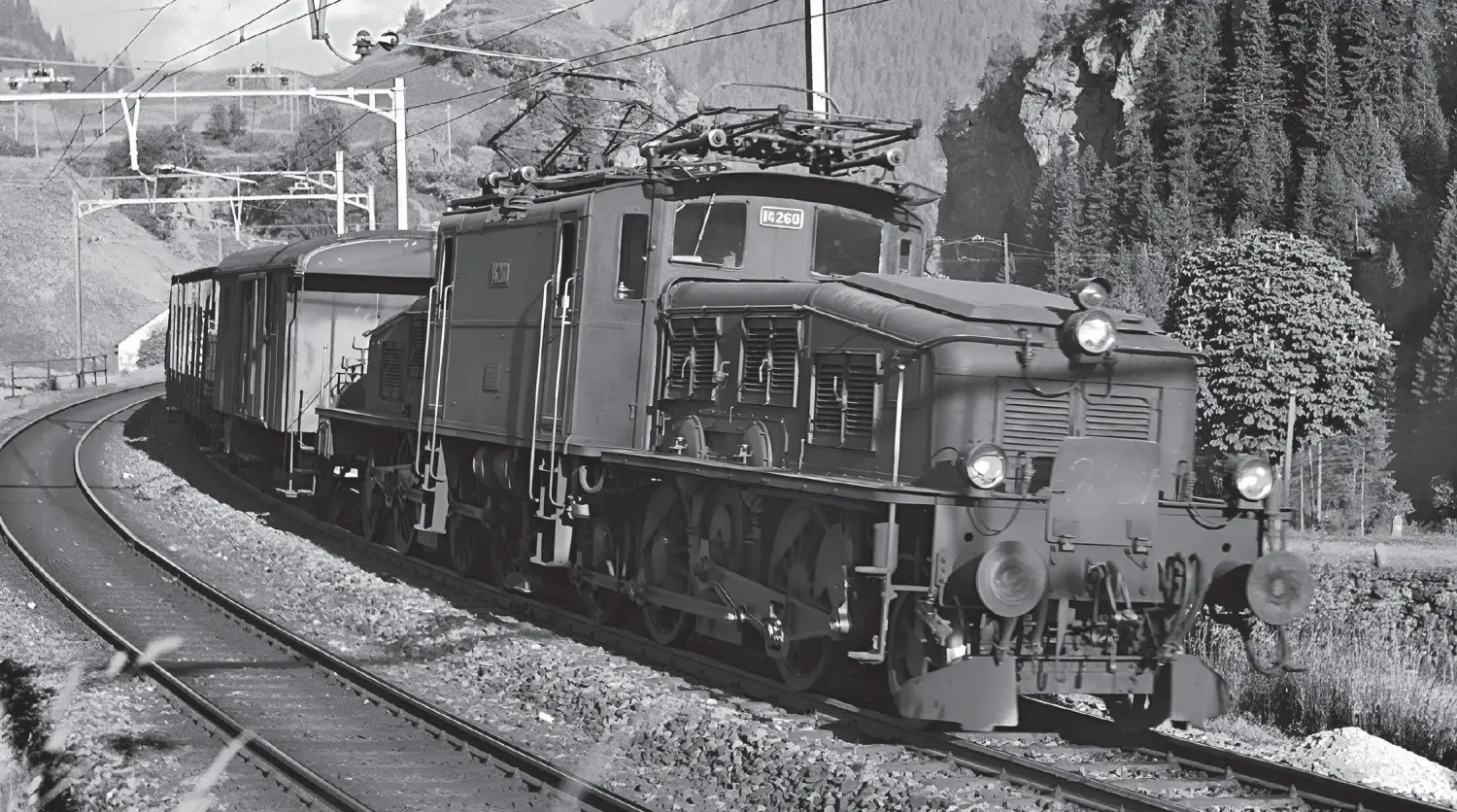
Between 1919 and 1922, a total of thirty-three locomotives were built and delivered, receiving the numbers Ce 6/8II 14251 - 142831. They entered service progressively as electrified sections of the Gotthard route became available2. From the outset, their deployment focused almost exclusively on freight services, where their high tractive effort and robust construction could be fully exploited without the operational constraints imposed by passenger timetables.
From the earliest months of operation, operating crews and maintenance personnel observed that the new locomotives displayed exceptional adhesive performance, stable running characteristics at low and medium speeds and a high degree of mechanical resilience under continuous load. The elongated driving hoods, combined with the visible articulation between the sections, gave the Ce 6/8II a distinctive appearance unlike that of any other locomotive in service. It was within this professional railway environment that the nickname "Krokodil" emerged, a designation that would soon extend beyond Switzerland and become permanently associated with the class.
1The first three Gotthard freight locomotives of the Ce 6/8II type were initially given the numbers 12251 - 12253, but after the delivery of the fourth locomotive they were renumbered to 14251 - 14253.
2Because at the time the first Ce 6/8II was delivered the Gotthard line had yet been electrified, the new electric locomotive was initially placed into service in Bern. From there, the locomotive could also be used by the SBB on other routes. Shortly afterwards, it was also employed on passenger trains. Only on 29 May 1921 was the entire Gotthard line between Erstfeld and Bellinzona able to be operated by electric trains. Nevertheless, the subsequent new Ce 6/8II were also commissioned in Bern, as the locomotive crews there had in the meantime become well acquainted with the particular characteristics of the articulated locomotive.
1920s
In regular service, the Ce 6/8II demonstrated a strong capacity for sustained heavy haulage on long gradients. Its articulated structure allowed it to negotiate tight curves with reduced mechanical stress, while the distribution of adhesive weight ensured stable running even at low speeds under high drawbar loads. The relatively modest top speed of the locomotive was well suited to the operational realities of Gotthard freight traffic, where reliability and controlled downhill operation were far more important than velocity. The integrated electric braking system proved particularly valuable on long descents, reducing reliance on mechanical brakes and improving overall operational safety.
As the class accumulated operating mileage, it transitioned from a newly introduced design into a fully standardised element of the Swiss Federal Railways fleet. Maintenance routines became increasingly systematic, and operating crews developed a high level of familiarity with the locomotive’s handling characteristics. By the mid-1920s, the Ce 6/8II was no longer treated as a special-purpose machine but as a routine assignment within freight diagrams, reflecting its successful integration into everyday railway operations.
During the later 1920s and throughout the 1930s, the gradual expansion of electrification across Switzerland led to a broader deployment of the class. While the Gotthard line remained its primary domain, Ce 6/8II locomotives were increasingly used on other routes requiring high tractive effort, including additional alpine sections and major freight corridors linking industrial regions. This wider use confirmed that the locomotive was not limited to a single line or operating niche but was capable of reliable service across a variety of operating environments.
1930s
1942
Following these changes, the rebuilt locomotives were reclassified as Be 6/8II in accordance with the Swiss locomotive classification system. In outward appearance, however, the modernized locomotives remained largely unchanged.
1950s
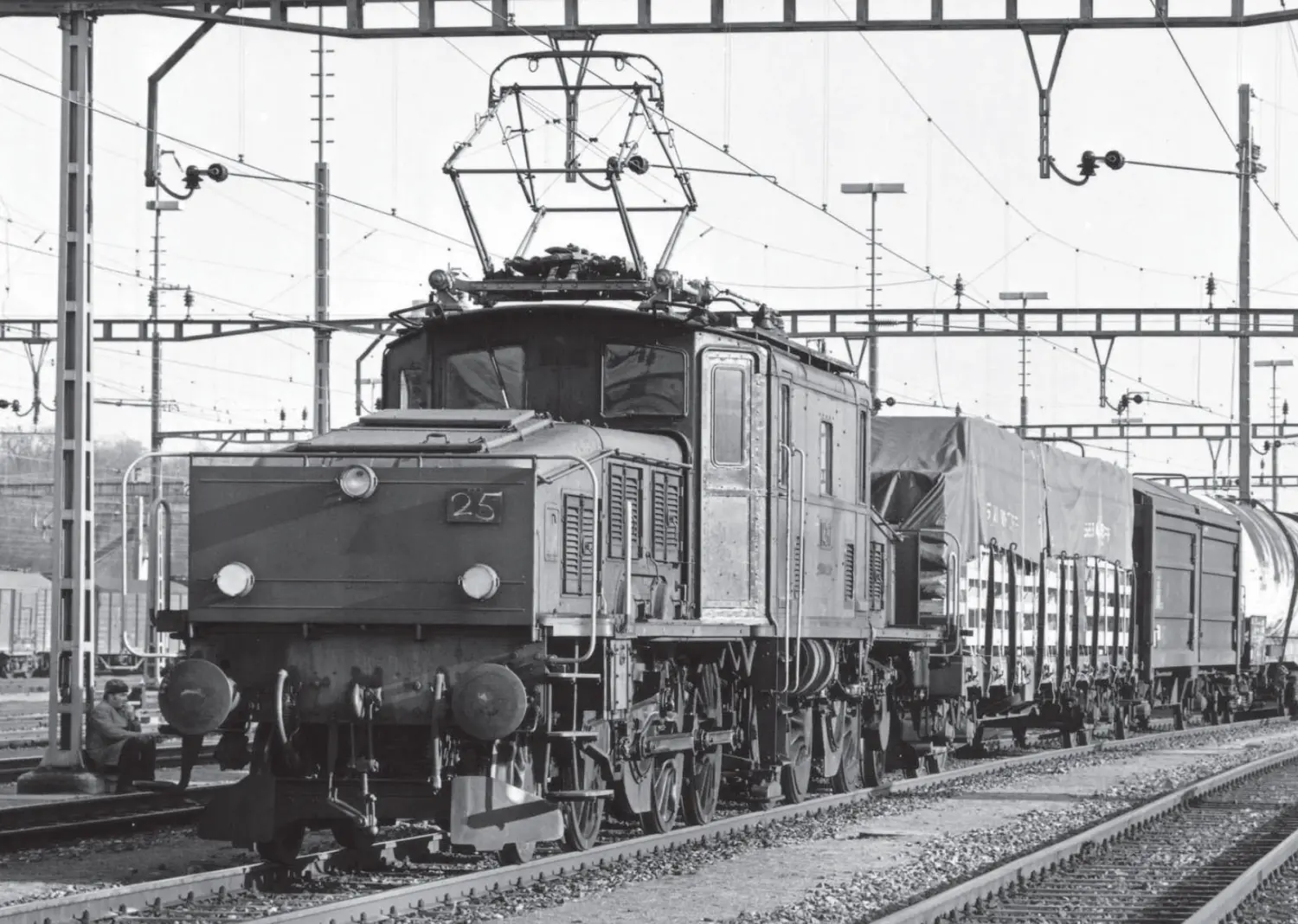
Within the Swiss Federal Railways fleet, this evolution led to a progressive reallocation of duties. The non-modernised Ce 6/8II units were increasingly removed from front-line Gotthard service and reassigned to tasks where their limitations were of lesser importance. These included transfer freight movements, local freight services and heavy shunting duties in major marshalling yards. In such roles, their strong tractive effort at low speeds and their well-understood mechanical behaviour continued to be valuable assets.
Despite their advancing age, the Ce 6/8II locomotives remained operationally reliable. Their conservative mechanical design, derived in part from established steam-era practices, proved resilient under prolonged use.
1965
At the same time 11 units began to be converted for use at large switch yards, whereby the following changes were done: installation of switching radio, removal of one pantograph, and installation of new platform railings in front of the hoods.
1970s & 1980s
Following their withdrawal, the historical significance of the Ce 6/8II was widely recognised. Seven locomotives were preserved by museums and railway heritage organisations, while others were retained as monuments or for static display.
Today, the Ce 6/8II stands as a foundational chapter in the history of Swiss electric traction, embodying both the early ambitions of railway electrification and the durability of a design shaped by the demanding conditions of alpine freight operation.
Do you have additional informations regarding this vehicle?
Help us writing the history of Ce 6/8II 14251 - 14283 "Crocodile"! Your knowledge is precious for us and the entire community, do not hesitate to share your facts, photos or videos:
Latest update on the 3rd of January 2026 at 09:54
Contributor(s): Tudor C.
Advertising:
Ce 6/8II 14251 - 14283 (Crocodile) - Related videos:

Ce 6/8II 14251 - 14283 "Crocodile" - Associated miniature models:

SBB CFF FFS - Ce 6/8II "Crocodile" electric locomotive
Recommended retail price: 549,00 €


Advertising:

The identity card, photos and videos for thousands of railway vehicles all around Europe!
