

Source : bahnbilder-von-max.ch
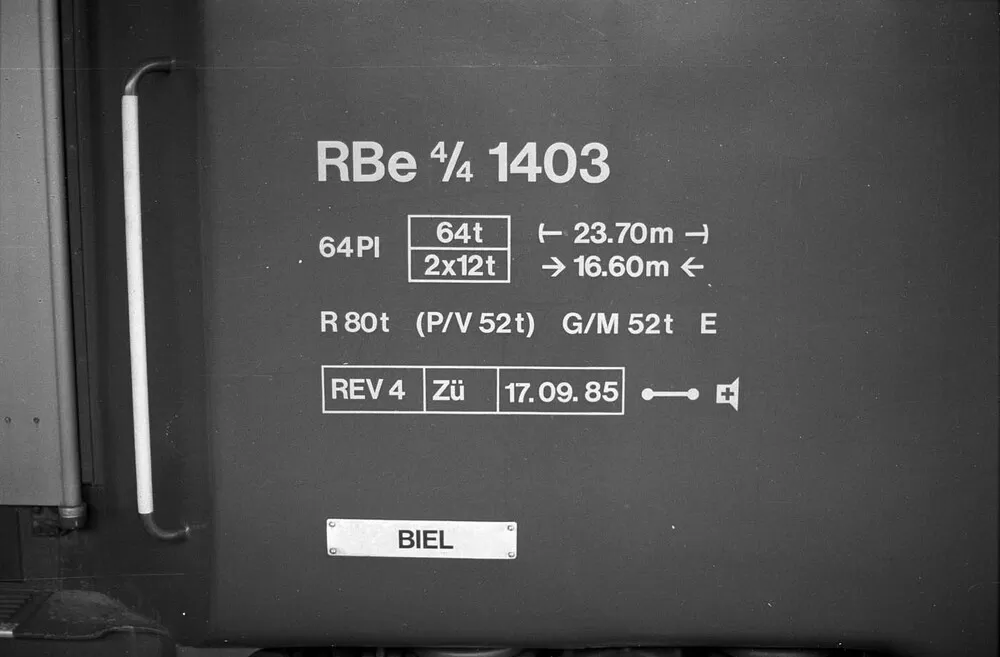
Source : R. Werder - polier.ch

Source : bahnalltag.de
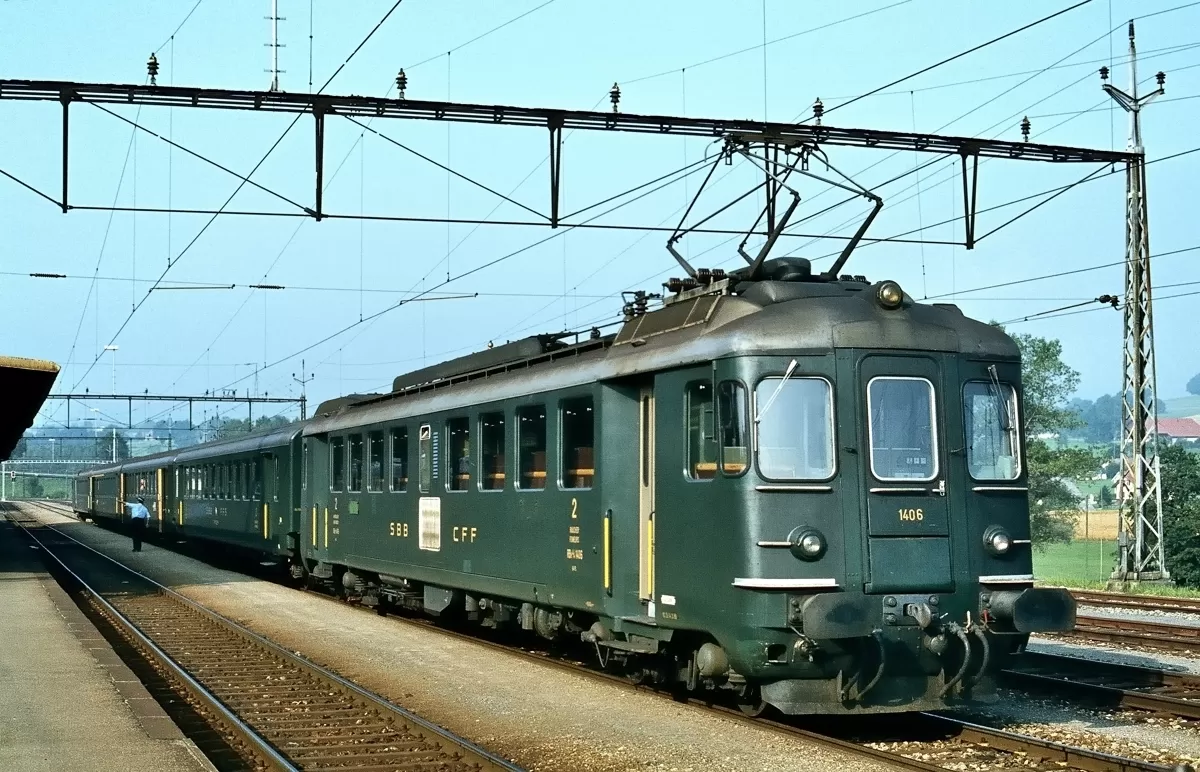
Source : Maarten van der Velden

Source : dsf-koblenz.ch
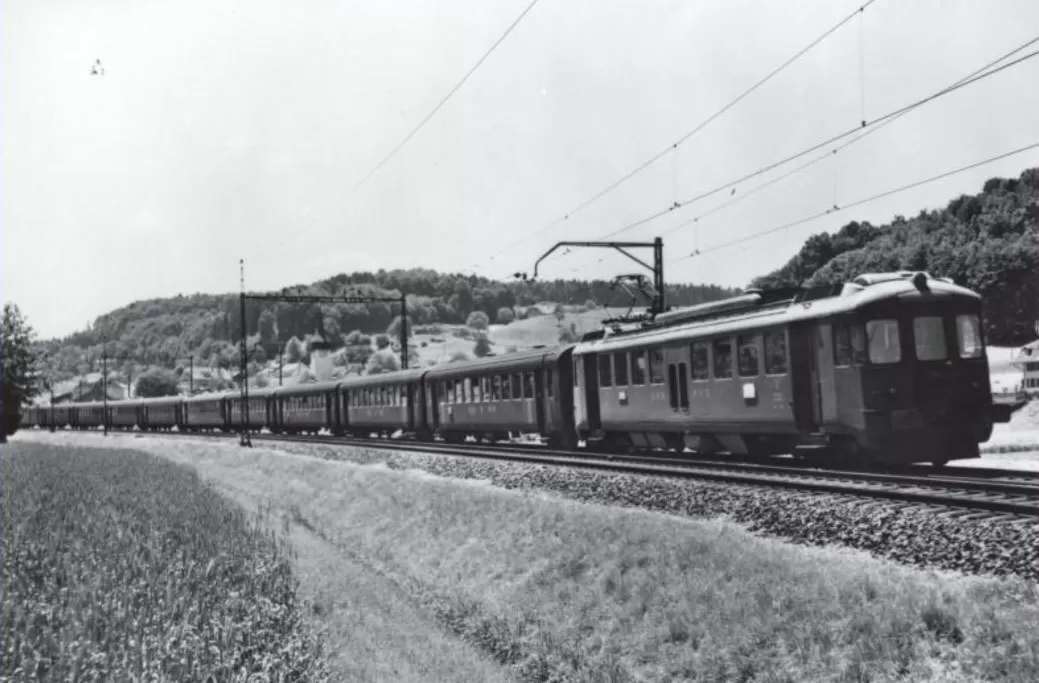

Source : C. Hertogs
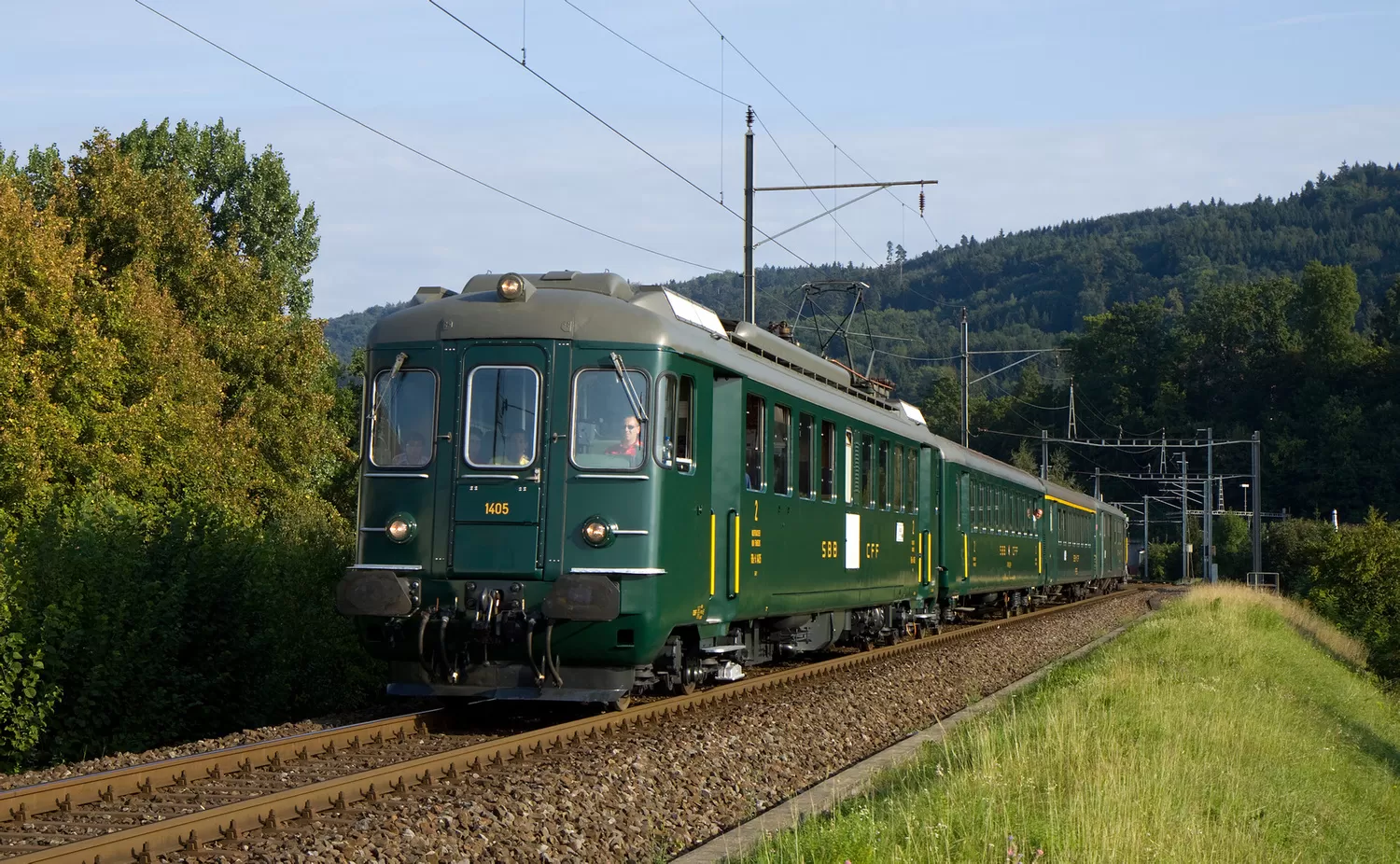
Source : David Gubler
Numérotation UIC / EVN: 94 85 7540
Type de véhicule: Electric railcar
Pays d'immatriculation: Switzerland
In 1964, Switzerland planned a national exhibition (Expo '64) in
Lausanne. This raised a unique challenge for the Swiss Federal
Railways (the SBB) that had to secure the transport of visitors
from all over Switzerland to Lausanne (at the time not so many
people owned a car and other modes of transport such as buses were
not yet available to such an extent as it is the case today). But
all modern locomotives were used in regular service and only old
locomotives were available for the necessary extra trains needed to
get people to and from the exhibition.
This was far from ideal and it became obvious new vehicles had to
be purchased. At first, the SBB looked to buy new locomotives from
existing series. The Re 4/4 and Ae 6/6 were available at the time
but neither proved to be a viable solution, either for logistic
reasons or performance issues. It also soon became apparent that
the trains had to operate as commuter trains (very flexible and
ready for use in a short timeframe) so, despite the bad experiences
with the RFe 4/4, the railcars seemed to be the solution. And the
success of the Ce 4/4 railcars of the BLS, offering high
performance and thus the desired traction, further comforted the
SBB in their choice.
The specifications for the new railcar were based on the Ce 4/4 of
the BLS:
- doors over bogies;
- one pantograph (since the introduction of the double abrasive
strips, a second pantograph was not considered necessary);
- inclined fronts.
The specifications also required the following:
- the railcars should be used both in regional and express
services;
- they should be able to replace the Ae 3/5 and Ae 3/6
locomotives;
- the power should amount to 1988 kW or 2720 hp (higher compared
with the BLS Ce 4/4 but also the SBB Re 4/4 locomotives and their
2450 hp);
- top speed of 125 km/h;
- regenerative braking;
- multiple-unit train control.
The units had to be available for testing purposes a reasonable
time ahead of the exhibition and also be conceived for the long
run, not only for the needs of the exhibition.
The mechanical construction of the vehicles was entrusted with the
Schweizerische Industrie Gesellschaft (SIG) and Schweizerische
Wagons- und Aufzügefabrik Schlieren (SWS) while the electrical
equipment came from Brown, Boveri & Cie (BBC) and from
Maschinenfabrik Oerlikon (MFO).
1959
L'équipement technique est installé en grande partie sous le compartiment passagers, ce qui a rendu les entrées considérablement plus hautes par rapport aux voitures passagers standard. D'autres composants, ainsi que les toilettes, ont été installés au milieu du véhicule, divisant ainsi le compartiment passagers en 2.
La technologie utilisée a causé certaines vibrations et le véhicule a reçu son surnom de "Schüttelbecher" ("secoueur").
La configuration originale des sièges : 64 places disponibles dans une configuration de 2e classe (32 fumeurs et 32 non-fumeurs).
Les autorails n'étaient équipés que d'un simple crochet de remorquage monté sur ressort qui pouvait se déplacer latéralement afin de faciliter le couplage des véhicules dans des virages serrés. Comme un couplage à vis a été omis pour des raisons esthétiques, deux autorails ne pouvaient être connectés entre eux qu'avec un couplage auxiliaire. Celui-ci était donc présent dans le véhicule en tant qu'équipement. Des couplages complets ont été installés quelques années plus tard.
Traduction automatique. Texte original en: EN - afficher l'original
1959
mai 24
Les premiers essais et essais de mise en service ont commencé peu après. Mais après seulement une semaine, les essais ont été annulés et, avec le deuxième prototype RBe 4/4 1404, les 2 unités sont entrées en service régulier sur les lignes St. Gallen - Zurich - Berne et Biel - Lausanne - Genève (ou Brig). Les 2 railcars ont atteint un kilométrage quotidien de 1234 km et 1522 km respectivement, ce qui était énorme par rapport aux locomotives utilisées à l'époque.
Les railcars étaient utilisés avec des voitures passagers assorties, de la série EW ("einheitswagen" ou "voitures standard"), et des voitures de contrôle avec compartiment à bagages et postal FZt4ü (plus tard DZt). Les voitures de contrôle ont été construites à partir des voitures standard EW I en ajoutant une cabine de conducteur correspondant au RBe 4/4.
Comme prévu, les courtes courses d'essai n'étaient pas suffisantes (les véhicules n'étaient pas testés et le personnel non formé). Cela a conduit à des problèmes réguliers et les railcars étaient souvent remplacés par des locomotives standard pour assurer le service.
Concerne le(s) numéro(s) d'immatriculation: 1401
Traduction automatique. Texte original en: EN - afficher l'original
1959
juillet
Concerne le(s) numéro(s) d'immatriculation: 1405
Traduction automatique. Texte original en: EN - afficher l'original
1959
juillet 25
Concerne le(s) numéro(s) d'immatriculation: 1404, 1405
Traduction automatique. Texte original en: EN - afficher l'original
1959
décembre
Concerne le(s) numéro(s) d'immatriculation: 1402, 1406
Traduction automatique. Texte original en: EN - afficher l'original
1960
Pour des raisons de sécurité, le système de protection du train a été retiré sur tous les autorails et il a été possible de continuer le service régulier en ajoutant un deuxième conducteur.
Concerne le(s) numéro(s) d'immatriculation: 1405
Traduction automatique. Texte original en: EN - afficher l'original
1960
janvier 8
Concerne le(s) numéro(s) d'immatriculation: 1403
Traduction automatique. Texte original en: EN - afficher l'original
1960
mai
Dans le même temps, les essais se poursuivaient également en Suisse.
Traduction automatique. Texte original en: EN - afficher l'original
1960
juin 14
L'enquête sur les 2 incendies a montré que la surchauffe était la cause en raison du positionnement des grilles de ventilation sur le toit, au-dessus des portes (elles ne garantissaient pas une ventilation suffisante). Cela sera modifié dans la production en série.
Concerne le(s) numéro(s) d'immatriculation: 1401
Traduction automatique. Texte original en: EN - afficher l'original
1963
Traduction automatique. Texte original en: EN - afficher l'original
2008
mai
Concerne le(s) numéro(s) d'immatriculation: 1404, 1405
Traduction automatique. Texte original en: EN - afficher l'original / Sources: http://www.dsf-koblenz.ch/index.php/08/10-04/118-2008-11-03-ersatzteilspender-rbe-1404
2008
novembre
Concerne le(s) numéro(s) d'immatriculation: 1404, 1405
Traduction automatique. Texte original en: EN - afficher l'original / Sources: http://www.dsf-koblenz.ch/index.php/08/10-04/118-2008-11-03-ersatzteilspender-rbe-1404
Avez-vous des informations supplémentaires concernant ce véhicule?
Aidez-nous à écrire l'histoire de RBe 4/4 1401 - 1406! Votre savoir est précieux pour nous et pour toute la communauté, n'hésitez pas à partager vos faits, photos ou vidéos:
Dernière mise à jour le 13th de November 2019 à 21:39
Contributeur(s): Tudor C.
Advertising:
RBe 4/4 1401 - 1406 - Related rolling stock from category "SBB CFF FFS - RBe 4/4 Electric railcar":

RBe 4/4 1401 - 1406 - Associated miniature models:

SBB RBe 4/4 Seetal + BDt EW II
Prix de vente conseillé: dès 449,99 €

SBB CFF FFS - RBe 4/4 electric railcar
Prix de vente conseillé: N/A
SBB CFF FFS - RBe 4/4 electric railcar
Prix de vente conseillé: N/A

SBB CFF FFS - RBe 4/4 electric railcar
Prix de vente conseillé: N/A

Advertising:

La carte d'identité, les photos et les vidéos pour des milliers de véhicules ferroviaires dans toute l'Europe !
