

Source : facebook.com

Source : Markus Wagner - flickr.com

Source : circusfreunde.ch

Source : beta.railsuisse.ch

Source : beta.railsuisse.ch

Source : beta.railsuisse.ch

Source : beta.railsuisse.ch

Source : beta.railsuisse.ch

Source : beta.railsuisse.ch

Source : beta.railsuisse.ch

Source : beta.railsuisse.ch

Source : beta.railsuisse.ch

Source : beta.railsuisse.ch

Source : beta.railsuisse.ch

Source : beta.railsuisse.ch

Source : beta.railsuisse.ch

Source : beta.railsuisse.ch

Source : beta.railsuisse.ch

Source : beta.railsuisse.ch

Source : beta.railsuisse.ch

Source : beta.railsuisse.ch

Source : beta.railsuisse.ch

Source : beta.railsuisse.ch

Source : beta.railsuisse.ch

Source : beta.railsuisse.ch

Source : Hurni Christoph - flickr.com

Source : Hurni Christoph - flickr.com

Source : Hurni Christoph - flickr.com

Source : Ulrich Neumann / Slg. P. Huerzeler

Source : flickr.com

Source : Vectron X4E

Source : Henk Hartsuiker

Source : maurizio messa

Source : maurizio messa

Source : Georg Trüb

Source : Jean Vernet, Montreux
Également connu sous le nom de: Lok 2000
Numérotation UIC / EVN: 91 85 4460
Type de véhicule: Electric locomotive
Pays d'immatriculation: Switzerland
2023

100 ans de Cirque Knie : SBB et la famille Knie baptisent les locomotives du cirque
Dans le cadre du 100e anniversaire du Cirque Knie, deux locomotives Knie circulent sur l'ensemble du réseau SBB. Les deux locomotives ont été présentées le jeudi 29 novembre 2018, à Rapperswil/SG en présence du président du gouvernement de Saint-Gall, Stefan Kölliker, d'Andreas Meyer (PDG de SBB AG) et de la famille Knie.
Cependant, un rapport de 2023 de la "Zürichsee Zeitung" révèle un changement significatif dans cette tradition. Le partenariat de longue date du cirque avec les chemins de fer est arrivé à sa fin plus tôt dans l'année. La principale raison citée pour ce changement est les investissements importants à venir nécessaires pour le nouveau matériel roulant. De plus, les besoins évolutifs du cirque ont conduit à des défis pour trouver une solution à long terme, malgré les efforts intensifs de toutes les parties impliquées, comme l'a déclaré les Chemins de fer fédéraux suisses (SBB).
La cessation de cette collaboration marque un changement significatif pour le Cirque Knie, qui passera désormais au transport routier pour se déplacer de ville en ville. Ce changement est le résultat d'une évolution longtemps anticipée tant pour le cirque que pour la SBB.
Ces dernières années, le Cirque Knie avait déjà réduit sa dépendance au transport ferroviaire. Le train était principalement utilisé pour transporter des remorques pour les logements, bureaux, guichets, toilettes et autres essentiels. L'échelle avait été réduite de deux à un seul convoi de train, mais il restait substantiel en taille, mesurant 500 mètres de long et pesant environ 900 tonnes. Il est à noter que la pratique du transport des animaux par train a été interrompue au milieu des années 2000. Le vieillissement des wagons de train et les préoccupations croissantes concernant le bien-être animal ont contribué à cette décision.
Un autre facteur influençant l'abandon du transport ferroviaire est le changement général dans la logistique des opérations du cirque. Contrairement au passé, le montage du chapiteau de cirque et des équipements techniques commence maintenant au nouveau lieu tandis que les spectacles sont encore en cours à l'emplacement précédent. Ce calendrier qui se chevauche crée des défis logistiques incompatibles avec le transport ferroviaire. De plus, la taille des nouveaux équipements ne correspond plus aux dimensions des anciens wagons de train, entraînant des inefficacités telles que des wagons sous-utilisés. En outre, le développement résidentiel croissant autour des zones de chargement des trains complique les opérations nocturnes, rendant encore plus difficile la viabilité du transport ferroviaire pour le cirque.
La fin de l'ère ferroviaire du Cirque Knie signifie non seulement un changement logistique, mais aussi la fermeture d'un chapitre emblématique de l'histoire culturelle et des transports en Suisse. Alors que le cirque s'adapte aux temps changeants, son riche héritage de voyages à travers le pays en train restera un souvenir précieux dans le cœur de nombreux.
 Source:
circuswelten.de
Source:
circuswelten.de Source:
circuswelten.de
Source:
circuswelten.de Source:
circuswelten.de
Source:
circuswelten.de Source:
circuswelten.de
Source:
circuswelten.de Source:
circuswelten.de
Source:
circuswelten.de Source:
circuswelten.de
Source:
circuswelten.de Source:
circuswelten.de
Source:
circuswelten.de Source:
circuswelten.de
Source:
circuswelten.deTraduction automatique. Texte original en: EN - afficher l'original / Sources: https://www.20min.ch/fr/story/cent-ans-apres-knie-ne-se-deplacera-plus-avec-le-train-172748631583
Avez-vous des informations supplémentaires concernant ce véhicule?
Aidez-nous à écrire l'histoire de Re 460! Votre savoir est précieux pour nous et pour toute la communauté, n'hésitez pas à partager vos faits, photos ou vidéos:
Dernière mise à jour le 2nd de December 2023 à 17:40
Contributeur(s): Tudor C.
Advertising:
Re 460 - Related videos:

EuroNight 316 "Luna" from Roma Termini to Geneva
Switzerland

4 SBB Re 460 for one train
Switzerland

SBB CFF FFS - IC2020
Switzerland

SBB CFF FFS: Re 460 & Bt 28-94 trial run
Switzerland

SBB CFF FFS - Re 460 presentation

Rail One Express - 175 years of Swiss Railways
Switzerland
+2 vidéo(s)
dans notre galerie vidéo
Re 460 - Associated miniature models:
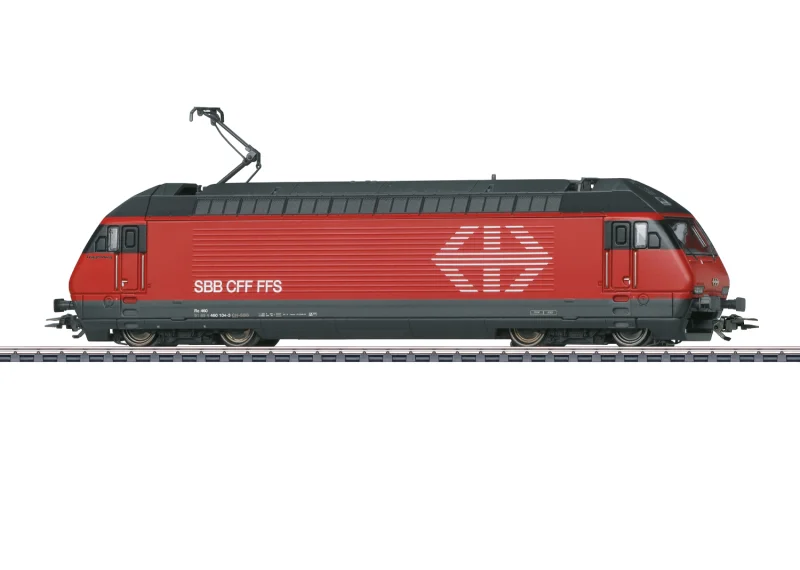
SBB CFF FFS - Re 460 electric locomotive
Prix de vente conseillé: 429,00 €

SBB CFF FFS - 460 019-3 "175 years of Swiss Railways" electric locomotive
Prix de vente conseillé: dès 329,90 €

SBB CFF FFS - Class Re 460 Electric locomotive
Prix de vente conseillé: 339,99 €

SBB CFF FFS - Class Re 460 electric locomotive
Prix de vente conseillé: 369,00 €


Advertising:

La carte d'identité, les photos et les vidéos pour des milliers de véhicules ferroviaires dans toute l'Europe !
